Home›Travel Guide›Aberdare National Park
Aberdare National Park — Wildlife, Waterfalls, Forest & Treetops
Aberdare National Park is a high-altitude Kenya safari destination in the Aberdare Range, north of Nairobi. It is defined by montane forest, bamboo, moorland, waterfalls, cold mountain streams and forest wildlife. The park is also associated with Treetops Lodge, the historic treehouse where Princess Elizabeth stayed in 1952 before becoming Queen Elizabeth II. This guide explains where Aberdare is, what to see, how the ecosystems affect wildlife viewing, when to go, where to stay, how to combine the park with other Kenya destinations, and what to expect from a safari here.
Plan Your Visit
Aberdare National Park at a Glance
If you are deciding whether Aberdare National Park belongs on a Kenya safari itinerary, the key distinction is habitat. This is not another open-grassland park. The Aberdare Range rises into a cool, wet highland environment where forest, bamboo and Afro-alpine vegetation shape both the landscape and the way animals are seen.
The park works particularly well for travellers who want a change of scenery after the Rift Valley or before continuing toward Mount Kenya, Samburu or the Masai Mara. It also suits visitors interested in Treetops Lodge, waterfalls, highland birdlife, forest elephants, black rhino and the possibility of seeing the rare mountain bongo.
For a first visit, one or two nights is usually enough. The most useful choice is to decide what matters most: wildlife, the Treetops history, highland scenery, waterfalls, birding or fitting Aberdare efficiently into a larger Kenya route.
The Destination
What Is Aberdare National Park?
Aberdare National Park protects a large section of the Aberdare mountain ecosystem in central Kenya. Its identity comes from altitude, rainfall and forest rather than the open plains associated with the Masai Mara or Amboseli.
The Aberdare Range forms a major highland block east of the Great Rift Valley. Within the protected area, elevation changes rapidly from lower forest to bamboo, upper montane vegetation and open moorland. That vertical sequence matters to visitors because temperature, visibility, vegetation and wildlife habitat change as the road climbs.
The lower forested sections are the practical centre of most short safari visits. Waterholes and salt licks near the treehouse lodges draw elephants, buffalo and other animals into predictable viewing areas. Higher sections are more strongly associated with scenery, streams, hiking and high-altitude vegetation.
Aberdare should therefore be viewed as a highland ecosystem rather than simply a smaller version of a savanna reserve. Wildlife can be close, but vegetation can also conceal it. A traveller who expects constant long-distance views across open grassland may find the experience different; a traveller interested in forest ecology and intimate waterhole viewing may find the difference is the main attraction.
The park is also part of a wider Central Kenya travel geography. It can be combined with other Kenya destinations, incorporated into a route from Nairobi toward the Rift Valley, or used as a highland contrast before a longer safari in the Masai Mara.

Landscape & Habitat
Aberdare’s Altitude Zones
The park’s elevation creates a sequence of habitats. Understanding that sequence explains why the scenery and wildlife experience change so quickly during a drive.
Lower Forest & Aberdare Salient
The Aberdare Salient is the eastern extension where many visitors stay. Dense montane forest, clearings, waterholes and salt licks create important wildlife habitat. The treehouse lodges are located here, making this the practical base for short game-viewing visits.
Bamboo Forest
Higher elevations support thick stands of mountain bamboo. The vegetation provides habitat for forest species, including the mountain bongo. Visibility is limited, so animal encounters depend on careful driving, tracks, sounds and knowledge of the habitat rather than scanning an open horizon.
Upper Montane Forest & Heath
As elevation increases, the vegetation changes again. Mist, lower temperatures and frequent moisture create a very different landscape from Kenya’s dry lowland parks. Streams descend through this terrain and feed the waterfalls that are among Aberdare’s most recognisable natural features.
Afro-Alpine Moorland
The highest terrain opens into moorland with giant groundsels, lobelias and other high-altitude plants. This area is more relevant to hikers, landscape photographers and visitors deliberately seeking the mountain environment than to travellers whose priority is concentrated game viewing.
Wildlife
Animals You Can See in Aberdare National Park
Aberdare’s wildlife is strongly shaped by forest cover and water. Some species are easier to find around the Salient’s waterholes, while others are elusive because they live in dense vegetation.
Black Rhino
One of Aberdare’s important conservation species. Sightings are possible but never guaranteed because forest and thick vegetation provide cover.
Elephant
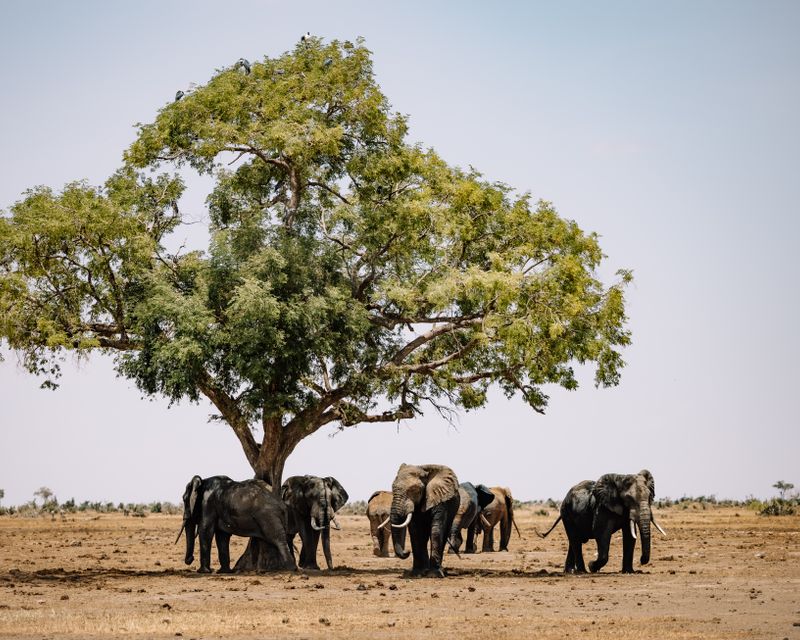
Elephants are a major feature of the Salient and are often associated with the waterholes and salt licks near the treehouse lodges.
Cape Buffalo
Buffalo use forest clearings, water and open patches within the park. Herds can provide some of the more dependable large-mammal sightings.
Mountain Bongo
A rare striped forest antelope associated with the highlands. Seeing one in the wild is difficult and should not be treated as an expected sighting.
Leopard
Present but difficult to see in dense forest. The species is better approached as a possibility than a guaranteed encounter.
Colobus Monkeys
Black-and-white colobus monkeys use the forest canopy and can be encountered along forest roads and around lodge areas.
Spotted Hyena
Hyenas and other nocturnal species can become active around waterholes after dark, adding a different dimension to a treehouse lodge stay.
Highland Birds
Forest, bamboo and moorland habitats support a strong bird community, making Aberdare relevant to birdwatchers as well as traditional safari travellers.
How Safari Differs Here
Wildlife Viewing in a Forest Park
The most important expectation to set before an Aberdare safari is that vegetation controls visibility. In a grassland destination, a guide may see an animal several hundred metres away and drive directly toward it. In Aberdare, the same animal can be behind a stand of bamboo or inside the forest edge.
That does not make the wildlife experience weaker; it changes the relationship between habitat and observation. Waterholes concentrate animals, forest tracks create close encounters, and a guide’s knowledge of tracks, feeding areas and regular animal movements becomes especially valuable.
For this reason, Aberdare works best when combined with an open-landscape safari elsewhere. A route that includes Aberdare and the Masai Mara, for example, gives travellers two different viewing environments: forest and waterhole encounters in the highlands, followed by broad grassland views and high concentrations of plains wildlife in the Mara.
If your only goal is to maximise the number of classic Big Five sightings in a short time, a dedicated Masai Mara itinerary may be more efficient. If you want a varied Kenya trip that includes mountain forest, history, waterfalls and wildlife, Aberdare becomes much more compelling.
History
Treetops Lodge and the 1952 Royal Story
Treetops Lodge is one of Kenya’s best-known historic safari properties because of Princess Elizabeth’s visit in February 1952. She and Prince Philip stayed at the treehouse above a waterhole during a Commonwealth tour. While they were there, King George VI died in England. Princess Elizabeth subsequently became Queen Elizabeth II.
The historical significance comes from the setting as much as the event. The original Treetops was designed around wildlife viewing: guests could watch animals approach the waterhole from an elevated position without leaving the building. The combination of a remote forest setting, wildlife and royal history turned the lodge into an enduring Kenya travel landmark.
The original structure was later destroyed during the Mau Mau period and was rebuilt. The present lodge continues the treehouse tradition and remains associated with the same story. Visitors who choose Treetops today are therefore buying into a historical experience as well as a place to sleep.
The key reason to choose it is the historic setting. If the main priority is a broader range of viewing platforms and a different lodge layout, compare it with The Ark before booking.

Where to Stay
Treetops Lodge vs The Ark
Both are designed around waterhole wildlife viewing, but they appeal to different travellers.
Treetops Lodge
Treetops is the natural choice for travellers who place the 1952 royal history at the centre of their Aberdare visit. Its identity is closely tied to Princess Elizabeth and the original treehouse tradition. The waterhole remains part of the experience, so the historical interest does not replace wildlife viewing.
Choose Treetops when the question is, “Where can I stay in Aberdare and experience the famous royal connection?” It is less about maximising facilities and more about the history, atmosphere and location.
The Ark
The Ark is another well-known waterhole lodge in the Aberdare Salient. Its design provides multiple levels and viewing positions over the waterhole, making it particularly attractive to travellers who want to spend time observing animals from the lodge itself.
Choose The Ark when wildlife viewing, viewing decks and the lodge experience matter more than the specific Treetops story. Both properties can form the basis of a one-night Aberdare stop.
Water & Scenery
Waterfalls in Aberdare National Park
The wet highland environment feeds streams that cut through the Aberdare Range. Waterfalls are therefore part of the park’s physical geography rather than isolated attractions.
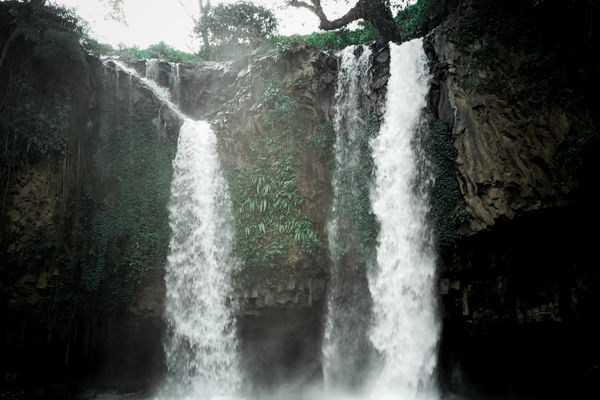
Karuru Falls
Karuru Falls is one of Aberdare’s signature viewpoints. The falls descend through the forested highland landscape in multiple stages. Water volume is generally strongest when the surrounding catchment has received substantial rainfall, while access conditions can become wetter at the same time.
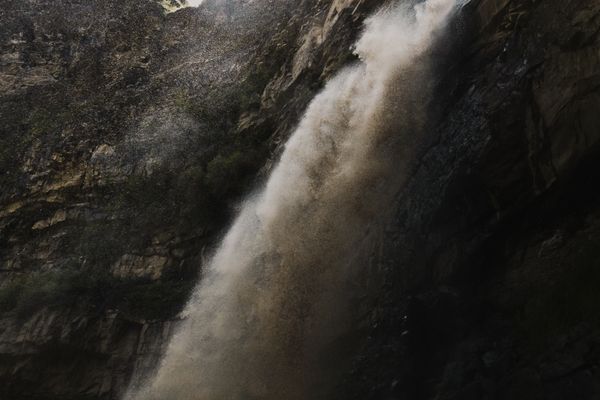
Gura Falls
Gura Falls is associated with the steep gorge country of the Aberdare Range. Its location and terrain make it less of a casual roadside stop than some other viewpoints, but it illustrates the scale of the water system descending from the highlands.
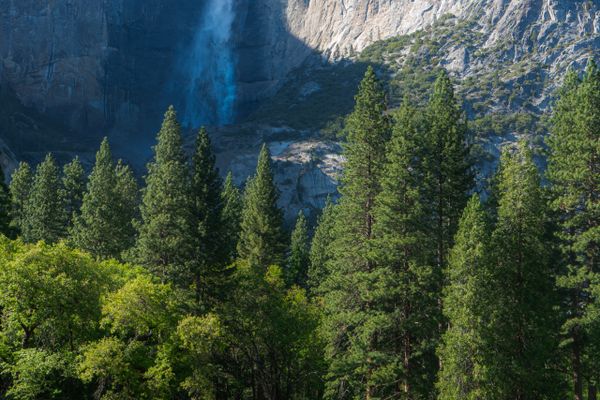
Chania Falls
Chania Falls is another recognised waterfall within the Aberdare landscape. It can be incorporated into a scenic drive when road and weather conditions permit, particularly for visitors who want landscape as well as wildlife.
For photographers, the main planning consideration is the relationship between rainfall and access. Wetter conditions can produce stronger water flow and greener vegetation while also making some park roads slower and more demanding.
Experiences
Things to Do in Aberdare National Park
Game Drives
Explore forest roads, clearings and water sources with a driver-guide. The Salient is the practical focus for most short wildlife visits.
Waterfall Visits
Include recognised waterfall viewpoints when road conditions and the itinerary allow. Water and forest provide a strong contrast with dry-country safari landscapes.
Wildlife Photography
Use the waterholes and lodge viewing areas for closer subjects, especially when animals come to drink. Forest photography rewards patience and careful exposure control.
Birdwatching
Explore forest, bamboo and moorland habitats for highland birds. A specialist birding itinerary can make better use of the park than a conventional short game drive.
Hiking
Higher sections of the Aberdare Range provide opportunities for guided walks and mountain scenery. Walking around large wildlife should be organised through authorised guides and park procedures.
Trout Fishing
Cold highland streams have a history of trout fishing. Where available and permitted, this offers a very different activity from a standard game drive.
Conservation Context
Why the Aberdare Forest Matters
The Aberdare Range is important not only because it contains wildlife but because it is a highland water catchment. Forest and mountain vegetation influence streams and rivers that serve people and ecosystems beyond the park boundary.
The park’s relationship with surrounding agricultural land also explains why conservation measures can look different here from those in open migratory ecosystems. A substantial boundary fence has been used to reduce movement of large animals into neighbouring farms, helping limit crop damage and human-wildlife conflict.
For wildlife such as black rhino, secure habitat and anti-poaching protection are central to long-term conservation. For the forest ecosystem, maintaining vegetation and water systems is equally important because the ecological value of Aberdare extends beyond what a visitor can see during a game drive.
Visitors can support this system by using authorised park access, following guide instructions, avoiding disturbance of wildlife and treating the forest as a functioning protected ecosystem rather than simply a safari backdrop.
Timing
Best Time to Visit Aberdare National Park
There is no single best month for every traveller. Dry conditions generally make roads and wildlife viewing easier, while wetter periods strengthen waterfalls and produce lush forest scenery.
January–February
Often a useful dry-season window for a highland itinerary. Firmer roads can make access easier, and the combination with other Central Kenya destinations is straightforward.
March–May
The long-rain period can bring dense green vegetation, cloud and stronger waterfalls. The trade-off is wetter ground and potentially more difficult road conditions.
June–September
A popular dry period across much of Kenya. It is a strong choice when dependable road conditions and a wider national safari circuit are the priority, although accommodation demand can be higher.
October–December
Conditions can become wetter again, particularly around the short rains. The park can be attractive for green scenery and waterfalls, with timing depending on the exact travel dates and road conditions.
Month-by-Month Planning
When Should You Go to Aberdare?
Use the month as a starting point, then match it to the reason Aberdare is on your itinerary.
January: A useful month for travellers prioritising relatively firm access and combining Aberdare with other highland destinations.
February: Similar to January, with dry-season planning generally favouring road access and wildlife viewing around water sources.
March: Conditions begin to become wetter. The landscape can be greener, but road conditions become a more important part of planning.
April: The long-rain period can make the park exceptionally lush. This is more attractive to scenery and waterfall-focused travellers than to visitors seeking the easiest road conditions.
May: Wet-season considerations remain important. Build more flexibility into driving times and vehicle choice.
June: A transition toward drier conditions can make this an attractive month for a broader Kenya circuit.
July: A popular period for Kenya travel. Book suitable accommodation early if your route is fixed.
August: Dry-season travel remains useful for road access. Travellers combining Aberdare with the Masai Mara can build a route around wider seasonal priorities.
September: Often a practical month for a dry-season itinerary, depending on the year’s rainfall pattern.
October: Conditions may begin shifting toward wetter weather. Check the complete route rather than judging Aberdare in isolation.
November: Short-rain conditions can produce lush vegetation and stronger streams while making roads more demanding.
December: A useful festive-period option when accommodation is available, with conditions varying across the month.
Getting There
How to Get to Aberdare National Park
Most safari travellers reach Aberdare by road from Nairobi. The exact journey depends on the entrance and accommodation, so a quoted driving time should be treated as route-specific rather than a fixed number for the entire park.
Nyeri is an important nearby town and a useful geographic reference for the eastern side of the Aberdare Range. Travellers continuing toward Mount Kenya can also use Aberdare as part of a Central Kenya route rather than making it a separate out-and-back journey from Nairobi.
A capable 4×4 safari vehicle is the sensible option because park roads can be steep, wet and uneven. This becomes especially relevant during rainy periods, when a standard passenger car may be less suitable for rough sections.
Sun & Safari can incorporate the park into a wider itinerary through its trip-planning service, with transport, accommodation and sequencing considered together.
Build the Route
What to Combine With Aberdare National Park
Aberdare is most useful when it solves a route problem or adds a distinct experience. These combinations cover common itinerary relationships.
Aberdare + Lake Nakuru
Pair the highland forest with the Rift Valley lake landscape. This creates a logical geographic progression before continuing farther west toward the Masai Mara.
Aberdare + Masai Mara
Use Aberdare for forest, waterholes and Treetops, then move to the Masai Mara for open plains, large herbivore concentrations and classic safari landscapes.
Aberdare + Mount Kenya
Combine two highland environments when mountain scenery, hiking or a cooler climate is part of the trip. Route design should account for elevation and road time.
Safari & Beach
Aberdare on a Kenya Safari + Coast Trip
Aberdare can be the highland section of a longer Kenya holiday that ends on the Indian Ocean. The logical structure is to place wildlife and inland travel first, then move to the coast for a different climate, landscape and pace.
A route might use Nairobi as the arrival point, continue through Aberdare or another Central Kenya destination, then proceed to a major safari area such as the Masai Mara before flying or driving onward to the coast.
For travellers who specifically want safari followed by Diani Beach, Sun & Safari has a 7 Days Bush & Beach package. The correct sequence depends on your arrival airport, travel dates and whether Aberdare is essential or simply one of several highland options.
See the Kenya Coast guide for the beach side of the trip and Diani Beach information for planning the final coastal stay.
Is It Right for You?
Who Should Visit Aberdare National Park?
Forest & Mountain Travellers
Choose Aberdare if a cool highland landscape is an important part of the Kenya experience.
History Travellers
Treetops provides a clear reason to visit for travellers interested in the 1952 royal story and Kenya’s colonial-era lodge history.
Photographers
Waterholes, forest edges, waterfalls and mist create a different photographic environment from open savanna.
Birdwatchers
The altitude gradient creates several habitats within one protected area, supporting highland birding.
Specialist Wildlife Travellers
Aberdare is relevant to travellers who specifically want a chance to encounter forest-adapted wildlife and black rhino.
Multi-Destination Travellers
The park fits well into Central Kenya and Rift Valley routes, especially as a one- or two-night stop.
Choose the Right Park
When Aberdare May Not Be the Priority
If you have only a few days in Kenya and your main objective is to see large numbers of plains animals in open terrain, Aberdare may not be the most efficient use of time. The Masai Mara, for example, provides a very different wildlife-viewing environment with broad grasslands and high concentrations of large herbivores.
Likewise, if your primary objective is elephants against Mount Kilimanjaro, Amboseli answers that specific search intent better. If the priority is a remote northern landscape and species associated with Samburu, then Samburu National Reserve is the more direct match.
Aberdare earns its place when its particular attributes matter: forest, altitude, waterfalls, Treetops, highland wildlife and a different safari environment. The strongest itinerary is therefore the one where the park adds something not already supplied by another destination.
Practical Preparation
What to Pack for Aberdare
Aberdare is cooler and wetter than many lowland safari destinations. Pack for changing conditions rather than assuming every day will feel like a warm savanna drive.
Warm Layers
Carry a fleece, light jacket or other warm layer for early mornings, evenings and high-altitude sections.
Practical Footwear
Waterproof or sturdy footwear is useful if your itinerary includes waterfall viewpoints or walks in wet conditions.
Rain Protection
A compact rain layer is sensible because weather can change quickly in the mountains.
Camera Protection
Use weather protection for cameras and lenses, especially during the rainy seasons.
Binoculars
Binoculars are particularly useful in forest and birding situations where visibility is limited.
Sun Protection
Altitude does not remove sun exposure. Sunglasses, sunscreen and a hat remain useful during open sections and drives.
Avoid These Errors
Common Aberdare Planning Mistakes
Treating Aberdare Like the Mara
The habitat is different. Forest cover means fewer long-distance sightings and more reliance on waterholes, tracks and guide knowledge.
Ignoring Altitude
Temperatures can be noticeably cooler than in lowland safari areas. Pack accordingly and allow your itinerary to accommodate the highland environment.
Using the Wrong Vehicle
Wet and uneven roads make a capable 4×4 the sensible choice, particularly during rainy periods.
Booking Only for the Wildlife List
Aberdare is strongest as a combination of wildlife, forest, waterfalls, history and landscape rather than as a single-species destination.
Leaving the Lodge Choice to the Last Minute
Treetops and The Ark serve different traveller priorities. Decide whether history or lodge-based wildlife viewing is the main objective.
Planning the Park in Isolation
Aberdare makes more sense when its position is considered alongside Nairobi, the Rift Valley, Mount Kenya and the Masai Mara.
Example Routes
How to Include Aberdare in a Kenya Itinerary
Short Highland Stop
Nairobi → Aberdare → Nairobi or onward. Spend one night at a waterhole lodge, use the afternoon and evening for lodge-based wildlife viewing, and continue the following day. This suits travellers who mainly want Treetops or a highland contrast without adding several days to the trip.
Central Kenya Circuit
Nairobi → Aberdare → Mount Kenya. Use Aberdare as the forest and wildlife component, then continue north for Mount Kenya scenery or a hiking-focused stay. This structure keeps the itinerary geographically coherent.
Highland to Rift Valley to Mara
Nairobi → Aberdare → Lake Nakuru/Naivasha → Masai Mara. This is a strong option when the goal is to experience several landscapes rather than spend the entire trip in one ecosystem.
Safari to Beach
Nairobi → Aberdare → safari destination → Diani Beach. Place the highland experience early, follow it with the main wildlife safari, then finish on the Indian Ocean. Sun & Safari’s Kenya safari packages can be used as a starting point for matching the route to your dates.
Booking the Trip
What Determines the Cost of an Aberdare Safari?
The cost of an Aberdare visit depends less on the park alone than on the complete itinerary. Accommodation category, vehicle type, number of travellers, season, transfers and whether the park is part of a private multi-destination safari all affect the final price.
A one-night treehouse stay can be a compact addition to a longer safari, while a private vehicle and guide for several days creates a different cost structure. The most useful way to compare options is to price the complete route rather than comparing a lodge room in isolation.
Sun & Safari’s safari services cover the planning and logistics required to connect destinations, accommodation and transport. For a fixed budget, provide the full trip dates and priorities so the itinerary can be adjusted as a whole.
For travellers who want to start from an existing package, review the Kenya safari packages and then use Plan Your Trip to request a route that includes Aberdare where it fits.
Entry Requirements
Do You Need a Visa or eTA for Aberdare?
Entry requirements apply to Kenya as a country rather than to Aberdare National Park specifically. Most international visitors should check the current Kenya Electronic Travel Authorisation requirements before travelling.
Because immigration rules can change, use the current official process for your nationality and travel dates. Sun & Safari’s Kenya eTA & Visa Guide provides the relevant travel-planning information within the site.
Your safari booking and Kenya entry documentation are separate planning tasks. Confirm both before departure, especially if you are travelling with a fixed arrival date or connecting directly to a safari after landing.
Understand the Park
Aberdare’s Forest, Water and Wildlife Relationships
The strongest way to understand Aberdare National Park is to connect its physical features: altitude influences rainfall; rainfall supports forest; forest feeds streams; streams create waterholes and waterfalls; and those habitats determine where wildlife can live and where visitors are most likely to encounter it.
Altitude changes the safari experience
Aberdare’s elevation is not simply a statistic on a map. It changes the temperature, vegetation and visibility experienced by a visitor. A drive that begins in a relatively mild lower landscape can climb into mist and cooler air, with the road progressively surrounded by denser forest or open high-altitude vegetation.
This is why travellers should not compare Aberdare with a lowland reserve only by asking how many animals live there. The meaningful comparison is between ecosystems. Aberdare offers a forest-and-mountain experience that complements the open savanna of the Masai Mara, the semi-arid northern environment of Samburu and the Kilimanjaro-facing plains of Amboseli.
The same relationship affects clothing. A visitor moving between Aberdare and a warmer safari destination can experience a noticeable difference between early mornings, evening lodge hours and midday drives. A layered approach is more practical than packing only for hot-weather safari conditions.
The highland environment also means weather can change faster than a visitor expects. Cloud and mist can alter visibility without changing the underlying itinerary. A good route therefore leaves room for the guide to adjust the order of wildlife viewing, waterfalls and scenic stops.
Water connects the park
The Aberdare Range is a major water catchment. Streams originating in the highlands descend through forest and steep terrain, producing waterfalls and feeding water systems beyond the park boundary. This catchment function is part of the ecological importance of the protected area.
For wildlife, water also creates concentration points. The treehouse lodges use this behaviour to create a viewing experience in which visitors can remain at the property while animals approach the waterhole. The result is different from following a herd across open plains.
Rainfall has a double effect on tourism. It can increase water flow, deepen the green colour of the vegetation and make waterfalls more dramatic, while at the same time slowing roads and reducing visibility. A traveller choosing the wet season should therefore choose it for the landscape and atmosphere, not because it guarantees easier game viewing.
This relationship between water, habitat and wildlife is one reason an Aberdare visit can feel substantially different from the rest of a Kenya safari even when the trip is only one night long.
Wildlife Detail
Key Species and Where They Fit in the Ecosystem
Aberdare’s species list is most useful when linked to habitat. The following explains what each major wildlife interest means for a traveller planning a visit.
Mountain Bongo
The mountain bongo is one of the species that gives Aberdare a specialist wildlife identity. Its forest habitat and rarity make it difficult to encounter. Travellers should never build a short itinerary around a guaranteed bongo sighting, but the species is a strong reason for specialist wildlife interest and conservation-focused travel.
Black Rhino
Black rhino are among the park’s most important large mammals from a conservation perspective. Forest cover can make them difficult to see, so a successful sighting depends on conditions, animal movements and the guide’s knowledge rather than simply spending a fixed number of hours on a road.
Elephant
Elephants are a central part of the waterhole lodge experience. They can move through forest and clearings and may approach water sources, giving visitors opportunities for close observation from protected viewing areas. Their behaviour is one reason an overnight lodge stay can add value beyond a daytime drive.
Cape Buffalo
Buffalo use open patches, forest edges and water. They can form substantial herds and may be easier to locate than some of the park’s specialist forest species, particularly where habitat creates natural concentrations.
Leopard
Leopards occur in the park but the dense vegetation makes a direct encounter difficult. A traveller whose primary objective is leopard photography may find an open savanna ecosystem more productive, while someone seeking a broad species experience can treat leopard as a valuable possibility.
Colobus Monkeys
Black-and-white colobus monkeys are adapted to the forest canopy and can be encountered around forest roads and lodge areas. Their presence illustrates why Aberdare is relevant to travellers interested in primates and forest ecology rather than only large mammals.
Birding
Birdwatching in Aberdare National Park
Aberdare is a useful birding destination because its altitude gradient produces several habitats within a relatively compact protected area. Forest, bamboo, heath and moorland each provide different ecological conditions.
A general safari visitor may notice colourful forest birds, raptors or canopy species during a game drive, but a dedicated birding itinerary benefits from slower travel and longer observation periods. Binoculars become more valuable in the forest because birds may be visible only briefly through branches or high in the canopy.
The park is also relevant to birders interested in highland endemics and range-restricted species. Exact species expectations should be matched to the season and the habitats being visited rather than treated as a simple checklist available from every road.
If birding is your main purpose, tell Sun & Safari when requesting an itinerary. The number of nights, daily pace and guide requirements can then be designed around observation rather than fitting birding into a conventional game-drive schedule.
Treetops Experience
What a Night at a Treehouse Lodge Adds
Wildlife Without a Conventional Game Drive
A waterhole lodge changes the rhythm of safari. Instead of remaining in a vehicle for the entire viewing period, guests can watch activity from elevated lodge decks and observation areas. Animals decide when they approach the water, so the experience is based on waiting for natural behaviour rather than following a predetermined route.
After-Dark Activity
Some animals become active around waterholes after sunset. Lodge-based observation can therefore extend the wildlife experience beyond normal daytime driving. Exact viewing opportunities depend on lodge rules, lighting, weather and animal behaviour, but the night-time setting is a defining feature of this type of stay.
History at Treetops
At Treetops, the lodge experience is inseparable from the 1952 story of Princess Elizabeth. Travellers who choose it are combining wildlife viewing with a specific historical location connected to the transition from Princess Elizabeth to Queen Elizabeth II.
Photography From a Fixed Position
A fixed viewing point can be useful for photographers because it allows a longer observation period without repeatedly repositioning a vehicle. The challenge is light: forest and waterhole scenes can shift quickly between shadow and artificial illumination, so flexible camera settings are useful.
Treetops History in Context
Princess Elizabeth, Treetops and Kenya’s 1952 Story
The Treetops story is often reduced to a single sentence, but its importance comes from the sequence of events. Princess Elizabeth was in Kenya on a Commonwealth tour with Prince Philip. They stayed at the treehouse lodge in the Aberdare forest, where the elevated position allowed guests to observe animals at a nearby waterhole.
During the night, King George VI died at Sandringham. The succession meant that Elizabeth became Queen Elizabeth II. The event gave Treetops an unusual place in British royal history and in the history of Kenya tourism.
The original building did not survive indefinitely. It was destroyed in 1954 during the Mau Mau period and later rebuilt. The modern property therefore should not be described as the untouched physical structure in which Princess Elizabeth stayed. Its significance is the location, the tradition and the continuity of the treehouse concept.
For travellers interested in history, this distinction matters. A Treetops booking is a chance to experience the setting associated with the event, while the exact original building belongs to the historical record rather than the current physical lodge.
Route Planning
Aberdare by Traveller Priority
The same park can make sense for very different reasons. Choose the route around the attribute that matters most to you.
For Treetops History
Make the treehouse lodge the centre of the stop. One night can be enough if the wider itinerary already contains several safari parks.
For Wildlife
Allow enough time for a game drive and lodge waterhole observation. Do not make a single rare species a guaranteed outcome.
For Waterfalls
Prioritise scenic routing and allow time for weather-dependent stops. Wet conditions can improve water flow but slow road travel.
For Birding
Slow the itinerary down and choose accommodation and guiding around habitat observation rather than standard safari mileage.
For Hiking
Plan around the higher mountain environment and use authorised guides and park procedures for walking where large wildlife may be present.
For Photography
Combine lodge waterholes, forest roads and waterfall viewpoints. A flexible schedule is more useful than trying to cover maximum distance.
For Families
A one-night lodge stay can provide a manageable introduction to a different ecosystem, especially when the wider itinerary includes longer safari drives.
For First-Time Kenya Visitors
Use Aberdare as a contrast destination, then pair it with an open savanna park for a broader understanding of Kenya’s wildlife landscapes.
Family Travel
Is Aberdare Suitable for Families?
Aberdare can work well in a family safari when the accommodation, driving time and children’s ages are considered as part of the whole itinerary. The attraction for families is variety: forest scenery, animals at waterholes and the novelty of a treehouse-style lodge create a different experience from a sequence of long grassland game drives.
For younger children, a one-night stop can be enough. The family does not need to spend several days covering every section of the park to understand its character. The most useful experience may be the lodge waterhole, a manageable game drive and a scenic stop if conditions allow.
Older children who enjoy wildlife identification, photography or hiking can benefit from a longer stay. The highland environment also provides an opportunity to explain how altitude changes vegetation and why animals occupy different habitats.
Parents should remember that Aberdare is a mountain environment. Warm layers and practical footwear are more important here than on a purely lowland itinerary, and activities involving walking should follow the lodge and park’s safety rules.
Photography
Photography in Aberdare National Park
Wildlife photography
Aberdare’s photographic character is defined by proximity, vegetation and changing light. Forest can create a sense of depth and intimacy, but it can also make exposure difficult. Waterholes offer more predictable backgrounds and viewing angles, particularly from lodge observation areas.
A longer lens remains useful, but photographers should not assume that every subject will be distant. In a forest environment, the challenge can be finding a clean line through vegetation rather than filling the frame with a far-away animal.
Patience is often more valuable than speed. Staying in one area and observing animal behaviour can produce better results than trying to cover every road in the park.
Landscape photography
For landscape work, mist and cloud are part of the Aberdare identity. Waterfalls become stronger visual subjects after rain, while high-altitude moorland provides a completely different composition from the lower forest.
Weather protection for equipment is sensible. A camera bag that handles rain, lens cloths and a simple protective cover can be more useful than carrying excessive equipment that slows movement on wet paths.
If photography is the main objective, build the itinerary around light and observation time rather than treating photographs as a secondary activity between transfers.
Planning Logic
How Aberdare Fits Different Kenya Safari Routes
Route efficiency matters because an attractive park can still be a poor fit if it forces unnecessary backtracking or removes time from a higher-priority destination.
If You Arrive in Nairobi
Aberdare can be positioned early in the trip, allowing the route to move north or west afterward. This can be more efficient than returning to Nairobi between each destination.
If You Want the Mara
Use Aberdare as a contrasting highland stop before continuing toward the Rift Valley and the Masai Mara. This creates a broader habitat sequence.
If You Want Mount Kenya
Aberdare and Mount Kenya can be treated as related highland experiences. The route should distinguish wildlife viewing from trekking because the time requirements are different.
If You Want a Beach Finish
Complete the inland route first, then move to the Indian Ocean. Diani Beach is a natural final section for a safari-and-coast itinerary.
If You Have Limited Time
Choose Aberdare only if its specific attributes matter. A short Kenya trip focused entirely on classic savanna wildlife may be better served by fewer destinations.
If You Have More Time
Add the park when you want more habitat diversity, birding, waterfalls, highland scenery or the Treetops experience rather than simply adding another generic game drive.
Choosing Accommodation
Where to Stay Near Aberdare National Park
The right accommodation depends on whether the lodge itself is part of the reason for visiting.
Stay inside the experience
A treehouse waterhole lodge is the most distinctive option because wildlife viewing continues at the property. This is particularly useful for a one-night visit, where the lodge becomes part of the attraction rather than simply a bed between game drives.
Treetops is the obvious choice for historical interest. The Ark is the alternative for travellers who prefer its particular layout and waterhole viewing design. Availability can be a decisive factor, especially during busy travel periods.
Stay outside the core park experience
Accommodation around the Aberdare foothills can make sense when travellers want more conventional hotel facilities or are using the park as a daytime stop. The trade-off is that the overnight waterhole experience is no longer part of the stay.
When comparing the options, consider the purpose of the night. If the lodge is itself a reason for the trip, an in-park waterhole property is more aligned with that objective. If the main goal is route efficiency, a nearby property may be sufficient.
A Practical Decision
Should Aberdare Be in Your Kenya Itinerary?
Add Aberdare if you want a different ecosystem
If your itinerary is otherwise dominated by lowland savanna, Aberdare adds forest, mountain climate, waterfalls and highland wildlife. The contrast is the strongest reason to include it.
Add it if Treetops matters to you
Travellers with an interest in royal history, historic safari lodges or the story of Princess Elizabeth have a specific reason to spend a night in the Aberdare Salient.
Add it for specialist wildlife or birding
Black rhino, mountain bongo, forest birds and highland species give Aberdare a role beyond the standard Big Five checklist.
Skip it when time is the main constraint
If you have only a few days and your top priority is a specific savanna experience, concentrate the itinerary around the destination that most directly satisfies that priority.
Detailed Planning
What to Expect During an Aberdare Safari Day
A day in Aberdare is structured differently from a long-distance savanna game-drive day because the park’s attractions are distributed between forest roads, water sources, scenic points and highland terrain.
Morning
Early morning is useful for wildlife viewing because animals can be active around water and clearings before the day warms. It is also the period when the highland atmosphere can feel cold and misty. If you are staying at a treehouse lodge, the waterhole itself can provide an immediate wildlife opportunity without requiring a long transfer before breakfast.
A morning game drive can then follow forest roads and clearings. The objective is not necessarily to cover the maximum distance. A guide may slow down where tracks, fresh signs or animal activity suggest a better opportunity.
Afternoon
Afternoon conditions can be useful for scenic stops and a second wildlife circuit. If waterfalls are part of the itinerary, their position should be considered against the day’s road route rather than added as an afterthought.
Evening
The evening is where a waterhole lodge can become more valuable than a simple roadside accommodation. Returning animals can be watched from the lodge, and the transition from daylight to darkness changes the character of the forest.
Visitors should follow lodge instructions about movement and wildlife. A waterhole is an animal-use area, not a place to approach wildlife on foot. The elevated viewing design exists precisely so guests can observe animals from a controlled position.
Why one night can work
Because several experiences can be combined within the Salient, one night can deliver a meaningful introduction. Two nights become more useful when the traveller wants slower wildlife viewing, birding, hiking or multiple scenic excursions.
Park Geography
The Aberdare Salient and the High Moorlands
The term Aberdare National Park covers a large mountain landscape, but a short-stay safari does not necessarily expose a traveller to every part of it. The eastern Salient is particularly important to tourism because it contains the waterhole lodges and areas where large mammals are commonly encountered.
The higher moorlands are a different proposition. Vegetation becomes shorter and more open, temperatures fall, and the landscape becomes more obviously alpine in character. This is where the park’s giant groundsels and lobelias become part of the visual identity.
This distinction should influence itinerary design. A traveller booking a treehouse lodge primarily for wildlife does not necessarily need a long excursion into the highest terrain. A hiker or landscape photographer may make the opposite decision and allocate more time to the upper zones.
The park is therefore better planned by experience zone than by a simple list of attractions. Accommodation, vehicle, weather and activity should all be matched to the section of the Aberdare Range the traveller wants to experience.
Comparing Destinations
Aberdare vs Other Kenya Safari Destinations
The best park depends on the wildlife, landscape and travel experience you are trying to obtain. These comparisons help define Aberdare’s role.
Aberdare vs Masai Mara
Aberdare is a forested highland ecosystem with waterhole viewing and waterfalls. The Masai Mara is an open grassland system with broad views and major concentrations of plains wildlife. Choose Aberdare for habitat diversity and highland experiences; choose the Mara when open-savana game viewing is the primary objective.
Aberdare vs Amboseli
Amboseli is strongly associated with elephants and views toward Mount Kilimanjaro. Aberdare is defined by mountain forest, bamboo, waterfalls and a cooler highland environment. The two destinations solve different traveller objectives and can complement each other on a longer Kenya circuit.
Aberdare vs Samburu
Samburu provides a semi-arid northern landscape and species associated with Kenya’s northern ecosystems. Aberdare offers dense forest, high altitude and a wetter mountain environment. The contrast is substantial, making both useful when the itinerary has enough time.
Aberdare vs Lake Nakuru
Lake Nakuru is a Rift Valley lake destination with open habitats and strong birding interest, while Aberdare is a mountain forest system. Their geographic proximity can make them logical consecutive stops on a wider route.
Aberdare vs Nairobi National Park
Nairobi National Park is the most convenient choice when time is limited around the capital. Aberdare requires more travel but provides a substantially different highland ecosystem and the treehouse lodge experience.
Aberdare vs a Beach Holiday
These are not substitutes. Aberdare provides inland wildlife and mountain scenery; Kenya’s coast provides Indian Ocean beaches, marine activities and a different climate. A safari-and-beach trip can deliberately use both.
Responsible Travel
Visiting Aberdare With Wildlife and the Forest in Mind
A protected area works because visitors, guides, park authorities and surrounding communities operate within rules designed to keep wildlife and people safe. In Aberdare, those relationships are particularly visible because the park sits within a highland agricultural landscape and supports a forest catchment.
Do not feed wildlife, call animals closer, block their route or leave designated roads without authorisation. At waterholes, remain within the lodge’s protected viewing areas. Large animals can move quickly even when they appear calm.
Keep noise low around wildlife and avoid using flashes when they could disturb an animal. A guide can advise on the safest distance and the best way to position a vehicle without creating pressure on the animals.
Responsible travel also means respecting the physical environment. Carry rubbish out where required, avoid damaging vegetation and follow park instructions around walking, fishing and other activities. The forest is a functioning ecosystem, not just a scenic location.
Support the local travel economy
Using licensed guides, local service providers and authorised accommodation channels keeps tourism connected to the destination. A well-planned itinerary also reduces unnecessary driving and makes better use of the time and resources required to move between Kenya’s protected areas.
For a wider trip, Sun & Safari can coordinate the park with other destinations through its travel services and custom trip planning.
Trip Design
Questions to Answer Before Booking Aberdare
What is the reason for adding Aberdare?
Decide whether it is the Treetops story, forest wildlife, waterfalls, birding, hiking or simply a desire for habitat diversity. This determines the accommodation and number of nights that make sense.
Which other destinations are already fixed?
If the itinerary already contains the Masai Mara, Amboseli, Samburu or another major park, Aberdare should add a distinct experience. If the itinerary is mainly Central Kenya, the park can carry more of the trip.
What are the travel dates?
Weather affects road conditions and scenery. Fixed dates also affect accommodation availability. Share the complete date range rather than only the intended Aberdare night.
Is the lodge part of the attraction?
If yes, prioritise Treetops or The Ark and protect the overnight stay in the itinerary. If no, accommodation outside the core park experience may offer more flexibility.
How much driving is acceptable?
Route efficiency matters. A park can be geographically attractive but still inefficient if it requires unnecessary backtracking. A consultant can sequence destinations around the complete route.
Booking Checklist
Aberdare National Park Planning Checklist
Confirm Dates
Check the complete Kenya itinerary and travel season before fixing the Aberdare night.
Choose the Lodge
Decide whether Treetops history or another waterhole-lodge experience is the priority.
Confirm 4×4 Transport
Use a vehicle appropriate for steep and potentially wet park roads.
Pack for the Highlands
Bring warm layers and rain protection as well as normal safari clothing.
Match the Route
Place Aberdare alongside destinations that make geographic and experiential sense.
Set Wildlife Expectations
Rare forest species are possibilities, not guarantees. Habitat affects visibility.
Check Entry Rules
Confirm current Kenya entry and eTA requirements for your nationality.
Share Your Priorities
Tell the safari planner what matters most so the itinerary is designed around it.
Common Questions
Aberdare National Park FAQ
Answers to practical questions travellers ask before adding Aberdare to a Kenya safari.
Aberdare National Park is in central Kenya in the Aberdare Range, spanning areas associated with Nyeri and Nyandarua counties. Its position makes it accessible from Nairobi and suitable for inclusion in Central Kenya and Rift Valley safari circuits.
The practical journey varies by the entrance gate, accommodation and traffic conditions. It is commonly treated as a relatively accessible highland destination from Nairobi, but the exact driving time should be planned from the chosen lodge and gate rather than from the park name alone.
Aberdare is known for its highland forests, bamboo, moorland, waterfalls, forest wildlife, black rhino conservation and historic treehouse lodges, particularly Treetops Lodge and its connection with Princess Elizabeth’s 1952 visit.
Treetops is associated with Princess Elizabeth’s stay in 1952. During the visit, her father King George VI died, and she became Queen Elizabeth II. The lodge’s identity has remained closely connected to that event.
Black rhino occur in the park, but sightings are not guaranteed. Dense vegetation makes them more difficult to spot than animals in open savanna, so a sighting should be treated as a wildlife possibility rather than a fixed itinerary outcome.
Yes. The mountain bongo is a rare forest antelope associated with the East African highlands, including the Aberdare ecosystem. It is elusive and difficult to see, so specialist interest improves the reason to visit but does not make a sighting predictable.
For easier road access, the drier periods are generally the most straightforward. Wetter periods can produce greener scenery and stronger waterfalls. The best month therefore depends on whether your priority is access, wildlife viewing, waterfalls, birding or a wider Kenya itinerary.
A capable 4×4 is recommended because the park contains steep and uneven roads and conditions can deteriorate after rain. A safari vehicle with an experienced driver-guide is particularly useful for a first visit.
One or two nights is enough for many visitors. One night works well for a Treetops or The Ark experience combined with a wider safari. Additional time is more useful when hiking, birding, waterfalls or slower wildlife observation is a priority.
Yes. The two destinations provide a useful contrast. Aberdare offers highland forest and waterhole viewing, while the Masai Mara provides open grassland and a different concentration of plains wildlife. They can be combined within a longer Kenya safari route.
Yes. Aberdare can be placed early in an inland itinerary, followed by a main safari destination and then a coastal stay. Sun & Safari’s Bush & Beach package is one starting point for this type of route.
Entry requirements apply to entering Kenya, not to the park separately. Most international visitors should check the current Kenya Electronic Travel Authorisation rules before travel. See the Kenya eTA & Visa Guide for site-specific travel information.
Add Aberdare to the Right Kenya Route
Share your dates, safari priorities and preferred destinations. Sun & Safari can position Aberdare where its forest, wildlife, waterfalls or Treetops history adds something to the itinerary.