Home›Destinations›Masai Mara
Masai Mara Safari — Wildlife, Great Migration & Kenya Safari Planning
Plan a Masai Mara safari around the wildlife you want to see, the season you are travelling, the reserve or conservancy you choose, and the way you want to reach Kenya’s most recognised safari destination.
Masai Mara Safari Guide
Why the Masai Mara Remains a Kenya Safari Priority
The Masai Mara National Reserve is the Kenyan section of the wider Serengeti–Mara ecosystem. For travellers searching for a Kenya safari with strong predator viewing, open savannah, resident plains wildlife and the possibility of seeing the Great Migration, the Mara brings several distinct experiences into one destination. The reserve sits in Narok County in southwestern Kenya and is connected ecologically to Tanzania’s Serengeti National Park rather than functioning as an isolated wildlife island.
A good Masai Mara trip is therefore not simply a question of entering a gate and driving until an animal appears. The result depends on location, season, accommodation, access rules, guide quality, time available and the traveller’s objective. A first-time visitor wanting the Big Five may prioritise a central reserve location and two full game-drive days. A photographer may prefer a smaller conservancy and longer drives. A migration traveller needs to think about river access and timing. A family may place more weight on room configuration, transfers and activity restrictions. A honeymoon itinerary may favour a private conservancy camp and a slower daily schedule.
Destination at a Glance
Masai Mara Facts That Change Your Trip
The useful facts are the ones that affect where you stay, when you go, how you move and what you can realistically experience.
| Attribute | Masai Mara | Why It Matters |
|---|---|---|
| Country | Kenya | The Mara is a natural choice for a Kenya-based safari circuit and can connect with Nairobi, Lake Nakuru, Amboseli or the coast. |
| County | Narok County | Reserve management, access routes and local administration are tied to Narok. |
| Protected-area type | National Reserve | Rules and management differ from Kenya’s centrally managed national parks. |
| Wider ecosystem | Serengeti–Mara ecosystem | Wildlife movement crosses the Kenya–Tanzania boundary and explains the seasonal migration. |
| Main habitat | Open grassland, riverine areas, woodland and escarpment landscapes | Habitat structure affects predator visibility, grazing patterns and photography conditions. |
| Signature wildlife | Lion, cheetah, leopard, elephant, buffalo, zebra, wildebeest, giraffe, hippo and crocodile | Resident wildlife makes the Mara worthwhile outside the migration season. |
| Migration event | Mara River crossings and seasonal arrival of migratory herds | The most famous period is generally July to October, with crossings most often associated with late July–September. |
| Accommodation zones | Reserve and surrounding conservancies | Location determines vehicle density, permitted activities, access and daily rhythm. |
Wildlife Geography
The Masai Mara Is an Ecosystem, Not Just a Gate
Understanding the relationship between the reserve, the Mara River, the surrounding conservancies and Tanzania explains why different areas produce different safari experiences.
Masai Mara National Reserve
The formal reserve is the destination most people mean when they search for “Masai Mara National Reserve” or “Masai Mara safari.” It provides extensive open-country game viewing and access to the Mara and Talek river systems. Its size is large enough to support resident populations of predators and herbivores while still being compact enough for a three- or four-day safari to cover several different habitats.
The eastern and central parts of the reserve are commonly associated with Sekenani and Talek access. The western portion is the Mara Triangle, separated geographically by the Mara River and the Oloololo Escarpment. These distinctions matter because entry points, accommodation locations, road conditions and management arrangements can change the practical shape of a safari.
Mara Triangle and Surrounding Conservancies
The Mara Triangle is the western section of the reserve and is managed separately from the eastern sectors. Beyond the formal reserve are community and private conservancies including Mara North, Mara Naboisho, Olare Motorogi, Ol Kinyei, Enonkishu and others. These areas are not simply “extra park.” Their land-use and tourism models can produce lower vehicle density and different activity permissions.
For a traveller, this creates a location decision: stay inside the reserve for direct access to the main reserve game-viewing areas, or stay in a conservancy for a more controlled setting with activities such as night drives, walking and off-road viewing where local rules permit them.
Things to Do
Masai Mara Safari Experiences Worth Planning For
The destination supports several distinct activities. Match the activity to the area and season rather than treating every safari day as identical.
Morning Game Drives
Early drives use the cooler part of the day, when many predators are active and the lower sun produces better contrast for wildlife photography. Morning drives also allow guides to follow fresh tracks before heat changes animal behaviour.
Afternoon & Sunset Drives
Later drives can combine resting wildlife with renewed predator activity as temperatures fall. They also place the traveller in the landscape during changing light, although exact return times depend on the area’s rules.
Mara River Viewing
The Mara River is an important year-round wildlife feature and the defining stage for the famous wildebeest crossings. During migration, patience matters: a large herd can gather at the bank without crossing.
Big Cat Tracking
Lions are among the Mara’s strongest attractions, while cheetah are often visible on open plains and leopards favour thicker cover. Guides use tracks, habitat and recent sightings rather than relying on a fixed “animal route.”
Hot-Air Balloon Safari
A pre-dawn balloon flight provides an aerial view of the plains, rivers and wildlife before a bush breakfast. It is an optional experience and should be reserved in advance when demand is high.
Guided Walking
Walking safaris are generally associated with private conservancies rather than the main reserve. A guided walk shifts attention from large-animal sightings to tracks, plants, insects, birds and the structure of the landscape.
Night Game Drives
Night drives can reveal nocturnal species and hunting behaviour that daytime drives miss. They are typically offered in private conservancies subject to local rules and operator procedures.
Maasai Cultural Experiences
Community visits can add context to the landscape by connecting wildlife tourism with Maasai pastoral culture, land ownership and contemporary conservation. Visits should be arranged respectfully and with community participation.
Wildlife Photography
Open plains, large mammals and changing light make the Mara suited to photography. The best setup depends on subject distance, vehicle position, lens choice and whether you prioritise predators, landscapes or migration.
Big Five & More
Masai Mara Wildlife: What Can You See?
The Big Five are part of the story, but a useful safari plan also considers predators, herbivores, river species and birds.
| Wildlife | Habitat / Behaviour | Safari Relevance |
|---|---|---|
| Lion | Open plains, grassland edges and areas around prey concentrations | One of the Mara’s signature species; often a high-priority sighting for first-time visitors. |
| Leopard | Riverine woodland, thicker vegetation and concealed resting areas | Present but more elusive than lion; a skilled guide and patient viewing help. |
| Cheetah | Open grassland where visibility supports high-speed hunting | Daylight sightings can be excellent, especially in open country. |
| Elephant | Grassland, woodland and areas near permanent water | Often encountered in family groups and important for landscape-scale viewing. |
| Buffalo | Grassland and water-associated habitats | Common large herbivore and one of the Big Five. |
| Black rhino | Less open cover and protected areas of suitable habitat | Rare compared with other large mammals; a sighting should never be treated as guaranteed. |
| Wildebeest | Seasonally moving across the wider Serengeti–Mara ecosystem | Central to the Great Migration and also represented by resident animals outside the main migration. |
| Zebra | Open grassland and mixed grazing areas | Often associated with wildebeest movement and resident plains wildlife. |
| Giraffe | Grassland, woodland edges and browse-rich areas | Frequently useful for photography because of their height and silhouette. |
| Hippo & crocodile | Mara and Talek river systems | Important river wildlife and especially relevant to migration crossing sites. |
| Birdlife | Open plains, wetlands, riverine vegetation and woodland | Supports a separate birding objective alongside mammal viewing. |
Great Migration
When Is the Best Time for the Masai Mara Migration?
The migration is a moving ecological process. July–October is the main Kenya window, but river crossings cannot be assigned to one guaranteed date.
What Travellers Usually Mean by “Migration Season”
The Great Migration links the Serengeti in Tanzania and the Masai Mara in Kenya. Huge numbers of wildebeest, accompanied by zebra and other grazers, respond to rainfall and fresh grazing across the ecosystem. When herds reach the Mara, the Mara River becomes one of the most famous natural barriers in their route.
For a traveller booking a migration safari, the useful question is not simply “Which month has the migration?” It is “Where are the herds likely to be when I arrive, which side of the river is accessible, and how many days can I stay?” More nights increase the opportunity to encounter movement, but they cannot guarantee a crossing.
River Crossings Are Unpredictable
A herd can reach the river and wait. It can split into smaller groups. It can move away from the bank and return later. Rainfall can change grazing conditions and alter the direction of movement. Crocodiles, steep banks, water level and the behaviour of the herd all influence what happens.
This is why migration-focused itineraries should allow multiple game-drive opportunities and should not be sold as a guaranteed crossing on a specific day. A strong itinerary gives you time in the ecosystem rather than promising a staged event.
Migration Calendar
Masai Mara by Season
Choose the season based on the wildlife objective, budget and tolerance for peak demand.
| Period | Wildlife & Landscape | Planning Implication | Fit |
|---|---|---|---|
| Jan–Feb | Dry conditions can concentrate resident game around water. The southern Serengeti is associated with calving during this broader ecosystem cycle. | Good option for travellers focused on resident wildlife rather than Kenyan river crossings. | Strong |
| Mar–May | Long rains can produce greener landscapes, dramatic skies and more challenging road conditions. | Often attractive for value-focused travellers who accept a greater chance of rain and muddy tracks. | Value |
| Jun | Dry-season conditions develop and wildlife viewing can be strong before the core migration period. | Useful shoulder period when the traveller wants a quieter safari than peak migration months. | Strong |
| Jul–Oct | Peak Kenya migration interest, with river crossings most associated with late July–September. | Higher demand and rates; accommodation and preferred locations should be secured early. | Peak |
| Nov–Dec | Short rains refresh vegetation; resident wildlife remains important as migratory herds move south. | Good for travellers who want wildlife without making the river crossing the sole objective. | Strong |
Accommodation
Where to Stay in the Masai Mara
Accommodation location is part of the safari decision. The same number of nights can feel very different depending on where camp is positioned.
Reserve-Based Camps
Staying inside the national reserve can reduce the transfer needed to reach reserve game-viewing areas. It is a logical choice when direct access to the reserve is the primary objective.
Conservancy Camps
Private and community conservancies can offer lower visitor density and activities not generally available inside the main reserve, subject to each conservancy’s rules.
Luxury Tented Camps
High-end tented camps combine en-suite accommodation, dining, guiding and a small-scale camp setting. The value is often the service, location and guide access rather than the building itself.
Family-Friendly Lodges
Families should prioritise room layouts, age policies, swimming facilities, meal flexibility and the minimum ages for walking or night activities.
Honeymoon Camps
For couples, a private or small conservancy camp can provide more privacy, flexible drives, private dining and a quieter setting than a large property.
Mobile & Small Camps
Smaller camps suit travellers who value guiding, location and atmosphere over extensive facilities. Mobile options may be designed around seasonal wildlife movement.
| Location Type | Best Match | Trade-Off |
|---|---|---|
| Inside the reserve | First-time safari, classic game drives, direct reserve access | Vehicle concentration can increase around popular wildlife sightings during peak periods. |
| Mara Triangle | Travellers prioritising the western sector and river landscape | Choice of accommodation and route should be matched to the intended game-viewing area. |
| Mara Naboisho | Predator-focused, lower-density conservancy safari | Time is needed for transfers into the main reserve when a reserve-specific sighting is the objective. |
| Mara North | Large conservancy setting and year-round wildlife viewing | Camp position within the conservancy still matters. |
| Olare Motorogi | Small-scale conservancy experience and predator viewing | Availability can be limited because of the low-density model. |
Reserve or Conservancy?
Choose the Masai Mara Area Before Choosing the Camp
The reserve and conservancies solve different traveller needs. Price alone does not explain the difference.
Staying in the National Reserve
A reserve-based stay makes sense when your priority is direct access to the national reserve. It can be particularly useful for travellers with a short itinerary who do not want a long transfer before the first or last game drive. During peak migration periods, however, popular viewing areas can attract many vehicles.
Reserve accommodation can also make sense for travellers who want to combine several classic game-drive zones within the formal reserve and who are less interested in night drives or walking activities.
Staying in a Conservancy
A conservancy stay is a different proposition. Land is generally held or leased through arrangements involving Maasai landowners and tourism operators, and management can impose lower visitor density and permit activities that are restricted in the main reserve. This makes conservancies attractive to repeat safari travellers, photographers, couples and guests who value quiet guiding.
The correct choice depends on the conservancy, not merely the word “conservancy.” Each has its own geography, camps, rules and relationship with the reserve. A Sun & Safari itinerary should match the property to the intended wildlife and activity rather than use a generic conservancy label.
Getting There
How to Get to the Masai Mara from Nairobi
Road and air solve different travel problems. The right option depends on time, budget, group size and whether the journey itself is part of the itinerary.
✈️Fly from Nairobi Wilson
Scheduled and charter bush flights can reduce transfer time substantially and may land at an airstrip close to your camp. Flying is useful when the traveller has limited holiday time or wants to maximise time in the ecosystem.
🚙Drive from Nairobi
The road journey passes through the Great Rift Valley and Narok before reaching the Mara. It takes longer than flying but can reduce air costs for some itineraries and adds a land-based view of the route into southwestern Kenya.
🧭Combine the Mara with Other Destinations
A Kenya safari can link the Masai Mara with Lake Nakuru, Amboseli, Nairobi or the Kenyan coast. The best route is determined by geography and available days rather than by trying to visit every major park in one trip.
Masai Mara from Nairobi
Should You Fly or Drive?
Use the following decision logic when comparing a road safari with a bush flight.
| Priority | Better Fit | Reason |
|---|---|---|
| Maximum time in the Mara | Fly | Less transfer time means more of the holiday can be spent on game drives and at camp. |
| Lower transport cost | Drive | Road travel can be more economical depending on group size and itinerary structure. |
| Scenic road experience | Drive | The route through the Great Rift Valley and Narok forms part of the journey. |
| Short holiday | Fly | Air travel protects safari time when only a few days are available. |
| Private family/group trip | Compare both | Private vehicle costs can change the value equation for larger groups. |
| Connecting to another bush destination | Usually fly | Air transfers can reduce backtracking and connect safari regions more efficiently. |
How Long to Stay
Masai Mara Safari Itineraries by Trip Length
Choose enough nights to match the wildlife objective rather than treating three days as a universal answer.
2 Days / 1 Night
A compressed safari for travellers with very limited time. It can deliver game drives but leaves little margin for weather, long transfers or a specific wildlife objective.
3 Days / 2 Nights
A practical first Masai Mara safari length. It can accommodate arrival, multiple game drives and a departure without requiring a long stay away from the rest of Kenya.
4 Days / 3 Nights
More suitable for travellers who want a slower pace, a conservancy experience, photography time or additional opportunities during migration season.
5 Days or More
Useful when the Mara is a primary trip objective rather than one stop in a wider circuit. More nights allow different areas, activities and a less rushed daily rhythm.
Mara + Kenya Circuit
Combine the Mara with Lake Nakuru, Amboseli, Samburu, Ol Pejeta or Nairobi when you want a broader Kenya wildlife itinerary rather than a single-reserve trip.
Mara + Coast
Finish a wildlife safari with Diani, Mombasa, Watamu or Lamu when the objective is a bush-and-beach holiday.
Masai Mara Cost
What Determines the Price of a Masai Mara Safari?
There is no single Masai Mara safari price because several cost components change with season, accommodation and transport.
The Main Cost Drivers
- Accommodation category and camp location
- Peak versus shoulder-season dates
- Reserve and conservancy fees
- Road versus air transfers
- Private versus shared safari vehicle
- Number of nights
- Guide and vehicle standard
- Balloon safari or other optional activities
- Meal and board plan
- Domestic flights and connecting transfers
- Group size
- Special requests and private services
Why the Cheapest Quote May Not Be Comparable
Two Masai Mara safari quotations can show different totals because one may include park or conservancy fees, airport transfers, a private vehicle, full board and air transfers while another quotes only accommodation. The number that matters is the complete trip cost for the same dates, same number of nights, same accommodation standard and same transport basis.
Peak migration weeks can also alter accommodation availability and pricing. If a river crossing is the priority, paying for the right location and sufficient nights can be more useful than simply selecting the lowest nightly rate.
Best Time to Visit
When Should You Visit the Masai Mara?
There is a different “best time” for resident wildlife, migration, lower prices, green landscapes and quieter camps.
| Travel Goal | Suggested Period | What to Expect |
|---|---|---|
| Great Migration river crossings | Late July–September | Highest migration focus, but crossing dates remain weather- and herd-dependent. |
| Resident predators and Big Five | Dry-season periods and other strong wildlife months | Good visibility and concentrations around water can support game viewing. |
| Lower-season value | Long-rain period | Greener scenery and potentially softer accommodation rates, with more rain risk. |
| Shoulder-season balance | June or November–December | Useful compromise between wildlife, landscape and demand. |
| Photography | Depends on subject | Green-season landscapes can be excellent; dry-season visibility can favour distant subjects and tracking. |
Maasai Culture
The Maasai and the Mara Landscape
The name Masai Mara connects the destination with the Maasai people, whose pastoral land-use traditions are deeply connected to the ecosystem surrounding the reserve. Cattle, family, land, mobility and social organisation remain important elements of Maasai life, while tourism has become one of the economic relationships through which communities around the reserve participate in conservation.
A cultural visit should be more than a staged photograph. When arranged responsibly, it can explain how a manyatta functions, the role of livestock, beadwork, traditional knowledge and the changing relationship between pastoralism, land ownership and wildlife tourism.
Community Conservation
Why Conservancies Matter to Wildlife Protection
The conservation landscape outside the reserve is important because wildlife does not stop moving at the official reserve boundary. Conservancies create incentives for landowners to maintain habitat, control development and keep wildlife corridors open while generating tourism income.
For visitors, this relationship can appear as lower vehicle numbers, walking activities, night drives and a more private camp setting. For communities, the model connects land-use decisions with tourism revenue, employment and conservation objectives. The quality of that relationship varies by conservancy and operator, so responsible booking requires attention to who manages the land and how tourism is structured.
Responsible Safari
How to Visit the Mara Without Damaging the Experience
Wildlife tourism works best when visitor behaviour supports the animals, guides, communities and landscape that make the destination valuable.
Keep a Responsible Distance
Do not pressure a guide to drive too close to an animal. A good sighting is not improved by crowding wildlife or blocking its movement.
Keep Noise Down
Quiet vehicles allow animals to behave naturally and improve the chances of observing feeding, hunting, nursing and social behaviour.
Follow Road Rules
Off-road driving is controlled by the relevant reserve or conservancy rules. Do not ask a driver to break them for a photograph.
Respect Photography
Avoid blocking other vehicles and avoid flash photography around sensitive wildlife situations. A long lens is often better than moving the vehicle closer.
Reduce Waste
Carry reusable water bottles where practical, minimise disposable packaging and follow camp waste procedures.
Choose Community-Linked Tourism
Where possible, use operators and camps that clearly explain conservation, employment and community relationships rather than treating local communities as scenery.
Masai Mara Compared
Masai Mara vs Other Kenya Safari Destinations
The right destination depends on the wildlife and landscape you want, not simply on which park has the strongest brand recognition.
| Destination | Strongest Association | Choose It When |
|---|---|---|
| Masai Mara | Big cats, open savannah, Great Migration, conservancies | You want a classic Kenya safari with strong predator viewing and access to the Mara ecosystem. |
| Amboseli | Elephants and Mount Kilimanjaro views | You want iconic mountain scenery combined with elephant-focused game viewing. |
| Lake Nakuru | Rhinoceros, lake landscape and birdlife | You want a compact Rift Valley wildlife stop that can pair naturally with the Mara. |
| Ol Pejeta & Laikipia | Rhino conservation and northern Kenya wildlife | You want conservation-focused experiences and a different ecological setting. |
| Samburu | Northern Kenya species and arid landscapes | You want a drier northern ecosystem and species not typical of the Mara. |
| Tsavo East & West | Large wilderness, red elephants and bush-to-coast routes | You want to connect safari with the Kenyan coast or explore a different scale of wilderness. |
Masai Mara + Lake Nakuru
Why Combine the Mara with Lake Nakuru?
The two destinations sit within a logical western Kenya/Rift Valley safari route and can create a more varied wildlife itinerary than staying in one reserve.
What Lake Nakuru Adds
Lake Nakuru changes the landscape from broad Mara grasslands to a lake-and-escarpment setting. It is associated with rhinoceros, birdlife and other wildlife, and can provide a different visual and ecological chapter in the same Kenya safari.
See the Lake Nakuru destination guide or the Lake Nakuru Flamingo & Rhino Safari when building a multi-destination itinerary.
What the Mara Adds
The Masai Mara contributes open savannah, major predator habitat, large plains herds and the possibility of migration encounters. Together, the two destinations provide a stronger range of landscapes and wildlife objectives than either destination alone.
For travellers with limited time, route order should be based on accommodation availability and transport connections. For longer trips, adding another region can create a broader Kenya safari rather than simply adding more nights in one habitat.
Masai Mara + Coast
From Safari to the Kenya Coast
A Mara safari can form the wildlife half of a bush-and-beach holiday, with Diani, Mombasa, Watamu or Lamu as the coastal extension.
Mara + Diani Beach
Pair a wildlife-focused safari with a quieter Indian Ocean beach stay. See the Diani Beach guide or Diani Beach Coastal Getaway.
Mara + Mombasa
Add Swahili history and coastal culture after the safari, including Old Town experiences. See the Mombasa Old Town Cultural Tour.
Mara + Watamu
Combine safari with marine activities and turtle-focused conservation experiences through the Watamu Marine Park experience.
Mara + Lamu
Extend a safari into the Lamu Archipelago for Swahili architecture, dhow culture and island time. See the Lamu Archipelago Cultural Escape.
Mara + Tsavo + Coast
A longer overland circuit can connect the Mara with Tsavo before the coast. See the Tsavo East & West guide and Tsavo East & West Safari.
Full Kenya Bush & Beach
For a broader holiday, combine multiple safari regions with the coast using a custom route or a 12-Day Safari & Beach Leisure itinerary.
Recommended Masai Mara Experience
Book the Masai Mara Safari That Matches Your Trip
If your priority is the destination itself, a dedicated Mara product is the simplest starting point. If your dates, accommodation or other parks matter more, use the custom trip route.

Featured Product
Masai Mara Great Migration Safari
The Masai Mara Great Migration Safari is the appropriate product link when the primary objective is to experience the Mara during the migration period. The itinerary can be adjusted around travel dates, accommodation availability and the current movement of the herds.
If you want the classic destination without making migration the sole objective, compare it with the 3-Day Masai Mara Classic. For a broader trip, use Plan Your Trip and specify the parks, dates, travel style and coast extension you want.
What to Pack
Masai Mara Safari Packing List
Pack for cool early mornings, warm afternoons, dust, sun and long periods in a vehicle.
Clothing Layers
Lightweight neutral-coloured clothing works for daytime. Add a fleece or warm layer for early drives, especially during cooler months.
Closed Shoes
Comfortable closed shoes are practical for camp paths, walking activities and dusty ground. Walking-specific footwear is useful when your itinerary includes a conservancy walk.
Sun Protection
Bring a hat, sunglasses and sunscreen. Open plains provide limited shade during long drives.
Binoculars
Binoculars help with distant wildlife and birds without asking the vehicle to move closer.
Camera Equipment
Bring spare batteries, memory cards and a lens appropriate to the subjects you want to photograph. A beanbag can be useful in some safari vehicles.
Personal Essentials
Pack personal medication, insect protection, lip balm, moisturiser and a reusable water bottle. Keep luggage compact if using a bush flight.
For a wider Kenya safari packing checklist, see What to Pack for Safari.
Planning for Families
Is the Masai Mara Good for a Family Safari?
Yes, but the itinerary should be designed around children’s ages, transfer times and accommodation rules.
What Families Should Check
- Minimum age for walking safaris
- Minimum age for night drives
- Family or interconnecting rooms
- Swimming pool and supervision rules
- Meal flexibility
- Private vehicle availability
- Transfer duration from airstrip
- Child seat requirements where applicable
- Distance between camp and main game-viewing areas
- Whether the camp accepts young children
Why a Private Vehicle Can Help
Families often benefit from a private vehicle because the daily schedule can be adjusted around meal times, naps and children’s attention spans. It also avoids the pressure of matching a shared group’s preferred departure and return times.
Sun & Safari’s family safari service can be used when the trip needs more detailed planning than a standard package provides.
Honeymoon Safari
Masai Mara for a Honeymoon
The Mara works especially well when privacy, wildlife and a high-quality camp experience are treated as one itinerary rather than separate purchases.
For a honeymoon, the choice between a reserve-based property and a conservancy camp often matters more than simply selecting “luxury.” A small camp in a conservancy may offer more privacy and flexible activities, while a reserve-based property may provide quicker access to specific reserve game-viewing areas.
Couples can combine morning game drives, a private dining experience where offered, a balloon safari, a cultural activity and time at camp without turning every hour into a scheduled excursion.
When the honeymoon continues to the coast, the safari-to-beach sequence is straightforward to build around Nairobi or domestic air connections. See Honeymoon Safari, then consider a Diani extension through the Diani Beach Coastal Getaway.
For a longer celebration trip, a custom itinerary can combine the Mara with another wildlife destination before the coast.
Practical Information
Masai Mara Travel Information Before You Book
Confirm these details before comparing safari packages.
Kenya Entry Requirements
Entry requirements can change. Check the current Kenyan electronic travel authorisation and nationality-specific rules before departure. Sun & Safari can help identify the relevant pre-travel requirements during planning.
Currency & Payments
The Kenyan Shilling is Kenya’s local currency. Safari camps commonly quote packages in USD, but payment methods and charges for extras vary by property.
Connectivity
Mobile coverage varies across the Mara. Many camps provide Wi-Fi in selected areas, but travellers should not plan a safari around continuous high-speed connectivity.
Weather
Altitude moderates temperatures compared with the coast. Early mornings can feel cool, while afternoons are warmer. Rainfall affects road conditions and wildlife distribution.
Health Preparation
Discuss vaccinations, malaria prevention and personal medication with a qualified travel-health professional before departure. Requirements depend on your origin, itinerary and medical circumstances.
Luggage
Bush flights commonly impose soft-bag weight limits. Confirm the operating airline’s current allowance before packing and keep heavy hard cases out of the safari transfer plan unless specifically permitted.
Common Planning Mistakes
What Can Make a Masai Mara Safari Less Effective?
Most avoidable problems come from itinerary structure rather than the destination itself.
Choosing Only by Price
A cheaper package may use a different location, room category, transport method or fee structure. Compare inclusions before comparing totals.
Staying Too Few Nights for a Specific Goal
If the objective is a river crossing, leopard sighting or photography project, one night leaves little room for natural variation.
Ignoring Camp Location
The camp’s position affects transfer time, which areas are practical for game drives and whether you spend more time travelling or watching wildlife.
Assuming Migration Dates Are Fixed
The migration follows ecological conditions, not a tourism calendar. July–October is a useful planning window, not a guarantee of a river crossing on a chosen day.
Trying to Visit Every Park
Adding too many destinations can turn a wildlife holiday into a transfer itinerary. Select destinations that add a different habitat or experience.
Booking Activities After Arrival
Balloon flights, private vehicles and some specialist activities have limited capacity. Reserve them with the main itinerary when they are central to the trip.
Kenya Safari Planning
Where the Masai Mara Fits in a Full Kenya Itinerary
The Mara can be the centrepiece of a short safari or one part of a larger route.
| Trip Pattern | Suggested Relationship | Best For |
|---|---|---|
| Nairobi + Mara | City experience followed by a focused wildlife stay | Short holidays and first-time Kenya visitors. |
| Nairobi + Nakuru + Mara | Rift Valley lake and rhino habitat followed by savannah | Travellers wanting more wildlife variety in a manageable western route. |
| Mara + Amboseli | Two major wildlife destinations with different landscapes | Travellers wanting predators and migration plus elephants and Kilimanjaro views. |
| Mara + Samburu | Southern savannah plus northern arid ecosystem | Longer Kenya safaris seeking ecological contrast. |
| Mara + Tsavo + Coast | Western safari to southeastern Kenya then Indian Ocean | Overland bush-and-beach itineraries. |
| Mara + Diani | Safari followed by beach leisure | Honeymoons, families and travellers wanting a simple bush-to-beach finish. |
| Kenya + Tanzania | Mara linked with Serengeti and other Tanzanian destinations | Travellers seeking a cross-border East African safari. |
For a longer circuit, compare the 14-Day Grand Kenya Circuit, the 12-Day Safari & Beach Leisure, or the Kenya–Tanzania Mara & Serengeti Combo.
Related Sun & Safari Experiences
Build Around the Mara With Relevant Trips
These links connect the Masai Mara destination with related products and destination guides.
Great Migration
Masai Mara Great Migration Safari — for travellers whose primary objective is the migration season.
Balloon Safari
Masai Mara Hot-Air Balloon Safari — an optional aerial experience for a Mara itinerary.
Hell’s Gate
Hell’s Gate Cycling & Hiking Adventure — an active Rift Valley experience that can complement a safari.
Safari Zones
How Different Parts of the Mara Change the Experience
The destination is large enough for geography to influence sightings, transfers and the style of a game drive.
| Area | Landscape / Access | Why Travellers Choose It |
|---|---|---|
| Sekenani area | Eastern gateway to the reserve and a common route from Nairobi | Practical for classic reserve access and first-time itineraries entering from the east. |
| Talek area | Eastern/central access around the Talek River | Convenient for camps and access to central game-viewing areas. |
| Musiara area | Northern reserve landscape with grassland and marsh habitat | Known for predator viewing and long-established safari camps. |
| Mara Triangle | Western reserve sector between the Mara River and Oloololo Escarpment | Strong option for travellers interested in the western Mara and river landscape. |
| Mara North | Large conservancy north of the reserve | Lower-density conservancy experience with diverse habitat and wildlife. |
| Mara Naboisho | Conservancy adjoining the reserve | Predator viewing, controlled visitor density and conservancy activities. |
| Olare Motorogi | Conservancy north of the reserve | Small-scale tourism model and strong predator habitat. |
| Ol Kinyei | Conservancy east of the reserve | Rolling terrain, walking opportunities and community conservation. |
Wildlife Behaviour
Why Animal Sightings in the Mara Change by Time of Day
Safari timing is connected to temperature, light, feeding patterns and predator behaviour.
Predators
Lions may be active at first light after a night of hunting, but they can also spend long periods resting. Cheetah depend heavily on visual hunting and can be easier to observe when temperatures are moderate. Leopards are more difficult because their preferred riverine cover can conceal them even when they are close.
Spotted hyenas can be active at several times of day, and their behaviour is worth observing rather than treating them simply as scavengers. The guide’s role is to understand what the animal is doing, not merely to find an animal with a name on a checklist.
This is one reason two game drives are more useful than one very long drive. The wildlife community changes throughout the day.
Herbivores and Birds
Large herbivores respond to heat, water and grazing conditions. Zebra and wildebeest may move across open plains, while giraffe often use browse-rich woodland edges. Elephant groups can change direction according to water, forage and social behaviour.
Bird activity is also affected by light and temperature. Early drives can be productive for vocal species and raptors, while later drives can reveal different feeding behaviour. A birding-oriented itinerary should make this objective explicit before travel.
The same landscape can therefore produce different sightings at different hours, which is why a well-structured safari uses both morning and afternoon opportunities.
Private vs Shared Safari
Should You Book a Private Masai Mara Safari Vehicle?
The answer depends on group size, budget and how specific your wildlife priorities are.
| Factor | Private Vehicle | Shared Vehicle |
|---|---|---|
| Schedule | More control over departure and return times | Shared with the group’s agreed schedule |
| Photography | Easier to structure around photographic priorities | Compromise may be required between guests |
| Families | Useful for children and flexible breaks | Less control over family-specific timing |
| Budget | Higher total vehicle cost, especially for a small party | Vehicle cost shared among travellers |
| Wildlife priorities | Guide can focus more directly on the group’s target species | Guide balances the interests of several guests |
| Migration | Useful when the group wants to wait at a river area | Waiting decisions are shared with other guests |
A private vehicle is not automatically a better safari. A strong guide, suitable location and enough time can matter more than whether the vehicle is private. The value of private travel is control.
Migration vs Resident Wildlife
Do You Need Migration Season to Have a Great Masai Mara Safari?
No. Migration is a major attraction, but it is one component of a permanent ecosystem with resident predators and herbivores.
If You Visit During Migration
You are buying access to a period of unusually high ecological activity and the possibility of dramatic river scenes. You are also accepting peak demand, higher accommodation pressure and the uncertainty that comes with following a moving herd.
The best migration itinerary is therefore not just a “migration package.” It should include a sensible number of nights, a camp with appropriate access and enough game-drive opportunities to respond to changing herd positions.
If river crossings are not your only interest, the resident lion, cheetah, leopard, elephant and plains wildlife can still make the trip valuable even when the herds are elsewhere.
If You Visit Outside Migration
Outside the peak Kenya migration window, the Mara remains a functioning ecosystem. Resident animals do not leave simply because the migratory herds move south. Dry periods can concentrate wildlife near permanent water, while rainy periods can produce greener landscapes and different grazing patterns.
An off-peak safari can also provide a different social experience. Lower demand can mean quieter camps and more flexibility, although weather and road conditions need to be considered.
For travellers whose primary goal is predators rather than river crossings, the “best” season may therefore be different from the peak migration season.
Conservancy Guide
What a Conservancy Safari Can Add
Conservancies are part of the destination’s conservation and tourism system, not simply cheaper alternatives to the reserve.
Lower Vehicle Density
Many conservancies operate with stricter limits than heavily visited reserve areas. Fewer vehicles can make sightings less congested and allow a more relaxed viewing environment.
Night Activities
Where permitted, night drives introduce nocturnal wildlife and different predator behaviour. They are subject to local operating rules and should be treated as a separate activity rather than a replacement for daytime game drives.
Walking
Walking shifts the safari from large-animal spotting to close observation of tracks, plants, insects, birds and the physical structure of the ecosystem.
Habitat Protection
Conservancies can maintain wildlife habitat outside the reserve boundary and provide economic reasons for landowners to keep land available for wildlife movement.
Community Revenue
Tourism arrangements can create lease payments, employment and other local economic benefits. Ask how a property connects its tourism operation with the landowners and community.
Small Camps
Many conservancy properties are intentionally small. This can create a more private safari atmosphere and allow the camp to operate with a lower bed density.
Mara Safari Decision Guide
Choose Your Trip by Primary Objective
Start with the reason you want to visit. The destination, season and accommodation can then follow from that objective.
| Your Main Objective | Planning Priority | Useful Starting Point |
|---|---|---|
| See the Big Five | Resident wildlife, experienced guide, multiple game drives | Classic three-night Mara itinerary |
| See a river crossing | Late July–September window, river-access location, several nights | Migration-focused safari |
| Photograph predators | Private vehicle, guide quality, longer drives, suitable camp location | Custom photography-oriented itinerary |
| Have a quiet safari | Conservancy, small camp, lower vehicle density | Conservancy-based stay |
| Travel with children | Family rooms, private vehicle, age-appropriate activities | Family safari planning |
| Celebrate a honeymoon | Privacy, camp atmosphere, flexible activities and coast extension | Honeymoon safari + Diani |
| See more of Kenya | Route efficiency and ecological contrast | Mara + Nakuru, Amboseli, Samburu or Tsavo |
| Combine safari and beach | Air or efficient road connections to the coast | Mara + Diani, Mombasa, Watamu or Lamu |
Sample Itinerary Structures
Masai Mara Safari Examples
These are planning patterns, not fixed schedules. Actual routes depend on dates, accommodation and transport availability.
Classic 3-Day Mara
Travel to the Mara on day one, use the arrival period for an initial game drive where timing allows, spend a full wildlife day on day two, and complete a final morning drive before departure on day three. This structure suits a first visit with limited holiday time.
4-Day Wildlife Focus
Use three nights to provide more game-drive opportunities and less pressure to move quickly. This is useful for travellers who care more about wildlife observation than ticking several destinations off a list.
Migration-Focused 4–5 Days
Build several nights around the Kenya migration window and include river-focused game drives. The extra time improves opportunity but does not guarantee a crossing.
Nakuru + Mara
Combine Lake Nakuru’s lake and rhino environment with the Mara’s savannah and predator habitat. This works well when the traveller wants two contrasting western Kenya wildlife landscapes.
Mara + Amboseli
Pair the Mara’s predators and open plains with Amboseli’s elephant-focused experience and Mount Kilimanjaro views. Air connections can help reduce transfer time on longer routes.
Mara + Diani
Finish the safari with Indian Ocean beach time. The combination works particularly well for honeymooners and travellers who want one holiday covering wildlife and relaxation.
Questions Before Payment
Masai Mara Booking Questions That Protect Your Budget
Ask these before paying a deposit when comparing safari companies.
Accommodation
Ask for the property’s exact name and location, not only “Masai Mara.” Confirm whether it is inside the reserve or in a conservancy and ask how long typical transfers take to the wildlife areas you care about. A camp can be excellent while still being poorly matched to a specific objective.
Transport
Confirm whether the quotation uses road transport, scheduled bush flights or private charter arrangements. Ask about baggage allowances for any small aircraft and whether transfers between the airstrip and camp are included.
Fees and Activities
Confirm which reserve or conservancy fees are included, how many game drives are included and whether activities such as balloon flights, guided walks, cultural visits or night drives cost extra. This prevents an apparently cheap quotation from becoming more expensive later.
Cancellation
Ask which parts of the booking are refundable and whether accommodation, flights and park-related charges have different supplier conditions. Migration-season bookings can have tighter conditions because demand is high.
Related Guides
Continue Planning Your Kenya Safari
Use the destination pages and travel resources that match the next decision in your itinerary.
Kenya Destinations
Browse Kenya safari destinations to compare the Mara with other wildlife regions.
Kenya Wildlife Guide
Use the Kenya Wildlife Guide to understand the species and habitats you may encounter.
Best Time to Visit Kenya
Compare seasons across the country with the Best Time to Visit Kenya guide.
Safari Packing
Prepare for bush flights, game drives and changing temperatures with What to Pack for Safari.
Mara Conservancies
Explore the relationship between land, wildlife and tourism through the Masai Mara Conservancies guide.
Wildlife Seasons
How Rainfall and Grazing Change the Mara
Seasonality changes the distribution of grass, water and herbivores, which in turn changes predator behaviour and game-drive routes.
The Masai Mara’s wildlife should be understood as a response to resources. When grass is abundant and water is widespread, herbivores can disperse across a larger area. When conditions become drier, permanent rivers and reliable water sources become more important. Predators respond to the distribution of prey, so the places where a guide looks can change with the season.
This is why the same camp can provide different sightings in January, May and September. The camp itself has not moved, but the ecological conditions around it have. A useful safari company should explain this rather than promising that a particular viewpoint always produces a particular species.
Rain also affects road access. Some tracks become difficult when wet, while vegetation can reduce visibility in areas that are easier to scan during drier months. Green-season conditions can nevertheless be excellent for landscapes, newborn animals and photography.
The practical conclusion is simple: choose the season based on what you want to see and how you want to travel. “Best time to visit Masai Mara” has different answers for a migration traveller, a photographer, a family and a budget-conscious visitor.
Mara and Tanzania
Masai Mara vs Serengeti: Which Should You Choose?
They are parts of one ecosystem, but the travel experience, national borders and timing can be different.
| Factor | Masai Mara | Serengeti |
|---|---|---|
| Country | Kenya | Tanzania |
| Landscape | Open savannah, riverine habitat and conservancies | Very large plains and multiple ecological zones across a much larger protected landscape |
| Migration relationship | Kenya’s major migration season is associated with arrival of herds and Mara River crossings | Supports different phases of the annual migration cycle, including calving and major herd movement |
| Trip structure | Works well as a 2–5 day Kenya safari and as part of a bush-and-beach holiday | Often forms part of a longer Tanzania safari circuit |
| Conservancy option | Extensive network around the reserve provides different rules and experiences | Management model and private-area structure differ by Tanzanian destination |
| Best choice | Travellers building a Kenya itinerary or wanting easy combination with Kenya’s coast | Travellers specifically building a Tanzania wildlife circuit |
The question is not which destination is universally better. The better choice is the one that fits the country you are entering, the season, your route and the wildlife experience you want. A cross-border trip can include both when time and logistics justify it; see the Kenya–Tanzania Mara & Serengeti Combo for a relevant route.
Vehicle and Road Conditions
Why a Proper Safari Vehicle Matters in the Masai Mara
Vehicle choice affects comfort, visibility, luggage, photography and the ability to handle changing tracks.
4×4 Capability
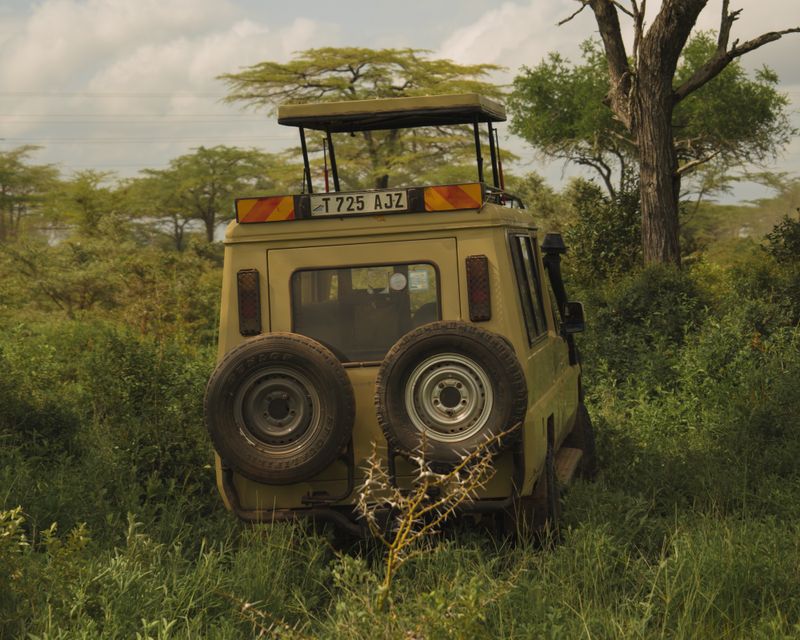
Four-wheel-drive capability is useful on uneven tracks and during wet conditions. The appropriate vehicle depends on the route, season and operator.
Viewing Position
A raised seating position can improve visibility over grass and vegetation. Open-sided safari configurations also make it easier to observe wildlife from several angles.
Photography Space
Photographers should ask about window access, roof configuration, beanbag support and seating layout before booking a vehicle.
Family Comfort
Families may value extra space, flexible stops and a private vehicle more than a particular vehicle brand.
Navigation
A capable guide and driver who knows the terrain can select alternative routes when conditions change rather than treating the itinerary as a fixed road map.
Reliability
Ask how vehicle maintenance and roadside support are handled. Remote safari travel requires an operator that plans for mechanical contingencies.
From Search to Booking
A Simple Way to Plan Your Masai Mara Safari
Start with the trip objective, then build the destination, accommodation and transport around it.
Step 1 — Choose the Objective
Decide whether the priority is Big Five viewing, the Great Migration, photography, a honeymoon, family travel, a quiet conservancy stay or a broader Kenya circuit. This determines which areas and seasons are worth considering.
Step 2 — Choose the Season
If migration river crossings are essential, start with the late July–September window. If resident wildlife, value or green landscapes matter more, compare the other seasons.
Step 3 — Choose the Area
Decide between the national reserve and the surrounding conservancies. Then select a camp whose exact position matches the planned game-viewing areas and activities.
Step 4 — Choose Transport
Compare road and bush flight options. For a short safari, protecting game-drive time may justify flying. For a private group, road travel may offer better value.
Step 5 — Compare Complete Prices
Check accommodation, meals, park or conservancy fees, vehicle, guide, transfers and activities. A price without its inclusions cannot be compared accurately with another quotation.
Step 6 — Reserve the Critical Components
Secure migration-season accommodation, preferred camp location, private vehicles and limited-capacity activities early. Then finalise the supporting transfers and coast extension.
Safari Value
What You Are Actually Paying For in a Masai Mara Safari
A safari price represents more than a hotel room. The useful comparison is the service and access included in the complete trip.
Accommodation is only one part of the cost. A safari package may also include a specialised vehicle, driver-guide, transfers, meals, reserve or conservancy fees and logistics between Nairobi and the Mara. When these elements are separated between suppliers, the advertised room rate can give a misleading impression of the final holiday cost.
Location also has economic value. A camp close to the area you want to explore can reduce transfer time and increase the hours available for wildlife viewing. A conservancy camp may cost more because the rate incorporates a conservation or land-use contribution and access to a lower-density tourism area. The relevant question is therefore not “Which camp is cheapest?” but “Which combination gives me the experience I am paying for?”
Guide quality is another part of the value equation. Two vehicles can spend the same six hours in the Mara and produce very different experiences because one guide recognises tracks, understands animal behaviour, knows the seasonal movement of wildlife and manages vehicle positioning responsibly.
For this reason, a good quotation should make the major components clear. Sun & Safari can structure a trip around the traveller’s priorities rather than forcing every visitor into the same accommodation, transport and activity combination.
First-Time Visitor Guide
What First-Time Masai Mara Travellers Should Prioritise
Do the important planning first: dates, nights, location, guide, transport and inclusions.
Get the Dates Right
If the trip is migration-led, start with the season and accept that nature does not follow a fixed event schedule. If migration is not essential, choose dates around budget and resident wildlife goals.
Choose Location Before Luxury
A five-star room in the wrong part of the ecosystem can be less useful than a simpler camp in the right location. Decide where you need access before comparing room features.
Protect Game-Drive Time
On a short trip, long transfers reduce wildlife time. Compare road and air options according to the number of nights available.
Do Not Chase a Checklist
Wildlife is unpredictable. A safari is stronger when time is spent observing natural behaviour rather than rushing from one species to another.
Understand the Area Rules
Activities differ between the national reserve and conservancies. Confirm whether walking, night drives, off-road viewing and other activities are actually included and permitted where you stay.
Compare Like for Like
Compare the same number of nights, same room standard, same transport basis, same fees and same activity inclusions before deciding which package represents better value.
Safari Quality
What a Well-Planned Masai Mara Itinerary Should Deliver
The objective is a coherent trip where transport, accommodation, wildlife time and activities support one another.
A well-planned itinerary gives the traveller enough time in the destination to respond to natural variation. It avoids spending the best game-drive hours on unnecessary transfers and places accommodation where it supports the intended wildlife objective. It also states clearly what is included so the traveller knows whether a quoted price covers fees, meals, transport and activities.
For migration travel, the itinerary should treat the river crossing as an opportunity rather than a guaranteed appointment. For a first-time safari, it should provide a broad introduction to the Mara’s wildlife. For families, it should reduce unnecessary logistical stress. For photographers, it should protect time and vehicle flexibility.
The strongest plans also leave room for the destination itself. A game drive can change because a guide finds a pride with cubs, elephants crossing a track or an unusual bird sighting. An itinerary that is too tightly packed can make these moments feel like delays. A flexible structure lets the guide follow wildlife while still meeting the day’s essential transfer requirements.
This is the practical reason to plan the Masai Mara as a destination with connected entities — reserve, conservancy, river, wildlife, accommodation, transport, season and traveller type — rather than as a single hotel booking.
Frequently Asked Questions
Masai Mara Safari FAQ
Direct answers to the questions that most affect itinerary decisions.
What is the Masai Mara famous for?
The Masai Mara is famous for its open savannah, high-quality large-mammal and predator viewing, the Big Five, the wider Serengeti–Mara ecosystem and the Great Migration’s Mara River crossings.
How many days do I need in the Masai Mara?
Three days and two nights is a practical first visit. Four or more days are better when a traveller wants a slower pace, conservancy activities, photography time or a migration-focused stay.
When is the best time to visit the Masai Mara?
There is no single best month for every traveller. Late July through September is the strongest general window for migration river-crossing interest, while other seasons can be excellent for resident wildlife, landscapes, lower demand or value.
Can I see the Great Migration on a specific date?
You can plan around the usual July–October Kenya migration window, but a river crossing cannot be guaranteed for a particular date. Herd movement responds to rainfall, grazing and local conditions.
Can I see the Big Five in the Masai Mara?
Lion, leopard, elephant and buffalo are established Mara species. Black rhino is much less common, so seeing all five during one trip is possible but should never be treated as guaranteed.
Is the Masai Mara a national park?
The Masai Mara National Reserve is a national reserve rather than a national park. Its management structure and permitted activities differ from those of Kenya’s centrally managed national parks.
What is the difference between a reserve and a conservancy?
The national reserve is the formal protected area, while surrounding conservancies are community or private land-management areas connected to wildlife conservation. Conservancies can have lower vehicle density and may permit walking or night drives under local rules.
Should I stay inside the reserve or in a conservancy?
Stay inside the reserve when direct reserve access is your main priority. Choose a conservancy when lower visitor density, walking, night drives or a smaller camp setting are more important. The best answer depends on your itinerary and the specific conservancy.
How do I get to the Masai Mara from Nairobi?
You can travel by road through the Great Rift Valley and Narok or fly from Nairobi Wilson Airport to a Mara airstrip. Flying saves time; driving can be more economical and includes the overland journey.
Is the Masai Mara good for families?
Yes. Families should select accommodation and activities according to children’s ages, room configuration, private-vehicle needs and any minimum-age rules for walking or night experiences.
Is a hot-air balloon safari worth adding?
It is useful for travellers who want an aerial perspective of the Mara at dawn. Because capacity is limited, it is better to arrange it with the main safari booking when it is a priority.
Can I combine the Masai Mara with Lake Nakuru?
Yes. Lake Nakuru can add a different Rift Valley lake environment and a strong rhinoceros and birding component. The combination is useful for travellers wanting more ecological variety.
Can I combine the Masai Mara with the Kenya coast?
Yes. Diani, Mombasa, Watamu and Lamu can all serve as post-safari coastal extensions, with the best choice depending on beach, culture, marine activities and trip length.
What should I pack for a Masai Mara safari?
Pack light layers, a warm early-morning layer, neutral clothing, sun protection, comfortable shoes, binoculars, camera equipment and personal essentials. Use soft luggage when your itinerary includes bush flights and confirm the current baggage allowance.
How much does a Masai Mara safari cost?
Cost depends on season, accommodation, number of nights, transport, fees, vehicle type and optional activities. Compare complete quotations with the same inclusions rather than comparing accommodation prices alone.
Is self-driving in the Masai Mara recommended?
Access rules vary by sector and can change. Most international visitors are better served by a professional guide and safari vehicle because navigation, wildlife etiquette and current road conditions all affect the quality of the experience.
What makes a good Masai Mara safari company?
Look for transparent inclusions, experienced guides, realistic migration expectations, clear accommodation locations, appropriate vehicle standards, responsible wildlife practices and an itinerary built around your actual travel objective.
What is a typical day on a Masai Mara safari?
Most days are structured around an early morning game drive, a midday rest and an afternoon or evening drive. The exact schedule depends on the camp, reserve or conservancy rules and the wildlife objective.
Is the Masai Mara suitable for wildlife photography?
Yes. Open plains, predators, large herbivores and strong morning and evening light make the Mara well suited to wildlife photography. A telephoto lens, stable support and an itinerary with sufficient game-drive time are useful.
What should I compare when choosing two Masai Mara safari packages?
Compare camp location, reserve versus conservancy setting, number of nights, game drives, vehicle basis, transport, park or conservancy fees, meals, optional activities and cancellation terms.
Plan Your Masai Mara Safari
Choose a migration-focused safari, a classic three-day Mara experience, a family itinerary, a honeymoon or a wider Kenya bush-and-beach route. Tell us your dates, priorities and preferred travel style.