Home›Destinations›Nairobi
Nairobi, Kenya — the Only Capital With a National Park Inside It
Nairobi is where nearly every Kenya safari and coast itinerary begins and ends. It is the sole national capital anywhere with a national park inside its municipal boundary, and it also holds an elephant orphanage, a Rothschild’s giraffe sanctuary, and the farmhouse where Karen Blixen wrote Out of Africa — three named entities worth a purposeful day or two before the rest of your trip.
Understanding Nairobi
What Is Nairobi, and What Is Its Role in a Kenya Trip?
Nairobi is the capital city of Kenya and the administrative, commercial, and transport centre of the country. It sits in the southern-central highlands, at an elevation of roughly 1,795 metres, on the edge of the Great Rift Valley. Within East Africa, Nairobi functions as the region’s largest city and one of the continent’s principal diplomatic and financial hubs — it hosts the only United Nations headquarters office located in the developing world, alongside the headquarters of the UN Environment Programme and UN-Habitat, and it is widely referred to as the “Silicon Savannah” for its position as East Africa’s leading technology and start-up centre.
For a Kenya safari operator, Nairobi’s defining attribute is not its size or its economy but its geography: the city’s southern edge directly borders Nairobi National Park, a fully functioning wildlife reserve with lion, rhino, giraffe, and zebra, inside the same municipal boundary as skyscrapers, embassies, and shopping malls. No other national capital on earth shares this arrangement. That single fact reframes what Nairobi is for a visitor — not simply a transit hub to be endured before the “real” safari begins, but a destination in its own right, containing several distinct attractions that do not exist, or exist differently, anywhere else in Kenya.
Nairobi’s elevation gives it a notably temperate, spring-like climate relative to the rest of Kenya. Mornings and evenings can be genuinely cool, daytime temperatures rarely become oppressive, and the city avoids both the heat of Tsavo and the humidity of the coast. Many first-time visitors arrive expecting the tropical image commonly associated with equatorial Africa and are surprised to find a climate closer to a mild highland city.
Nearly every Kenya itinerary touches Nairobi at least once, because international flights land at Jomo Kenyatta International Airport and most bush flights to safari camps depart from the separate, smaller Wilson Airport nearby. Rather than treat the resulting stopover as dead time, we build most itineraries around one or two purposeful Nairobi nights, timed to the specific attractions a traveller cares about most.

Enkare Nyirobi
The Maasai phrase from which “Nairobi” derives, meaning “place of cool waters,” referring to a river that ran through the site chosen for the original railway depot.
Uganda Railway
The British colonial railway project that established Nairobi in 1899 as a supply depot, chosen for its central location, flat terrain, and fresh water rather than any planned town design.
Kenya Independence, 1963
By the time Kenya became independent, Nairobi had already grown from a railway camp into the country’s administrative capital and East Africa’s largest urban centre.
Silicon Savannah
Nairobi’s informal nickname as East Africa’s leading technology hub, reflecting the city’s mobile-money origins and its concentration of start-ups and international tech offices.
Origin and Growth
How Did a Railway Depot Become East Africa’s Largest City?
Nairobi began in 1899 as a supply depot on the Uganda Railway, the line built by the British colonial administration to connect the port of Mombasa on the Indian Ocean coast to Lake Victoria. The site was chosen for practical reasons — a central position between the coast and the interior, relatively flat ground for a railway yard, and a nearby river providing fresh water — rather than for any long-term plan to build a capital city. The name itself comes from a Maasai phrase, “Enkare Nyirobi,” meaning “place of cool waters,” describing the river that ran through the site.
Within a few decades, the railway depot outgrew its original function. Nairobi became the administrative seat of British East Africa, then of the Kenya Colony, and from 1963 onward, the capital of independent Kenya. Its growth from railway camp to national capital took place within little more than a century, a compressed timeline that helps explain some of the city’s more unusual juxtapositions: a national park beside a financial district, a colonial-era farmhouse a short drive from a United Nations complex, a historic railway museum a few streets from glass office towers.
Today Nairobi is Kenya’s political, financial, and diplomatic centre, and East Africa’s largest metropolitan area. That scale is part of why the city rewards a planned visit rather than a rushed pass-through — the attractions that matter to a safari traveller are concentrated in specific southern suburbs, close to each other and to Nairobi National Park, while the wider city extends well beyond what any single-day itinerary needs to cover.
The Signature Attraction
What Is Nairobi National Park, and Why Is It Unlike Any Other Park?
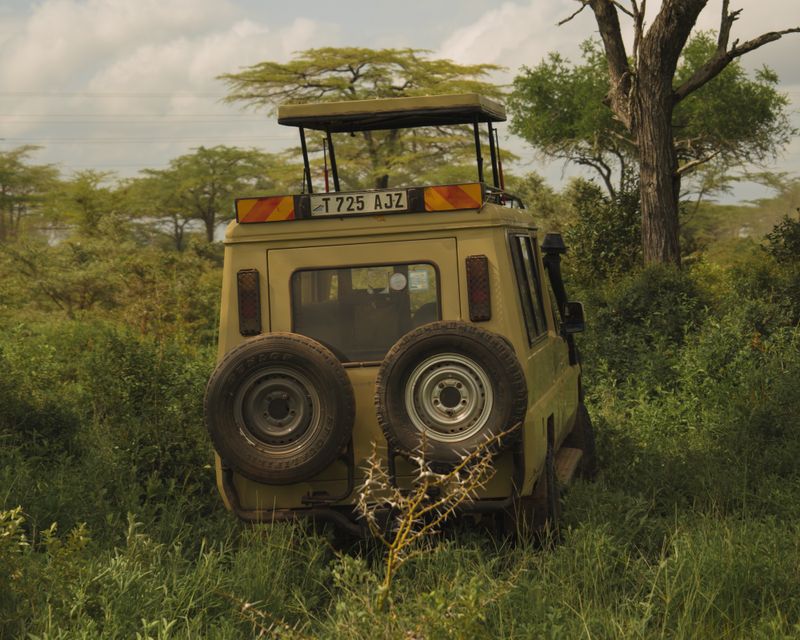
Nairobi National Park covers roughly 117 square kilometres immediately south of Nairobi’s city centre, its boundary sitting a mere 7 kilometres from the downtown skyscrapers. No other national park in the world sits this close to a capital city’s central business district, and the park is internationally known for a single image: a lion resting on open grassland, or a giraffe browsing an acacia tree, with Nairobi’s skyline rising directly behind them.
The park is administered by the Kenya Wildlife Service, the government body responsible for managing Kenya’s national parks and reserves, whose national headquarters sits at the park’s main gate — a placement that underscores the site’s symbolic importance to the country’s wider conservation programme. Nairobi National Park protects a resident population of lion, leopard, both black and white rhino, buffalo, giraffe, zebra, and more than 400 recorded bird species, all within a landscape compact enough to cover in a half-day game drive, making it one of the most time-efficient wildlife-viewing experiences available anywhere in Kenya.
One attribute distinguishes the park from every other major reserve in the country: it has no resident elephant population. Its southern boundary remains deliberately unfenced to preserve a migration corridor toward the Kitengela plains, connecting the park to the wider Athi-Kaputiei ecosystem rather than sealing it off as an isolated wildlife island. This is a conservation trade-off, not an oversight — elephants require far larger ranges than the park alone can support, and the open boundary lets other migratory species move between the park and the surrounding rangeland as they always have.
The park also carries a national conservation role beyond tourism. It hosts one of Kenya’s most important black rhino sanctuaries, contributing to the same recovery programme that Lake Nakuru National Park and the Ol Pejeta Conservancy support elsewhere in the country, and its accessibility has made it a significant site for public conservation education, with Kenyan school groups forming a meaningful share of annual visitors alongside international tourists.
Nairobi National Park, in Detail
Key Attributes of Nairobi National Park
The specific facts that shape how much time to plan for the park and what to expect from a visit.
Size and Location
117 square kilometres, bordering Nairobi’s southern edge, roughly 7 kilometres from the city centre and the closest major national park to any capital city in the world.
Resident Species
Lion, leopard, black rhino, white rhino, buffalo, giraffe, zebra, hippo, and more than 400 recorded bird species. No resident elephant population.
Managing Authority
The Kenya Wildlife Service, whose national headquarters sits at the park’s main gate, overseeing both the park and its associated conservation programmes.
Boundary Design
Fenced on its northern, eastern, and western sides against the city; deliberately unfenced on its southern side to preserve the Kitengela wildlife migration corridor.
Typical Visit Length
A half-day game drive, usually in the early morning, is enough to cover the park’s main circuits and see its resident species.
Best Time of Day
Dawn, both for wildlife activity during the cooler hours and to avoid Nairobi’s rush-hour traffic on the return drive into the city.
Beyond the Park
What Other Named Attractions Does Nairobi Contain?
Several sites here rank among the most memorable of an entire Kenya trip, independent of how much safari time follows.
Sheldrick Wildlife Trust
An elephant and rhino orphanage inside Nairobi National Park’s forest, rehabilitating animals rescued after losing their mothers to poaching, drought, or human-wildlife conflict. A single daily public visiting hour lets guests watch orphaned elephant calves take their mud bath and milk feed. Elephants raised here are eventually released into Tsavo East National Park once old enough to cope independently, a process that can take up to a decade given how long elephants remain dependent on maternal care.
The Giraffe Centre
A conservation centre in Nairobi’s Langata suburb dedicated to the endangered Rothschild’s giraffe, one of the rarer giraffe subspecies in East Africa. An elevated wooden platform lets visitors hand-feed giraffes at eye level, and the centre directly supports a captive breeding and release programme that has helped stabilise wild Rothschild’s giraffe populations across Kenya.
Karen Blixen Museum
The former farmhouse of Danish author Karen Blixen, who wrote the memoir Out of Africa here in the early twentieth century under the pen name Isak Dinesen. Now preserved as a museum with original furnishings and outbuildings, set against the Ngong Hills she described in the book’s opening lines. The Nairobi suburb of Karen takes its name from her.
Bomas of Kenya
A living cultural village presenting traditional homesteads from Kenya’s diverse ethnic communities, with an evening programme of traditional dance and music spanning the country’s cultural range in a single venue. A useful primer if a later stage of your itinerary includes cultural visits in the Mara or elsewhere, since it introduces Kenya’s ethnic diversity before you meet individual communities in the field.
Karura Forest
A genuine indigenous forest within Nairobi’s city limits, with waterfalls, cycling and walking trails, and an escape from urban traffic. A favourite among Nairobi residents and an underused option for visitors wanting fresh air without leaving the city, particularly on a free morning before an afternoon flight.
Maasai Market
A rotating open-air market held at different Nairobi locations depending on the day of the week, offering beadwork, carvings, textiles, and crafts from across Kenya. Bargaining is expected and part of the experience, and it remains one of the best places in the country to buy souvenirs at fair value rather than inflated airport-shop prices.
Elephant and Rhino Rescue
How Does the Sheldrick Wildlife Trust Rehabilitate Orphaned Elephants?
The Sheldrick Wildlife Trust operates its Nairobi nursery inside Nairobi National Park’s forest, close to the park’s main gate. Orphaned elephant and rhino calves arrive here after losing their mothers to poaching, drought, or conflict with humans elsewhere in Kenya, and the nursery hand-raises them, feeding specially formulated milk on a schedule that mimics natural elephant nursing, until they are old enough to begin the transition back to the wild.
The public visiting hour, from 11am to 12pm daily, is timed to coincide with the calves’ mud bath and milk feed, giving visitors the chance to watch the animals at close range while keepers narrate each individual’s rescue story. Because it is a single daily slot shared among all visitors that day, advance booking is recommended, and Nairobi day itineraries here are usually built around this specific window rather than around visitor preference.
Once elephants reach an appropriate age and stage of development, the Trust relocates them to its reintegration units in Tsavo East National Park, where they gradually rejoin wild elephant herds. The relationship between the Nairobi nursery and Tsavo is direct: an elephant’s journey through the Trust’s programme typically begins in this Nairobi facility and ends, years later, as a free-ranging animal in Tsavo’s much larger wilderness.
Rothschild’s Giraffe
One of several recognised giraffe subspecies, distinguished by the absence of markings below the knee, historically reduced to a small number of individuals before conservation intervention.
African Fund for Endangered Wildlife
The conservation organisation that established the Giraffe Centre in the 1970s specifically to breed and reintroduce Rothschild’s giraffe to protected areas across Kenya.
Feeding Platform
An elevated wooden walkway built to the giraffe’s own head height, allowing visitors to hand-feed pellets directly rather than viewing the animals from ground level.
Langata
The Nairobi suburb where the Giraffe Centre sits, also home to the Giraffe Manor hotel and within a short drive of the Sheldrick Wildlife Trust.
Rothschild’s Giraffe Conservation
Why Does Nairobi Have a Dedicated Giraffe Sanctuary?
The Giraffe Centre exists because the Rothschild’s giraffe, one of the more distinct giraffe subspecies found in East Africa, had declined to a small surviving population by the mid-twentieth century, largely due to habitat loss across its range in Kenya and Uganda. The Africa Fund for Endangered Wildlife established the centre in Nairobi’s Langata suburb specifically to breed Rothschild’s giraffe in a controlled setting and reintroduce individuals to protected areas including Lake Nakuru National Park and other conservancies where the subspecies had disappeared.
The centre’s defining feature is its elevated wooden feeding platform, built to match a giraffe’s natural head height, which lets visitors hand-feed pellets directly to the animals at eye level — an interaction not offered at any of Kenya’s larger parks, where giraffe are viewed from a vehicle at a distance. The experience is brief, usually thirty minutes to an hour, and works well paired with a same-day visit to the nearby Sheldrick Wildlife Trust, since both sit within Nairobi’s southern Karen and Langata suburbs.
Beyond the visitor experience, the centre’s breeding programme has had a measurable conservation effect: Rothschild’s giraffe populations reintroduced through this and related programmes now persist in several Kenyan parks and reserves that had previously lost the subspecies entirely, making the Giraffe Centre one of the more direct examples in Nairobi of tourism revenue funding an active species-recovery effort rather than simply observation.
Out of Africa’s Nairobi Setting
Who Was Karen Blixen, and Why Does Nairobi Have a Suburb Named After Her?
Karen Blixen was a Danish author who lived on a coffee farm at the base of the Ngong Hills, southwest of Nairobi’s city centre, between 1914 and 1931. Writing under the pen name Isak Dinesen, she published Out of Africa in 1937, a memoir describing her years running the farm, her relationships with the Kikuyu community living on and around the land, and the East African landscape she came to regard as home. The book, and the 1985 film adaptation shot partly on location in Kenya, brought international attention to this specific corner of Nairobi.
The farmhouse itself survives as the Karen Blixen Museum, preserved with original furnishings, and the surrounding suburb — now one of Nairobi’s most sought-after residential areas — takes its name directly from her. The museum sits with a clear view toward the Ngong Hills, the same hills Blixen described in the book’s opening lines, giving visitors a direct link between the physical landscape and the text that made it famous internationally.
A visit here typically runs forty-five minutes to an hour, guided through the house’s rooms and grounds, and pairs naturally with the Giraffe Centre and Sheldrick Wildlife Trust as the third stop on a single Nairobi day, since all three sit within the same southern cluster of suburbs.
Out of Africa, 1937
Karen Blixen’s memoir of her years farming coffee near Nairobi, published under the pen name Isak Dinesen and later adapted into a 1985 film.
Ngong Hills
A range of hills southwest of Nairobi, visible from the Karen Blixen Museum grounds and referenced in the opening lines of Out of Africa.
Karen, Nairobi
The Nairobi suburb named after Karen Blixen, now home to the museum, the Giraffe Centre, and some of the city’s most established residential properties.
1985 Film Adaptation
An Academy Award-winning film adaptation of Out of Africa, partly filmed on location in Kenya, which broadened international awareness of Blixen’s story and Nairobi’s setting.
Kenya’s Ethnic Communities, Introduced
What Does Bomas of Kenya Show Visitors About the Country’s Diversity?
Kenya is home to more than forty recognised ethnic communities, each with distinct language, dress, architecture, and tradition. Bomas of Kenya, located on Nairobi’s southern edge near Nairobi National Park, presents this diversity through reconstructed traditional homesteads — the word “boma” itself means homestead or enclosure in several Bantu languages — representing communities from across the country in a single accessible site.
The venue’s evening programme features traditional dance and music performed by a resident troupe, drawing on repertoire from multiple Kenyan communities rather than a single regional tradition. For visitors whose itinerary later includes a cultural village visit in the Masai Mara or elsewhere, a Bomas visit in Nairobi provides useful context beforehand — an overview of Kenya’s ethnic range before meeting one specific community in the field.
Karura Forest, by contrast, offers no cultural programming at all — it is a 1,041-hectare tract of indigenous forest inside Nairobi’s city limits, threaded with waterfalls, caves once used during Kenya’s independence struggle, and marked trails for walking and cycling. It functions as a genuine escape from Nairobi’s traffic and density, popular with residents on weekend mornings, and works well as a low-key final activity before an afternoon flight rather than as a wildlife or cultural experience in its own right.
Understanding the City’s Layout
Nairobi’s Key Suburbs and What Each Offers
Nairobi’s relevant attractions and hotels cluster into a small number of named suburbs. Knowing which one you are staying in shapes what is realistically reachable in a day.
Karen
Named after Karen Blixen, this leafy southwestern suburb holds the Karen Blixen Museum, sits close to the Giraffe Centre, and is popular for quieter, garden-set hotels near Nairobi National Park’s western edge.
Langata
Adjoining Karen, home to the Giraffe Centre and the Sheldrick Wildlife Trust nursery, and the closest residential suburb to Nairobi National Park’s main gate.
Westlands
A commercial and residential district northwest of the city centre, known for shopping malls, restaurants, and nightlife, favoured by travellers prioritising city amenities over proximity to wildlife sites.
Nairobi CBD
The central business district, home to government buildings, the Nairobi Railway Museum, and the city’s financial institutions, generally more practical for a business stopover than a leisure one.
Gigiri
The suburb hosting the United Nations Office at Nairobi, including UN Environment Programme and UN-Habitat headquarters, alongside several embassies.
Kilimani
A residential and increasingly commercial district between the city centre and Karen, popular for mid-range accommodation with reasonable access to both.
Species Found in the Park
Nairobi National Park’s Resident Wildlife
The specific species most visitors come to see, and where each fits within the park’s ecosystem.
Lion
Several prides are resident in the park, most often found in the open grassland areas toward the centre and south, making early-morning drives the most reliable time to find them active.
Black Rhino
The park holds one of Kenya’s more significant black rhino populations, part of a national recovery programme shared with Lake Nakuru National Park and Ol Pejeta Conservancy.
White Rhino
Present alongside black rhino, distinguishable by a broader, squared mouth adapted for grazing rather than the black rhino’s browsing habit.
Leopard
Present but naturally elusive, more often spotted resting in trees along the park’s riverine forest sections than out in open grassland.
Buffalo
Found in herds across the park’s grassland, one of the more commonly sighted species on a standard game drive circuit.
Giraffe and Zebra
Both grazing species are reliably seen across the park’s open plains, frequently in the same frame as the city skyline that makes the park internationally recognisable.
Hippo
Resident in the park’s river sections, typically viewed from designated hippo pool viewpoints along the Athi and Mbagathi rivers that form part of the park’s boundary.
Birdlife
Over 400 recorded species, ranging from ostrich on open grassland to a wide range of raptors, making the park a significant birding site independent of its mammal population.
Further Landmarks
Other Named Sites Within Nairobi
Beyond the wildlife and cultural sites already covered, Nairobi holds several further landmarks relevant to specific traveller interests. The National Museum of Kenya, in the city centre, houses the country’s most significant collection of prehistoric human fossils, including specimens connected to the Rift Valley’s role in early human evolutionary research, alongside cultural and natural history exhibits covering the whole country.
The Nairobi Railway Museum, close to the city centre, documents the Uganda Railway that founded the city in 1899, with preserved locomotives and carriages from the colonial era on display — a direct physical link to the origin story described earlier in this guide.
Gigiri, in Nairobi’s northeast, hosts the United Nations Office at Nairobi, the only major UN headquarters complex located in the developing world, home to the UN Environment Programme and UN-Habitat. While not a typical tourist stop, its presence underscores Nairobi’s standing as a genuine diplomatic and international capital, distinct from its role as a safari gateway.
A Historical Footnote Worth Knowing
Why Is Nairobi Considered the Birthplace of the Modern Safari?
The word “safari” is Swahili for “journey,” and Nairobi played an outsized role in turning it into the global tourism concept recognised today. In the early twentieth century, as the Uganda Railway opened British East Africa to settlement and travel, Nairobi rapidly became the organisational hub for expeditions into the surrounding wilderness — initially built around trophy hunting rather than photography — departing with elaborate logistics of porters, guides, and supplies.
Figures such as Theodore Roosevelt, who led a major expedition through British East Africa in 1909, and later Ernest Hemingway, whose writing romanticised the East African safari for a global readership, both organised and departed their expeditions from Nairobi. Their association with the city cemented Nairobi’s place in the popular imagination as the gateway to African adventure and wildlife, decades before mass tourism made the region broadly accessible.
The shift from hunting to photography-based tourism accelerated through the mid-twentieth century, and by Kenya’s independence in 1963, Nairobi had already established the infrastructure — outfitters, guides, vehicle fleets, and logistical expertise — that still underpins the modern safari industry. A Nairobi night before an early flight to the Mara follows the same essential pattern travellers have followed from this city for well over a century.

How Nairobi Connects to the Rest of Kenya
Nairobi as the Hub of Every Kenya Itinerary
Nairobi’s two airports link the city directly to nearly every other safari and coast destination in this guide. Understanding those connections helps explain why almost no Kenya trip can avoid Nairobi entirely.
Masai Mara
Roughly five to six hours by road, or under an hour by bush flight from Wilson Airport. Kenya’s best-known reserve and the setting of the annual wildebeest migration.
Amboseli
A short bush flight from Wilson Airport, or a three-to-four-hour drive south. Known for large elephant herds photographed against Mount Kilimanjaro across the Tanzanian border.
Tsavo East & West
Reachable by road or air from Nairobi, and the release site for elephants raised at the Sheldrick Wildlife Trust nursery in Nairobi National Park.
Lake Nakuru
Around two and a half hours by road through the Rift Valley, home to another significant black and white rhino sanctuary alongside flamingo populations.
Samburu
Reached by road or bush flight north of Nairobi, home to the “Samburu Special Five” species found in this drier northern ecosystem but absent from parks further south.
Ol Pejeta & Laikipia
A conservancy north of Nairobi hosting the world’s last northern white rhinos, reachable by road through Nanyuki or by light aircraft.
Lake Naivasha & Hell’s Gate
Under two hours from Nairobi by road, making both a feasible day trip or the first overnight stop on a Rift Valley circuit heading further north or west.
The Coast
Diani, Watamu, Malindi, and Lamu are all reached by flights departing Nairobi’s airports, making the city the natural hinge point between a safari and a beach stay.
Logistics
Understanding Nairobi’s Two Airports
A detail that surprises many first-time visitors, and one worth understanding before you travel.
Jomo Kenyatta International (JKIA)
Kenya’s main international gateway, where virtually all long-haul flights from Europe, the Middle East, and beyond arrive and depart, located roughly 15 kilometres southeast of the city centre.
Wilson Airport
A separate, smaller airport across the city, dedicated to domestic and bush flights to safari destinations like the Masai Mara, Amboseli, and Samburu — one of the busiest small-aircraft airports in Africa by daily flight movements.
Why This Matters for Your Itinerary
Transferring between the two airports takes 45 minutes to over an hour depending on Nairobi traffic, which is precisely why most itineraries include at least one Nairobi overnight rather than attempting a same-day connection between an international arrival and a bush flight departure.
Before You Arrive
Entry Requirements for Arriving at JKIA
Most nationalities require an approved Kenya Electronic Travel Authorization before boarding a flight to Jomo Kenyatta International Airport. The authorization is applied for online in advance of travel, and approval is not guaranteed to be instant, so it should be handled well before departure rather than at the airport itself.
Once through immigration at JKIA, most travellers either transfer directly to a Nairobi hotel for an overnight stay, or, on itineraries with a tighter connection window, transfer across the city to Wilson Airport for a same-day onward bush flight. Which approach makes sense depends on arrival time, flight schedule, and how much of Nairobi itself a traveller wants to see.
Communication in Nairobi
What Languages Will You Hear and Use in Nairobi?
English and Swahili are Kenya’s two official languages, and both are used interchangeably across Nairobi in daily life, government, and business. Nearly all tourism-facing staff — hotel reception, guides, drivers, restaurant staff — communicate fluently in English, so language is rarely a practical barrier for visitors, even away from the most tourist-oriented parts of the city.
Swahili itself functions as Kenya’s lingua franca, understood across the country regardless of a person’s first language, and learning a handful of basic Swahili phrases — greetings, “thank you,” numbers for market bargaining — is a small gesture that is generally well received without being expected. Nairobi residents also commonly speak Sheng, an informal urban blend of Swahili, English, and words drawn from several of Kenya’s other languages, though visitors are unlikely to need it beyond recognising it as a distinct, city-specific way of speaking.
Beyond English and Swahili, Nairobi’s population reflects the country’s wider linguistic diversity, with speakers of Kikuyu, Luo, Luhya, Kamba, and Kenya’s many other first languages all present in the city — a linguistic mix that mirrors the ethnic diversity presented more formally at Bomas of Kenya.
English
One of Kenya’s two official languages, used fluently by nearly all tourism-facing staff across Nairobi’s hotels, tours, and restaurants.
Swahili
Kenya’s other official language and its lingua franca, understood nationwide regardless of a speaker’s first language.
Sheng
An informal urban language blending Swahili, English, and other Kenyan languages, associated specifically with Nairobi’s streets and youth culture.
Kikuyu, Luo, Luhya, Kamba
Among the first languages of communities represented across Nairobi’s population, reflecting the ethnic diversity also presented at Bomas of Kenya.
Photographing People
Ask before photographing individuals directly, particularly at the Maasai Market and Bomas of Kenya, where sellers and performers are the subject rather than the backdrop.
Photographing Wildlife
Standard safari photography etiquette applies inside Nairobi National Park — no flash near animals, and staying inside the vehicle except at designated viewpoints.
Government and Security Sites
Photography is restricted around certain government buildings and security installations in the city centre; signage generally makes this clear where it applies.
Dress at Cultural Sites
Modest, comfortable clothing is appropriate at Bomas of Kenya and the Karen Blixen Museum; no specific dress code is enforced, but conservative choices are generally more comfortable.
Practical Courtesy Notes
Photography and Etiquette Worth Knowing in Advance
At the Maasai Market and similar craft settings, asking before photographing an individual seller directly is good practice, distinct from photographing the market or its goods more generally, which is normally uncontroversial. At Bomas of Kenya, performers are part of a formal programme and photography during performances is typically welcomed, though flash photography can be disruptive and is usually discouraged.
Inside Nairobi National Park, standard safari photography practice applies: remaining inside the vehicle except at designated viewpoints, avoiding flash near animals at close range, and keeping a respectful distance regardless of how habituated a particular animal appears to vehicle traffic. These norms are the same ones that apply in every other Kenyan park covered in this guide, so a Nairobi game drive is also a reasonable place to establish good habits before a longer safari further afield.
A small number of locations around Nairobi’s government buildings and security installations restrict photography, generally indicated by visible signage; this is not something visitors typically encounter at the tourist attractions covered in this guide, but it is worth being aware of if a Nairobi day extends into the city centre itself.
Making the Most of Limited Time
A Well-Spent Single Day in Nairobi
For travellers with just one full day between flights, this sequence covers the city’s genuine highlights without feeling rushed.
Early Morning — Nairobi National Park
A dawn game drive takes advantage of the coolest hours and the best wildlife activity, typically wrapping up by mid-morning with time to spare for the rest of the day. Starting this early also avoids Nairobi’s rush-hour traffic on the return journey into town.
Mid-Morning — Sheldrick Wildlife Trust
Timed around the single daily public visiting hour, this stop fits naturally after an early park visit and before lunch, given the two sites sit a manageable distance apart on Nairobi’s southern edge.
Early Afternoon — The Giraffe Centre
A short, easy visit that pairs naturally with the nearby Sheldrick Trust, both sitting in Nairobi’s Karen and Langata suburbs, allowing a relaxed lunch stop along the way.
Late Afternoon — Karen Blixen Museum
A quieter, reflective close to the daytime programme, just minutes from the giraffe and elephant experiences, with the Ngong Hills visible from the grounds in the softening afternoon light.
Evening — Bomas of Kenya or a Nairobi Restaurant
An evening cultural performance at Bomas, or a relaxed dinner in one of Nairobi’s genuinely excellent restaurants, closes out a full day before an early safari departure the next morning.
With a Second Night
Extending to Two Days in Nairobi
A second day makes room for the sites a single day rarely fits.
Morning — Karura Forest
A walk or cycle through indigenous forest, waterfalls, and quiet trails within the city limits, a genuine contrast to the previous day’s game drive and a favourite among Nairobi residents themselves.
Midday — Maasai Market
A rotating open-air craft market, timed to whichever Nairobi location is hosting it that day, for beadwork, carvings, and textiles ahead of onward travel.
Afternoon — Onward Transfer to Wilson Airport
With logistics built into the schedule, the second afternoon connects cleanly into a bush flight departure toward the Masai Mara, Amboseli, Samburu, or another safari destination.
Maasai Beadwork
Brightly coloured beaded jewellery and accessories associated with Maasai craftwork, among the most commonly represented items across Nairobi’s markets.
Kamba Wood Carving
Carved wooden sculptures and figures, a craft tradition associated with the Kamba community of eastern Kenya, widely sold alongside Maasai items at Nairobi’s markets.
Kisii Soapstone
Carved stone sculptures and bowls made from soapstone quarried near Kisii in western Kenya, another regularly represented craft tradition at Nairobi’s markets.
Rotating Market Locations
Nairobi’s Maasai Market moves between several fixed locations across the week rather than operating from one permanent site, so its location on a given day depends on the weekly schedule.
Craft Traditions Represented in Nairobi
What Will You Actually Find at the Maasai Market?
Despite its name, the Maasai Market represents craft traditions from well beyond the Maasai community alone. Maasai beadwork sits alongside Kamba wood carving from eastern Kenya, Kisii soapstone sculpture from the west of the country, Turkana basketry from the north, and textiles and fabric goods drawn from across Kenya’s ethnic communities — the market functions as a single access point to crafts that would otherwise require visiting several different regions to find.
The market does not operate from one fixed permanent site. Instead, it rotates through several Nairobi locations across the week, a detail worth confirming against the current schedule before planning a visit around it, since the specific venue on any given day depends on this rotation rather than a single address.
Bargaining is the expected and normal mode of transaction here, distinct from the fixed pricing found in curio shops or hotel gift stores. Asking prices are typically set with negotiation in mind, and a reasonable counter-offer, delivered good-naturedly, is part of how prices are actually settled — a cultural norm worth knowing before arriving rather than discovering mid-negotiation.
Where Nairobi’s Tourism Revenue Goes
How Does Visiting Nairobi’s Attractions Fund Conservation Elsewhere?
Entry fees to Nairobi National Park are collected by the Kenya Wildlife Service and form part of the funding base for the agency’s operations across all of Kenya’s national parks and reserves, not solely Nairobi’s. This means a Nairobi National Park visit indirectly supports the same conservation infrastructure protecting the Masai Mara, Amboseli, Tsavo, and Lake Nakuru, even though the visitor experience itself is confined to Nairobi.
The Sheldrick Wildlife Trust operates on a comparable model specific to its own programme: visitor fees and adoption donations at the Nairobi nursery directly fund the rescue, hand-rearing, and eventual release of orphaned elephants into Tsavo East National Park, creating a direct financial link between a Nairobi morning and a conservation outcome realised years later and hundreds of kilometres away.
The Giraffe Centre’s breeding and reintroduction programme for the Rothschild’s giraffe follows a similar pattern, with visitor revenue supporting a species-recovery effort whose results are visible not in Nairobi itself but in the parks and conservancies where reintroduced giraffe populations now persist. Understood this way, a Nairobi day is not conservation-adjacent tourism — it is a direct, if indirect-feeling, contribution to wildlife protection across the rest of the country.
Matching Attractions to Interests
Which Nairobi Attractions Fit Your Specific Interests?
With more named attractions in Nairobi than a single day can comfortably cover, the right selection depends on what a traveller actually wants from the stop.
Wildlife-First Travellers
Prioritise Nairobi National Park for the game drive itself, then the Sheldrick Wildlife Trust for the closest thing Nairobi offers to an elephant encounter.
Families With Young Children
The Giraffe Centre’s hand-feeding platform and the Sheldrick Trust’s mud-bath hour are both built around close, safe animal interaction that keeps children genuinely engaged.
Literature and History Readers
The Karen Blixen Museum rewards travellers who have read or seen Out of Africa, offering a direct physical connection to the text and film.
Culture-Focused Travellers
Bomas of Kenya offers the broadest single-site introduction to Kenya’s ethnic diversity, useful ahead of community visits later in a Mara or Samburu itinerary.
Travellers Wanting Rest, Not Sightseeing
Karura Forest offers a quiet, low-effort morning of walking or cycling, better suited to jet-lag recovery than a packed sightseeing schedule.
Shoppers and Souvenir Hunters
The Maasai Market is the strongest single stop for authentic, fairly priced Kenyan crafts, best timed against its weekly rotating schedule.
Is It Right for You?
Who Gets the Most Out of Nairobi Time?
Unlike the other destinations in this guide, the real question isn’t “should I visit Nairobi” — nearly every itinerary passes through it — but how to use the time well.
Because Nairobi functions primarily as a gateway rather than a headline destination, the most common mistake first-time visitors make is under-planning it entirely, treating it as a place to sleep between flights. Travellers who get the most value from Nairobi approach it with the same intentionality they bring to planning the Mara or the coast — a short but considered stop, not an afterthought.
Jet-Lagged International Arrivals
A gentle first day of wildlife and culture close to your hotel, rather than an immediate bush flight, gives you a chance to adjust before the more physically demanding early mornings of a proper safari begin.
Families With Children
The Giraffe Centre and Sheldrick Trust in particular are genuinely engaging for children, offering hands-on animal encounters in a gentler, more controlled setting than an open safari vehicle.
Culture & History-Focused Travellers
The Karen Blixen Museum and Bomas of Kenya offer a depth of Kenyan history and cultural context that pure wildlife destinations further afield generally cannot provide within a single, accessible location.
Travellers on very tight schedules who genuinely cannot spare an extra day can transit directly between JKIA and Wilson Airport with careful flight timing, though we generally advise against same-day connections given Nairobi’s unpredictable traffic and the value of a short rest before a demanding safari begins.
A Regional Medical Hub
Why Does Nairobi Matter for Medical Evacuation and Care?
Nairobi hosts some of East Africa’s most established private hospitals, including facilities with international accreditation and specialist departments not available in smaller Kenyan towns or across much of the wider region. This matters for safari travel beyond Nairobi itself: flying doctor and medical evacuation services operating across Kenya’s parks and reserves are based out of Nairobi, using Wilson Airport as their operational hub, which is one of the reasons travel insurance with evacuation cover is routinely recommended for any Kenya safari, not only for remote parks far from Nairobi.
For a Nairobi stay itself, this concentration of medical infrastructure means competent care is close at hand should anything arise during the city portion of a trip, in contrast to more remote safari camps where the nearest serious medical facility may be a flight away. It is a background fact rather than something that should affect day-to-day planning, but it is part of why Nairobi’s role in a Kenya itinerary extends beyond tourism into practical trip safety.
Flying Doctors Service
An air ambulance and medical evacuation service operating across Kenya’s parks and reserves, based out of Nairobi and using Wilson Airport as its operational hub.
Private Hospitals
Nairobi hosts several internationally accredited private hospitals with specialist departments unavailable in smaller towns elsewhere in Kenya.
Travel Insurance
Evacuation cover is routinely recommended for Kenya safaris given how far some parks sit from advanced medical facilities, most of which are concentrated in Nairobi.
Yellow Fever Documentation
Travellers arriving from certain countries may be asked for proof of yellow fever vaccination at Nairobi entry points, a requirement worth confirming ahead of travel.
Before You Go
Practical Information for Your Nairobi Stay
A few specifics that make Nairobi feel straightforward from the moment you land.
Climate
Nairobi’s altitude keeps temperatures mild year-round, typically ranging from the mid-teens Celsius overnight to the mid-twenties during the day — pack a light jacket for evenings regardless of when you visit.
Getting Around
Private transfers are strongly recommended over public transport or hailing taxis independently; Nairobi’s traffic can be unpredictable, and a pre-arranged driver removes the guesswork from your day’s timing.
Where to Stay
Karen and Langata, near Nairobi National Park and most key attractions, are popular for their leafy, quieter atmosphere, while hotels closer to the city centre and Westlands suit travellers prioritising restaurants and nightlife over proximity to wildlife sites.
Dining
Nairobi’s restaurant scene spans everything from Kenyan nyama choma grill houses to internationally trained fine dining — a pleasant surprise for visitors expecting only safari-lodge buffets.
Health
Nairobi’s altitude and climate mean malaria risk is considered low within the city itself, unlike the coast and lower-altitude safari parks, though standard travel health precautions still apply throughout your visit.
Money and Connectivity
The Kenyan shilling is the local currency, with M-Pesa mobile money used everywhere alongside cards and cash. Nairobi has reliable 4G coverage across the areas most visitors stay in.
Timing Your Visit
Does Nairobi Have a Best Time of Year to Visit?
Because Nairobi’s attractions are largely indoor, forested, or contained within a single compact park, the city is far less seasonal than destinations like the Masai Mara, where the timing of the wildebeest migration drives most planning decisions. Nairobi National Park can be visited comfortably in any month, and the Sheldrick Wildlife Trust, Giraffe Centre, and Karen Blixen Museum operate on consistent daily schedules year-round.
The main seasonal variable is rainfall. Nairobi’s long rains generally fall between March and May, and shorter rains between October and December, both of which can affect road conditions on the park’s unpaved circuits and reduce visibility on early game drives. Outside these windows, the city’s dry, mild climate makes almost any month workable for the itineraries described here.
Month by Month
Nairobi’s Climate Across the Year
A general guide to what to expect from Nairobi’s weather in any given month, useful for packing and for timing outdoor sections of a Nairobi day.
January & February
Generally the driest, sunniest stretch of the year in Nairobi, with clear mornings well suited to an early game drive in Nairobi National Park.
March, April & May
Nairobi’s long rains fall in this window, often as heavy afternoon downpours following clear mornings — early activities are usually unaffected if scheduled before midday.
June, July & August
Nairobi’s coolest months, with overnight temperatures sometimes dropping into single digits Celsius; a warmer layer is worth packing for early starts.
September
A transitional month between the cool mid-year period and the short rains, generally dry with mild, comfortable daytime temperatures.
October, November & December
Nairobi’s short rains typically arrive here, usually lighter and more localised than the long rains, with December and early January often clearing into a drier festive period.
Nairobi’s Wider Role
How Does Nairobi Compare to Other East African Capitals?
Within East Africa, Nairobi is the largest city by population and the region’s principal financial and diplomatic centre, ahead of Kampala, Dar es Salaam, and Kigali in terms of international connectivity and economic scale. Its position as the region’s aviation hub reinforces this role: Jomo Kenyatta International Airport handles more long-haul connections than any other airport in East Africa, which is a direct reason so many regional and cross-border safari itineraries, including combined Kenya-Tanzania trips, route through Nairobi even when the traveller’s main interest lies elsewhere in the region.
Nairobi’s standing as a technology and start-up hub, often summarised by the nickname “Silicon Savannah,” traces back in part to Kenya’s early and widespread adoption of mobile money through the M-Pesa system, which reshaped everyday commerce across the country well before mobile payments became common elsewhere in the world. That reputation now extends to a broader concentration of international technology offices and venture-backed companies based in the city, alongside its longer-established roles in banking, diplomacy, and regional trade.
For a visitor arriving purely for wildlife tourism, none of this civic and economic context changes the practical itinerary, but it explains why Nairobi feels distinctly more metropolitan than the small towns bordering most of Kenya’s other national parks — the city functions on a genuinely different scale from the destinations that follow it on a typical safari route.
Jomo Kenyatta International Airport
East Africa’s busiest airport by long-haul international connections, reinforcing Nairobi’s role as the region’s principal gateway.
M-Pesa
Kenya’s mobile money system, launched in Nairobi, credited with driving the country’s early reputation for financial technology innovation.
UN Office at Nairobi
The only major United Nations headquarters complex located in the developing world, based in Nairobi’s Gigiri suburb.
Kenya-Tanzania Cross-Border Safaris
Combined itineraries linking the Masai Mara to Tanzania’s Serengeti frequently begin or end in Nairobi given its superior international flight connectivity.
Getting Around and Where to Base Yourself
Transport Options and Accommodation Types Within Nairobi
Private vehicle transfer is the standard way to move between Nairobi’s attractions, hotels, and airports, and it is the option we arrange as part of every Nairobi itinerary. A dedicated driver and vehicle removes the need to negotiate taxi fares, navigate unfamiliar routes, or account for Nairobi’s variable traffic patterns, and it allows a fixed schedule to be built around specific timed elements such as the Sheldrick Wildlife Trust’s single daily visiting hour.
Ride-hailing apps operate widely across Nairobi and are a reasonable option for short, independent trips within a single suburb, though they are less practical for a full day covering several spread-out attractions with fixed timing. Public matatu minibuses serve most of the city but are generally not recommended for visitors unfamiliar with Nairobi’s routes and are not part of any itinerary we build.
Accommodation in Nairobi ranges from boutique lodges set within private gardens in Karen and Langata, close to Nairobi National Park’s boundary, to larger international hotel brands concentrated in Westlands and the city centre, to serviced apartments in Kilimani for longer stays or business-adjacent trips. Which category suits a given traveller depends mainly on whether wildlife proximity or urban amenities matter more for that particular stop on the itinerary.
Private Transfer
The standard arrangement for Nairobi itineraries, built around fixed timing for sites like the Sheldrick Wildlife Trust and its single daily visiting hour.
Ride-Hailing Apps
Widely available across Nairobi, practical for short independent trips within one suburb, less suited to a multi-stop day with fixed appointment times.
Boutique Lodges (Karen & Langata)
Garden-set properties near Nairobi National Park’s boundary, favoured by travellers prioritising wildlife proximity and a quieter atmosphere.
International Hotels (Westlands & CBD)
Larger branded properties suited to travellers prioritising restaurants, nightlife, and central-city convenience over proximity to wildlife sites.
A Note on Expectations
What Nairobi Is Not a Substitute For
Nairobi National Park is a genuine, credible wildlife experience, but it is not a substitute for the scale of the Masai Mara, Amboseli, or Tsavo. Its compact size means sightings are concentrated in a smaller area, its species list excludes elephant, and its proximity to the city means it will never offer the same sense of untouched wilderness as a reserve several hours from the nearest urban centre. Travellers expecting a Nairobi game drive to replace a longer safari further afield are usually setting the wrong expectation for what the park is built to deliver.
What Nairobi does offer, and what the destinations further afield generally cannot, is efficiency and access: a credible wildlife encounter, an internationally significant conservation story at the Sheldrick Wildlife Trust, a literary and historical landmark at the Karen Blixen Museum, and a genuine introduction to Kenya’s cultural diversity at Bomas of Kenya, all reachable within a single day without the flight time or road time a comparable set of experiences would require anywhere else in the country. Framed this way, rather than as a lesser version of the Mara, Nairobi’s real value on a Kenya itinerary becomes clear.
Book Your Nairobi Time
Tours and Packages Built Around Nairobi
These specific tours and multi-day packages either begin in Nairobi, include Nairobi as part of a wider circuit, or depart directly from the city.
Nairobi City & National Park Day Tour
A single-day itinerary combining Nairobi National Park with the city’s other core attractions, built for exactly the kind of layover described throughout this guide.
View Tour →Lake Naivasha Boat Safari & Crescent Island Walk
A short drive from Nairobi through the Rift Valley, pairing a boat safari with a walking safari on Crescent Island — a practical add-on for a second Nairobi-area day.
View Tour →Hell’s Gate Cycling & Hiking Adventure
An active day near Lake Naivasha, close enough to Nairobi to combine with the boat safari above on the same Rift Valley circuit.
View Tour →Maasai Mara Great Migration Safari
The classic onward leg from Nairobi, typically flown from Wilson Airport in under an hour to reach one of the world’s best-known wildlife spectacles.
View Tour →3-Day Amboseli National Park Safari
A short safari to Amboseli’s elephant herds and Kilimanjaro views, reachable from Nairobi by road or bush flight.
View Tour →2-Day Tsavo East Safari
A short trip to the park where Sheldrick-raised elephants are eventually released, extending the Nairobi orphanage visit into the wider landscape those animals return to.
View Tour →Lake Nakuru Flamingo & Rhino Safari
Another rhino sanctuary within a half-day’s drive of Nairobi, useful for travellers who want a second rhino-focused stop after Nairobi National Park.
View Tour →Ol Pejeta Conservancy — Northern White Rhino Visit
A road or air trip north of Nairobi to see the last northern white rhinos on earth, alongside chimpanzees at the conservancy’s sanctuary.
View Tour →7-Day Masai Mara & Diani Bush & Beach
A full itinerary that uses Nairobi as its hinge point, combining a Mara safari with a Diani Beach coastal stay via Nairobi’s airports.
View Tour →Common Questions
Nairobi FAQ
Direct answers to the questions we hear most about the Nairobi portion of a Kenya trip.
Yes. Nairobi National Park’s boundary sits roughly 7 kilometres from the city centre, and the park is known specifically for photographs showing lion, giraffe, or rhino with Nairobi’s skyscraper skyline visible in the background — a combination found nowhere else on Earth.
One to two nights is typical, usually bookending the start or end of a safari or coast itinerary. This is enough time for Nairobi National Park plus one or two additional experiences such as the Sheldrick elephant orphanage or the Giraffe Centre, without extending the overall trip length or budget.
The public visiting hour typically runs from 11am to 12pm daily, when the orphaned elephants are brought out for their mud bath and milk feeding in front of visitors. Booking ahead is recommended given the popularity of this single daily slot.
Nairobi’s established tourist areas, hotels, and attractions are visited safely by millions of travellers annually, and normal city precautions apply, similar to any major world capital. We arrange private transfers between attractions rather than relying on public transport, which meaningfully reduces the usual urban travel risk.
Not necessarily for the safari portion, since bush flights depart from Wilson Airport rather than the main international airport. However, most international flights arrive into Nairobi requiring at least an overnight stop before an onward bush flight, which makes at least one Nairobi night a practical reality for most itineraries.
Four of the five are present — lion, leopard, buffalo, and both black and white rhino — but the park has no resident elephant population, since its unfenced southern boundary preserves a wildlife corridor. For a genuine elephant encounter, the Sheldrick Wildlife Trust orphanage is the recommended alternative.
For most travellers, one to two nights covers the genuine highlights well. A longer stay makes sense if you want to add Karura Forest, a more leisurely museum visit, or extra recovery time from long-haul jet lag before a proper safari begins.
Nairobi is sometimes called the “Green City in the Sun,” reflecting both its temperate, sunny climate and the surprising amount of green space and tree cover found throughout the city, sustained in part by Nairobi National Park and Karura Forest.
By road, the Masai Mara is roughly five to six hours from Nairobi depending on the route and the specific camp’s location. By bush flight from Wilson Airport, the journey takes under an hour, which is why most itineraries fly rather than drive.
Most nationalities need an approved Kenya Electronic Travel Authorization before arrival at Jomo Kenyatta International Airport. It is processed online in advance of travel and should not be left until the day of departure.
The Kenyan shilling is the local currency, and M-Pesa mobile money is used everywhere alongside cards and cash. Nairobi has reliable 4G coverage and is widely regarded as East Africa’s leading technology hub.
Yes. Nairobi typically bookends both safari and coast itineraries, since flights to Diani, Watamu, Malindi, and Lamu also depart from Nairobi’s airports, making the city a natural hinge point between the two halves of a Kenya trip.
Karen and Langata suit travellers prioritising proximity to Nairobi National Park, the Giraffe Centre, and the Sheldrick Wildlife Trust. Westlands and the city centre suit travellers who value restaurants, shopping, and nightlife over wildlife-site proximity.
The park’s southern boundary is deliberately left unfenced to preserve the Kitengela wildlife migration corridor rather than sealing the park off as an isolated ecosystem. Elephants require ranges far larger than the park alone can support, so none are resident inside its boundary.
Yes. Nairobi hosts East Africa’s most established private hospitals and is the operational base for flying doctor and medical evacuation services covering Kenya’s parks and reserves, which is one reason evacuation-inclusive travel insurance is recommended for any Kenya safari, not only remote ones.
Bargaining is expected and part of the normal transaction process rather than an exception to fixed pricing. Asking prices are typically set with negotiation in mind, so a reasonable, good-natured counter-offer is standard practice rather than an awkward one.
Quick Reference
Nairobi at a Glance
The core facts and entities covered in this guide, summarised for quick reference before you plan your own Nairobi days.
What Nairobi Is
Kenya’s capital city and the only national capital in the world containing a national park within its municipal boundary.
Its Core Attractions
Nairobi National Park, the Sheldrick Wildlife Trust, the Giraffe Centre, the Karen Blixen Museum, Bomas of Kenya, Karura Forest, and the Maasai Market.
Its Two Airports
Jomo Kenyatta International Airport for long-haul arrivals, and Wilson Airport for domestic and bush flights to safari destinations.
How Long to Stay
One to two nights, positioned at the start or end of a wider Kenya safari or coast itinerary.
What It Connects To
Every other destination in this guide — the Masai Mara, Amboseli, Tsavo, Lake Nakuru, Samburu, Ol Pejeta, Lake Naivasha, and Kenya’s coastal towns — by road or by flight through Wilson Airport.
Who It Suits
Nearly everyone, since almost no Kenya itinerary avoids Nairobi entirely — the real planning question is how to use the time here, not whether to include it.
Ready to Plan Your Nairobi Days?
Tell us your arrival and departure dates — we’ll build a Nairobi itinerary that makes the most of your time before or after the main safari.