Home›Destinations›Lake Nakuru National Park
Lake Nakuru National Park — A Rift Valley Lake Built to Protect Rhino
Lake Nakuru National Park is a fenced sanctuary around a shallow soda lake in Kenya’s Great Rift Valley, roughly 160 km — 2.5 to 3 hours — from Nairobi. It is one of Kenya’s most reliable places to see both black rhino and southern white rhino, alongside Rothschild’s giraffe and the region’s tree-climbing lions. Lesser flamingo numbers, once the park’s defining spectacle, now vary year to year with the lake’s water level. This page sets out the park’s geology, governed status, wildlife, landmarks, seasonality, and how it fits into a wider Kenya route.
Entity Definition
What Lake Nakuru National Park Is
Lake Nakuru National Park is a 188 sq km protected area in Nakuru County, Kenya, built around a shallow, alkaline soda lake on the floor of the Great Rift Valley. It sits roughly 160 km northwest of Nairobi, adjacent to Nakuru town, the county’s administrative centre and Kenya’s fourth-largest urban area. The park is managed by the Kenya Wildlife Service and is one of a small number of entirely fenced national parks in Kenya — a status that is not incidental design but a direct expression of its founding purpose.
Lake Nakuru was originally protected in 1961 as a bird sanctuary, in recognition of the exceptional flamingo concentrations the lake supported, and was later upgraded to full national park status in 1968 with an expanded boundary and a broadened conservation mandate. The rhino sanctuary function that now defines much of the park’s identity was layered on afterward, during Kenya’s rhino poaching crisis of the 1970s and 1980s, when the park’s boundary was fenced specifically to create a defensible stronghold for both black rhino and, later, an introduced southern white rhino population.
That layered history — bird sanctuary first, national park second, fenced rhino sanctuary third — explains the park’s current identity as a place with three overlapping reputations: a Rift Valley soda lake historically associated with flamingos, a rhino conservation success story, and a compact, easily covered game-viewing destination within striking distance of Nairobi.
Governance and Protected-Area Status
How Lake Nakuru Is Governed and Managed
Several distinct facts about the park’s administrative status shape how it is managed day to day.
- Lake Nakuru National Park is managed by the Kenya Wildlife Service, the same state corporation responsible for Kenya’s other national parks, including Tsavo, Amboseli, and Nairobi National Park.
- The park was first gazetted as a bird sanctuary in 1961, protecting its flamingo populations before any broader wildlife mandate existed on the site.
- Full national park status was established in 1968, expanding both the protected boundary and the conservation mandate beyond birdlife alone.
- The perimeter fence, added during the rhino poaching crisis of the 1970s and 1980s, is a management tool specific to the sanctuary’s rhino protection mission, not a standard feature of Kenyan national parks generally.
- Southern white rhino, not native to this part of Kenya historically, were introduced to the park under a managed Kenya Wildlife Service conservation programme and now maintain a stable, breeding population.
- Entry fees, charged per person per day at Kenya Wildlife Service rates, fund ranger patrols, fence maintenance, and rhino monitoring inside the sanctuary.
The Landscape Itself
Why Lake Nakuru Is a Soda Lake, and What That Means
The lake’s basic chemistry explains almost every distinctive feature of a visit here, from the historic flamingo flocks to the surrounding vegetation.
Lake Nakuru is classified as a soda lake, or alkaline lake — a body of water with no natural outlet, sitting in a volcanic basin on the floor of the Great Rift Valley. Without an outflow, minerals and salts carried in by seasonal rivers and underground springs accumulate rather than drain away, concentrating over time into a highly alkaline, mineral-rich environment quite different from a typical freshwater lake.
This chemistry is inhospitable to most fish species but ideal for a specific type of blue-green algae, or cyanobacteria, that thrives in alkaline water — the food source that historically drew enormous lesser flamingo flocks to feed here. The lake’s average depth is shallow, generally under three metres even at capacity, which makes it unusually sensitive to changes in regional rainfall: even modest increases in inflow measurably dilute the alkalinity across the entire basin.
The Great Rift Valley itself, within which Nakuru sits, is a major tectonic fracture running roughly north to south through Kenya, formed as the African continental plate slowly pulls apart along a line stretching thousands of kilometres from the Middle East through East Africa. Nakuru occupies this rift’s floor, ringed by the escarpment walls visible from Baboon Cliff and other elevated viewpoints inside the park.
This same tectonic system produced the wider chain of Rift Valley soda lakes running through the region — Nakuru, Bogoria, Elementaita, and Magadi among them — each formed by comparable volcanic and geological processes, and each showing broadly similar sensitivity to rainfall change. That shared sensitivity is precisely why flamingos move between these lakes depending on which currently offers the best feeding conditions, rather than remaining fixed at any single site.

Primary Species
Black Rhino and White Rhino — Two Species, One Sanctuary
Lake Nakuru protects two distinct rhino species within a single fenced area: black rhino, Diceros bicornis, a browsing species with a pointed, hooked upper lip adapted to feeding on shrubs and leaves, and southern white rhino, Ceratotherium simum simum, a grazing species with a broad, square lip adapted to feeding on grass. The two species differ in more than diet — black rhino tend to be smaller, more solitary, and more easily startled, while white rhino are larger, more sociable, and typically encountered in small groups rather than alone. Seeing both species within one game drive is realistically achievable at Nakuru in a way few other Kenyan parks can match.
The fence surrounding the park, sometimes questioned by travellers who picture an unbounded wilderness, has a specific conservation rationale: it sharply reduces poaching access at the park’s edges and limits human-wildlife conflict with the surrounding agricultural land, which is more densely populated than the areas bordering unfenced parks such as Tsavo or the Mara. That containment allows rangers to monitor a dense, breeding rhino population far more closely than would be possible across an open landscape of comparable size.
The sanctuary’s history tracks Kenya’s national rhino conservation arc directly. Black rhino numbers nationwide collapsed from an estimated 20,000 to a few hundred during the poaching crisis of the 1970s and 1980s. Lake Nakuru’s fenced model, built during that crisis specifically to create a defensible stronghold, became a template for Kenya’s wider rhino recovery strategy, and the park has since served as a source population for rhino translocations to other protected areas across the country as numbers have grown.
Setting Expectations Honestly
What Happened to the Flamingos at Lake Nakuru?
This is addressed directly rather than left to an outdated photograph.
For much of the twentieth century, Lake Nakuru hosted one of the largest concentrations of birds anywhere on Earth: at times, over a million lesser flamingos, Phoeniconaias minor, gathered on its shores to feed on the blue-green algae that flourish in shallow, alkaline water, turning the shoreline a shimmering pink visible from the surrounding escarpment. Greater flamingos, a separate, larger species that feeds on small invertebrates rather than algae, are also present at Nakuru, though in far smaller numbers than the lesser flamingo historically was.
Since around the mid-2010s, the lake’s water levels have risen substantially, a shift in regional rainfall patterns affecting several Rift Valley lakes at once. Higher water dilutes the lake’s alkalinity and submerges the shallow feeding margins flamingos rely on, prompting large numbers of birds to relocate to nearby soda lakes, particularly Lake Bogoria and Lake Elementaita, where conditions have stayed more favourable in many recent years.
The practical result is that flamingo numbers at Lake Nakuru vary considerably year to year, and in some seasons only modest numbers are present rather than the historic pink shoreline. Rhino sightings, giraffe, and the park’s other wildlife remain strong regardless of flamingo numbers in any given year — flamingo variability is not a reason to skip the park, but it is a reason to travel with accurate expectations rather than a decades-old image in mind.
Current conditions across the Rift Valley soda lakes are checked before finalising any itinerary that includes Nakuru specifically for flamingo viewing. Where the birds are concentrated elsewhere that season, that is stated directly, with Lake Bogoria suggested as an alternative where it fits the wider route.
Signature Species and Landmarks
What Else Is Inside Lake Nakuru National Park
Beyond rhino tracking, the park’s compact size makes several distinct highlights coverable within a single stay.
Tree-Climbing Lions
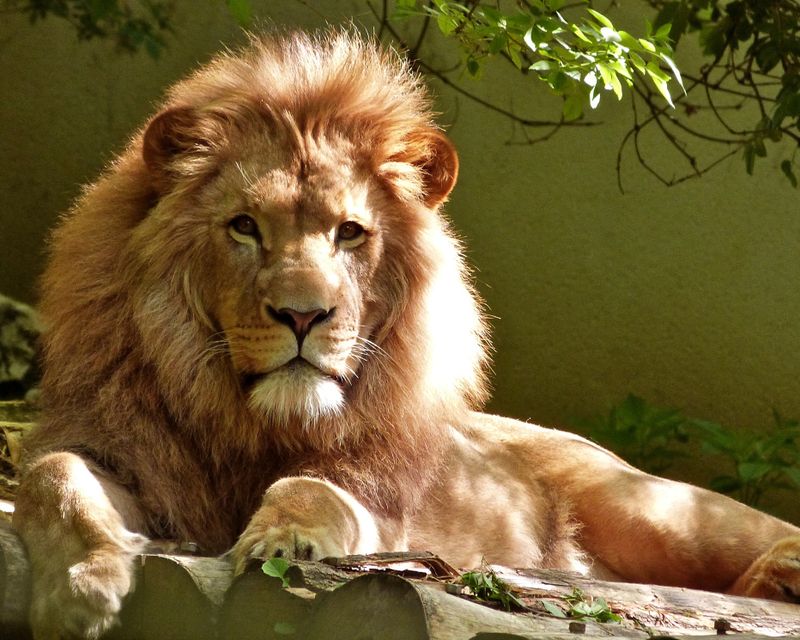
Lake Nakuru is one of only a few places in East Africa where lions are regularly seen resting in the branches of acacia and euphorbia trees — a behaviour more commonly associated with Tanzania’s Lake Manyara National Park, and an unusual sighting whenever it occurs here.
Rothschild’s Giraffe
The park protects the endangered Rothschild’s giraffe subspecies, Giraffa camelopardalis rothschildi, distinguished by a lighter, more irregular coat pattern and distinctive white markings below the knee, with only a few thousand individuals remaining in the wild.
Baboon Cliff Viewpoint
An elevated viewpoint on the park’s western edge overlooking the full lake basin and the Rift Valley escarpment beyond — one of the park’s strongest photographic vantage points, especially in early-morning light.
Makalia Falls
A seasonal waterfall in the park’s quieter southern section, reachable by a short walk from the vehicle track — a picnic stop and a change of pace from game-drive viewing, particularly suited to families.
Birdlife Beyond the Flamingos
The park’s mix of lake, woodland, and grassland habitats supports over 450 recorded bird species, including pelicans, fish eagles, and a wide range of raptors — a strong birding destination independent of flamingo numbers in any given year.
Euphorbia Forest
A forest of tall candelabra euphorbia trees along the park’s eastern shore — an unusual, photogenic landscape feature found in few other Kenyan parks, and a favoured haunt of the park’s leopard population.
Timing Your Visit
Best Time to Visit Lake Nakuru
Rhino, giraffe, and general game viewing hold up year-round; flamingo numbers are the genuinely variable factor.
| Season | What to Expect at Lake Nakuru | Verdict |
|---|---|---|
| Jan – Mar | Hot and dry, with generally good visibility for rhino and general game viewing across the park’s open terrain. | Excellent |
| Apr – May | The long rains bring lush landscapes and the lowest visitor numbers of the year, though some park tracks can become muddy after heavy downpours. | Best Value |
| Jun – Oct | The dry season gives the most reliable game viewing conditions and coincides with the wider safari circuit’s peak season when combining Nakuru with the Mara. | Peak Season |
| Nov – Dec | Short rains bring brief afternoon showers and a refreshed, green landscape; game viewing stays strong and the park is notably quieter than mid-year. | Very Good |
Flamingo presence does not track neatly with these seasons and instead follows multi-year rainfall trends affecting the lake’s water level — current conditions can be confirmed before travel if flamingos are a specific priority.
Logistics
Getting to Lake Nakuru, and Where It Fits in an Itinerary
Nakuru’s proximity to Nairobi makes it one of the more flexible parks to add to almost any Kenya route.
By Road From Nairobi
Approximately 160 km via the well-maintained Nairobi-Nakuru highway, a drive of roughly 2.5 to 3 hours that descends into the Rift Valley, with viewpoints along the route worth a brief stop.
As a Masai Mara Stopover
For travellers driving overland to the Masai Mara rather than flying, Nakuru sits conveniently along several route options, making a one- or two-night stop an efficient way to add rhino sightings without significantly lengthening the journey.
As a Standalone Day Trip
Given the manageable drive time, Nakuru is genuinely feasible as a long day trip from Nairobi for travellers with limited time, though an overnight allows both a sunset and dawn drive, meaningfully improving sighting odds.
Comparison With Other Kenyan Parks
Lake Nakuru vs. Masai Mara vs. Amboseli vs. Tsavo
Each park solves a different travel problem from a Nairobi base. The comparison below reflects that starting point rather than a general ranking.
| Factor | Lake Nakuru | Masai Mara | Amboseli | Tsavo East / West |
|---|---|---|---|---|
| Travel from Nairobi | ~160 km, 2.5–3 hrs by road, no flight | ~270 km by road (5–6 hrs) or 45-min flight | ~240 km, 3.5–4 hrs by road, or short flight | ~230–330 km, 4–5 hrs by road, or short flight |
| Signature species | Black & white rhino, Rothschild’s giraffe | Big Five, wildebeest migration (seasonal) | Large-tusker elephants against Kilimanjaro | Red-dust elephants, Big Five possible |
| Ecosystem | Rift Valley soda lake, woodland, grassland | Open short-grass savannah | Semi-arid savannah with swamps | Semi-arid savannah and scrubland |
| Minimum time needed | Half day to overnight; feasible as a day trip | 2–3 nights minimum to feel worthwhile | 2 nights minimum to feel worthwhile | 1–2 nights minimum to feel worthwhile |
| Fenced boundary | Yes — entirely fenced rhino sanctuary | No — open, unfenced ecosystem | No — open, unfenced ecosystem | No — open, unfenced ecosystem |
| Best framed as | An efficient add-on or Mara-route stopover | The main event of a Kenya trip | A short bush add-on to a Nairobi start or end | A stand-alone or dual-destination safari |
Is It Right for You?
Who Does Lake Nakuru Suit Best?
An honest read on who benefits most from adding this park to a Kenya itinerary.
Lake Nakuru occupies an unusual position in Kenya’s safari landscape: rarely anyone’s sole safari destination, but frequently a valuable addition to a longer itinerary. Approached as a standalone “big trip” destination, it can disappoint travellers expecting Mara-scale drama; approached as an efficient, high-value addition to a broader route, it consistently performs well.
Rhino-Focused Travellers
If completing the Big Five within a short trip matters, few Kenyan parks offer better rhino odds in less time than Lake Nakuru’s compact, fenced sanctuary.
Overland Travellers to the Mara
Travellers driving rather than flying to the Masai Mara can add real wildlife value here with minimal extra travel time.
Time-Constrained Visitors
For travellers with limited days who still want a genuine safari experience close to Nairobi, Nakuru’s manageable size and short transfer time make it one of the more efficient options available.
Travellers whose primary motivation is the pink-flamingo image are better served checking current conditions with a consultant first, since that specific spectacle cannot be guaranteed in any given season. Travellers prioritising the Great Migration or the highest possible predator density are better served focusing their time on the Masai Mara instead.
Before You Go
Practical Information for Visiting Lake Nakuru
Specifics that make planning a Nakuru visit straightforward, whether as a standalone trip or part of a longer route.
Climate and Altitude
Nakuru sits at around 1,760 metres above sea level, keeping temperatures notably cooler than the coast or lower-altitude parks such as Tsavo — mornings and evenings feel genuinely cool, so a light layer is worth packing even in the dry season.
Accommodation Style
Options range from lodges within the park itself to comfortable properties just outside the gates in Nakuru town, giving more budget flexibility than some of Kenya’s more remote parks, where in-park lodging is often the only realistic option.
Getting Around Inside the Park
The park’s network of all-weather and seasonal tracks is generally well maintained and navigable in a standard safari 4×4, and its compact size means a full day’s circuit covering most highlights is realistic without excessive early starts.
What to Pack
Standard neutral safari clothing applies, with a warmer layer for cooler mornings given the altitude. A telephoto lens rewards visitors even without flamingos present, given the strong rhino, giraffe, and birding opportunities throughout the park.
Park Fees
Entry fees are charged per person per day, standard across Kenya’s national parks, and are included in every Sun & Safari itinerary that features Lake Nakuru — see the packages page for full pricing detail.
Photography Notes
Baboon Cliff at sunrise offers the park’s best light for landscape photography, while rhino and giraffe sightings are most frequent in the cooler hours of early morning and late afternoon, mirroring general safari practice elsewhere in Kenya.
Common Questions
Lake Nakuru FAQ
Direct answers to the questions asked most often about visiting Lake Nakuru.
Not guaranteed. Flamingo numbers fluctuate significantly year to year depending on the lake’s water level and salinity, which affects the algae they feed on. Some years bring large pink flocks; in others, most flamingos have moved to nearby soda lakes like Bogoria or Elementaita.
Current conditions are checked before travel dates are confirmed, and expectations are set honestly — if flamingos are the priority, that can be flagged so the consultant can advise on current sightings across the region’s soda lakes and adjust the itinerary if another lake offers better odds that season.
Yes. Lake Nakuru is one of Kenya’s most reliable locations for rhino sightings. The park operates as a fenced sanctuary specifically protecting both black rhino and southern white rhino, and its compact size and open terrain make sightings considerably more likely here than in Kenya’s larger, unfenced parks, where rhino can be genuinely hard to find given how few remain and how much ground they cover.
Approximately 160 kilometres, a drive of roughly 2.5 to 3 hours along the well-maintained Nairobi-Nakuru highway, making it one of the most accessible parks for a day trip or short overnight stay from the capital, without requiring an internal flight.
Yes, given the roughly 2.5 to 3 hour drive each way. An overnight stay allows both a sunset and dawn game drive, which significantly improves wildlife sighting odds and is generally recommended where the schedule allows it.
Yes, for travellers driving overland rather than flying. Nakuru sits conveniently along or near several routes toward the Masai Mara and makes an efficient one- or two-night stop that adds rhino sightings and Rift Valley scenery without significantly lengthening the journey. It is a less natural fit for travellers flying directly between parks by bush plane.
Yes, particularly given the park’s compact size, shorter game drives, and manageable distance from Nairobi, all of which reduce the long-transfer fatigue that can affect young children on longer safari itineraries. Makalia Falls also offers a short walk and change of pace many children enjoy more than an extended vehicle-based game drive.
The fence supports the park’s role as a rhino sanctuary — it reduces poaching access at the boundary and limits human-wildlife conflict with the surrounding agricultural land, which is more densely populated than the areas bordering parks such as the Mara or Tsavo. This targeted conservation approach has made Lake Nakuru one of Kenya’s more successful rhino breeding and protection programmes.
Yes. Lake Bogoria and Lake Elementaita both sit within a reasonable drive of Nakuru and can extend a Rift Valley-focused itinerary, particularly useful if flamingo numbers are concentrated at one of these neighbouring lakes during specific travel dates rather than at Nakuru itself.
Black rhino are browsers with a hooked, pointed upper lip suited to feeding on shrubs and leaves, tend to be more solitary, and are generally smaller than white rhino. White rhino are grazers with a broad, flat lip suited to grass, are more sociable and often seen in small groups, and are the larger of the two species. Lake Nakuru protects both within the same fenced sanctuary.
Rothschild’s giraffe is an endangered giraffe subspecies distinguished by a lighter, more irregular coat pattern and distinctive white markings below the knee. Fewer than a few thousand remain in the wild, and Lake Nakuru’s fenced, well-monitored sanctuary is one of the more reliable places in Kenya to see this specific subspecies.
Ready for Lake Nakuru?
Send your route and priorities — current flamingo conditions are checked directly, and Nakuru is built into your wider Kenya itinerary around what actually fits.