3 Days Maasai Mara Classic

HomePackages3 Days Maasai Mara Classic

3 Days Maasai Mara Classic Safari — From $690 Per Person

The 3 Days Maasai Mara Classic Safari is Sun & Safari’s flagship short safari: two full days of game drives in Kenya’s most celebrated reserve, reached by scheduled bush flight, with a full-board tented camp and every park fee included. From $690 per person — the fastest way to experience the Mara properly on a long weekend.

3 Days
2 nights, 4 game drives
$690
From, per person sharing
45 min
Bush flight from Wilson
Jul–Oct
Migration-season departures

The Concept

Why Fly In for Just Three Days?

This package answers a question we hear constantly: “I only have a long weekend — is the Masai Mara even worth it?” The answer is yes, because of one decision this itinerary makes deliberately: flying, not driving. A 45-minute bush flight from Nairobi Wilson Airport puts you on your first game drive the same afternoon you leave home — compare that to the 5–6 hour road transfer other operators default to, which alone consumes most of a short trip’s first day.

That time saved goes straight into game viewing. Two full days inside the reserve, with dawn and dusk drives on both, is enough to reliably encounter four or five of the Big Five and to genuinely absorb the Mara’s scale rather than glimpsing it through a window. During migration season (July–October), it’s also enough time to position at the river for a crossing without needing a longer stay.

This is the package for the traveller who wants the real Mara experience — camp fires, sundowners, dawn drives — inside a schedule that fits around work, without compromising on what makes the reserve worth visiting in the first place.
Lion resting on the savannah in the Masai Mara, the setting of this 3-day classic safari

The Destination

Understanding the Masai Mara Ecosystem

What the reserve actually is, how it fits into the wider landscape, and why its geography drives everything about this itinerary.

The Masai Mara National Reserve covers roughly 1,510 square kilometres of rolling grassland in south-western Kenya, named for the Maasai people who have grazed livestock across this land for generations and for the Mara River that cuts through it. It is not an isolated park: the reserve is the northern extension of the far larger Serengeti-Mara ecosystem, which spans some 40,000 square kilometres across the Kenya-Tanzania border. That single fact explains why the wildlife here moves the way it does — the Serengeti and the Mara function as one continuous habitat, and the animals treat the international border as irrelevant.

The reserve itself is divided into two administrative sections, the Mara Triangle in the west (managed by the Mara Conservancy) and the main reserve to the east (managed by the Narok County Government), separated by the Mara River and the Oloololo Escarpment that rises along its western edge. Around the formal reserve boundary sits a ring of private and community conservancies — Naboisho, Olare Motorogi, Mara North, and Ol Kinyei among the best known — where the same wildlife roams under a different, lower-density management model.

Elevation across the ecosystem sits between about 1,500 and 2,100 metres above sea level, which keeps the climate notably temperate for a location this close to the equator: daytime temperatures typically sit in the low-to-mid 20s°C year-round, with cool mornings that make dawn game drives genuinely brisk rather than merely scenic.

This geography is also why the itinerary above is built around flying. The Mara airstrips sit inside or immediately adjacent to the reserve boundary, so a bush flight lands you within minutes of your first game drive. A road transfer from Nairobi, by contrast, has to descend the Great Rift Valley escarpment and cross largely unpaved final approach roads — scenic once, but a genuine time cost on a short trip.

The Mara River itself deserves its own mention beyond the migration season. Even outside the crossing months, it hosts one of the highest concentrations of hippopotamus and Nile crocodile in East Africa, and riverine forest along its banks supports species you won’t see out on the open plains — colobus monkey, African fish eagle, and giant kingfisher among them.

Because the reserve and its conservancies share one contiguous wildlife population, a guide’s read of where herds and predators are currently concentrated matters more than which specific gate you enter through — which is why every game drive on this itinerary is led by a professional driver-guide with current knowledge of animal movement, not a fixed route.

Day by Day

The Full 3-Day Itinerary

Built to maximise time in the reserve — flying eliminates the road-transfer day entirely.

D1
Nairobi → Masai Mara

Bush Flight & First Game Drive

A scheduled 45-minute flight from Nairobi Wilson lands you on a Mara airstrip by late morning. Your guide meets you on arrival, and lunch at camp is followed immediately by your first afternoon game drive — sightings begin on day one, not day two.

✈️ Bush flight included🏕️ Tented camp, full board🚙 Afternoon game drive
D2
Masai Mara

Full Day — Dawn & Dusk Drives

The heart of the trip: an early-morning drive while predators are most active, a relaxed midday back at camp, then a second drive through the golden evening hours. In migration season (July–October), today is positioned toward the Mara River for a chance at a crossing.

🌅 Dawn & dusk drives🌊 River positioning (Jul–Oct)🔥 Camp dinner
D3
Masai Mara → Nairobi

Final Game Drive & Bush Flight Home

A last dawn game drive en route to the airstrip, then the return bush flight to Nairobi Wilson, landing by mid-morning — leaving your afternoon free to connect onward to the coast or fly home.

🌅 Final game drive✈️ Return bush flight🕐 Landing by late morning

The Wildlife

What You’ll Actually See

The Masai Mara supports one of the densest concentrations of large mammals anywhere in Africa — here’s the full picture, not just the headline five.

The Big Five

Lion, leopard, elephant, African buffalo, and black rhino make up the traditional Big Five, a term that originated with big-game hunters rating the most dangerous animals to track on foot, and now doubles as travellers’ shorthand for a successful safari. The Mara has one of the highest lion densities in Kenya, with several well-studied prides regularly seen along the Mara and Talek rivers. Leopard sightings are less certain, since the species is solitary and largely nocturnal, but the reserve’s riverine tree cover gives guides consistent places to look. Elephant and buffalo are seen on the great majority of drives. Black rhino is the true outlier: fewer than 50 individuals are estimated to remain across the whole Masai Mara ecosystem, so a sighting is a genuine highlight rather than an expectation.

Other Predators & Plains Game

Beyond the five, the Mara is prime cheetah habitat — the open, short-grass plains suit their hunting style better than denser bush further south, and cheetah sightings here are among the best on the continent. Spotted hyena, black-backed jackal, and serval round out the predator list. Herbivores are everywhere in volume: Burchell’s zebra, Thomson’s and Grant’s gazelle, topi, impala, eland, and giraffe form the resident backdrop even outside migration season, alongside hippo pods and Nile crocodile concentrated along the river.

Birdlife

The Mara is also a serious birding destination, with over 450 recorded species. Look for the martial eagle and bateleur soaring on thermals above the plains, lilac-breasted roller (Kenya’s most photographed bird), secretary bird stalking through the grass, and, near the river, African fish eagle and saddle-billed stork. Guests specifically interested in birding can ask their consultant to note this preference — guides will adjust drive pacing accordingly.

What Affects Sighting Quality

Three factors matter more than luck: time of day (dawn and dusk drives, both built into this itinerary, correspond to peak predator activity), season (migration months add sheer volume, while the dry season concentrates resident wildlife near permanent water), and guide quality — radio networks between driver-guides across camps mean a sighting reported by one vehicle is often relayed to others within minutes, which is one of the practical reasons an experienced local operator outperforms a self-drive visit.

Pricing Detail

What Does the $690 Include?

Our standard transparent inclusions, applied to this package specifically.

Included

  • Return bush flight, Nairobi Wilson to the Masai Mara
  • Masai Mara National Reserve entry fees for both days
  • Full-board tented camp accommodation, two nights
  • Four game drives with a professional driver-guide
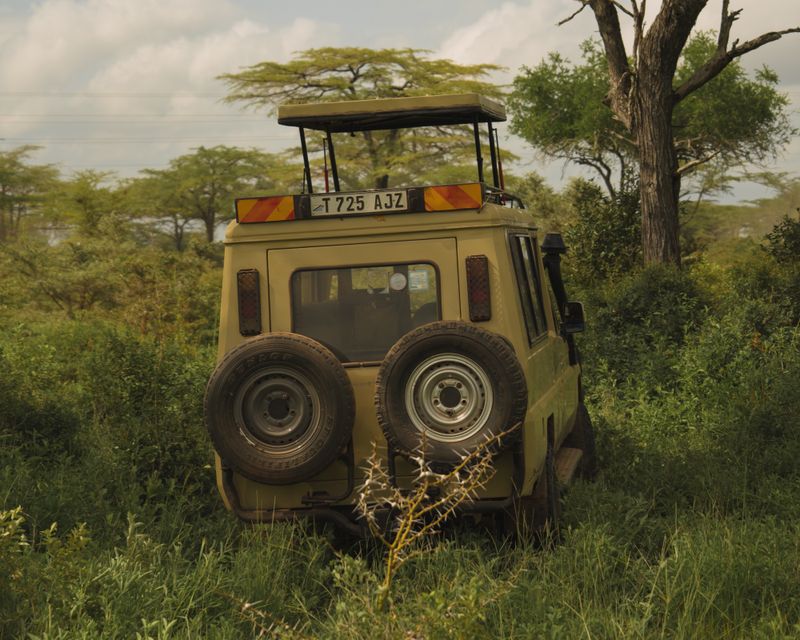
  • 4×4 safari vehicle with pop-up roof
  • Airport transfer to Wilson Airport in Nairobi
  • Dedicated travel consultant and 24/7 support line

Not Included

  • International flights and Kenya eTA (~USD 30)
  • Travel insurance (required for all bookings)
  • Hot-air balloon safari and Maasai village visit (quoted on request)
  • Drinks, tips, and personal expenses

This package’s rate rises noticeably during migration season (July–October), when camps near the river crossings are in highest demand — book 6–12 months ahead for those dates.

Migration Season

The Great Migration, Explained

Why the Mara’s calendar drives so much of this package’s timing and pricing.

The Great Migration is the year-round, clockwise movement of roughly 1.5 million wildebeest, alongside several hundred thousand zebra and gazelle, following seasonal rainfall around the Serengeti-Mara ecosystem in search of fresh grass. It isn’t a single event — it’s a continuous cycle — but the portion that gives the Masai Mara its reputation is the northward push into Kenya that typically begins around July, once the southern Serengeti’s grass has been grazed down and the rains shift north.

By late July and into August, large herds are usually established across the Mara’s plains, and this is when the Mara River crossings — the dramatic, widely photographed moments of thousands of wildebeest fording the river under threat from resident crocodiles — become a realistic daily possibility, generally peaking through August and September. Crossings are never scheduled or guaranteed; herds can gather at a crossing point for hours or days before committing, which is why a full second day in the reserve (built into this itinerary) matters more than a single rushed drive.

From around October, the herds begin drifting back south toward the Serengeti as the Mara’s grass is depleted and short rains return further south, with most of the migration having left Kenya by November. Calving season, when hundreds of thousands of wildebeest calves are born within a few concentrated weeks, happens later in the cycle on the southern Serengeti plains around January to March — outside the Mara entirely, and outside the scope of this package.

It’s worth being direct about what this means for booking: migration-season dates (July–October) carry the Mara’s highest camp rates and the tightest availability, which is why this package’s price rises during that window, as noted in the pricing section above. Guests booking specifically to see a river crossing should treat the second week of August through mid-September as the highest-probability stretch, while accepting that no operator — including us — can guarantee a crossing on any single date.

The upside of this seasonality is that the Mara delivers exceptional game viewing outside migration months too. Resident predator populations, the permanent hippo and crocodile population on the river, and healthy numbers of non-migratory plains game mean the reserve is a legitimate year-round destination — migration season simply adds a specific, weather-dependent spectacle on top of an already strong baseline.

Planning Your Dates

Best Time to Visit the Masai Mara

A month-by-month view to help you weigh weather, crowds, and wildlife against this package’s pricing.

Period Conditions Wildlife Highlight Booking Note
Jan – FebWarm, dry, minimal rainStrong resident game viewing, quieter campsGood value, book 6–8 weeks out
Mar – MayLong rains, lush and greenResident game only; migration is in TanzaniaLowest rates, easiest availability
JunRains easing, cooler morningsHerds beginning to move northShoulder-season rates, good compromise
Jul – SepDry, cool mornings, warm daysMigration herds present; river crossings likeliestPeak rates; book 6–12 months ahead
OctDry, herds thinning outTail end of migration presenceStill elevated rates; book 3–6 months ahead
Nov – DecShort rains, brief afternoon showersMigration has left; resident game returns to focusGood value outside the Dec holiday peak

Make It More

Popular Ways to Extend This Safari

Three days is complete on its own — these are the most common next steps.

Add a Fourth Night

One extra night roughly doubles your chance of a strong river crossing or predator kill during migration season — the single most-requested upgrade.

Add the Balloon Safari

A sunrise hot-air balloon flight over the herds, landing to a champagne bush breakfast — bookable as an add-on to Day 2.

Continue to the Coast

This is exactly the safari half of our signature 7-Day Bush & Beach package — add Diani Beach nights to complete it.

The People

The Maasai People and This Land

The reserve’s name and its landscape are inseparable from the community that has lived here for centuries.

The Maasai are a semi-nomadic pastoralist people whose traditional grazing lands span southern Kenya and northern Tanzania, and whose presence in this landscape predates the reserve’s formal designation by generations. Cattle remain central to Maasai life, both economically and culturally, and it’s common on the drive between the airstrip and camp to pass Maasai herders moving livestock along the reserve boundary — a reminder that this is a lived-in landscape, not an empty wilderness set aside for tourism.

The private conservancies mentioned earlier in this page exist because of a specific partnership model: Maasai landowners lease grazing and development rights to conservancy operators in exchange for steady lease income, which funds both community services and lower-density, higher-quality tourism than the main reserve can offer. It’s a structure worth understanding if you’re deciding between a reserve-based stay like this one and a conservancy-based extension.

A visit to a Maasai village (often called a boma) is available as an optional add-on to this itinerary, typically arranged for the morning or afternoon between game drives. It’s a paid, pre-arranged visit rather than an impromptu stop, and it’s worth approaching with the same respect you’d bring to any home visit — ask your guide about appropriate etiquette, and expect a modest per-person village fee that supports the community directly.

We flag this as an optional add-on rather than bundling it into the core itinerary because not every guest wants a cultural stop on a short trip focused on wildlife — but for those who do, it’s one of the most requested extras, and easy to slot into either Day 1 or Day 3 without disrupting the two full game-drive days at the centre of this package.

Where You Sleep

What “Full-Board Tented Camp” Means

The accommodation style used on this package, and how it differs from a lodge.

“Tented camp” in the Mara doesn’t mean roughing it. This package uses walk-in canvas tents built on raised platforms, each with a proper en-suite bathroom (flush toilet, hot shower — usually via a bucket or solar system rather than mains plumbing), a real bed, and private veranda space. The canvas walls are what make the experience distinct from a brick-and-mortar lodge: at night, with the camp generator off, you genuinely hear the bush — hyena whoop, lion contact calls carrying across the plains, hippo grunting from the river. It’s a deliberate part of the safari experience, not a downside.

“Full board” means all meals are included — breakfast, lunch, dinner, and the tea or coffee that typically arrives at your tent before the dawn game drive — along with drinking water. It does not include bar drinks, which are the main out-of-pocket cost guests report at camp.

Camps operating on this package are unfenced or lightly fenced, meaning wildlife can and does pass through camp grounds after dark — guests are always escorted between tents and the dining area after sunset by camp staff, standard practice across the Mara and nothing to be concerned about with basic common sense.

Compared to a permanent lodge, tented camps sit lighter on the land, are typically smaller (10–20 tents rather than 40-plus rooms), and put you noticeably closer to the sounds and rhythms of the reserve. If you’d prefer a lodge instead — useful for travellers with mobility considerations, since lodges are generally step-free — tell your consultant when you enquire, and we’ll substitute an equivalent lodge property at the applicable rate difference.

Choosing Your Trip

How This Package Compares to Other Mara Options

Where the 3-Day Classic sits against the alternatives we also offer.

Option Transfer Game Drives Best For
3-Day Classic (this package)Bush flight, both ways4 drives, 2 full daysLong weekends, first-time safari-goers
Road-transfer 3-day equivalent5–6 hour drive, both ways2–3 drives effectivelyBudget-conscious travellers with flexible time
4–5 night Mara extensionBush flight, both ways8–10 drives, 3–4 full daysMigration-season crossings, serious photography
7-Day Bush & BeachBush flight, continuing to the coast4 drives + beach nightsHoneymoons, one trip covering safari and beach

Trip Fit

Who Is the 3-Day Masai Mara Safari For?

The itinerary is defined by time in the reserve, the flight connection, the wildlife objective, and the traveller’s available days.

A short safari with a high wildlife-to-travel ratio

The 3-Day Masai Mara Classic Safari is suited to travellers who want the Masai Mara National Reserve to be the main purpose of a short Kenya trip. The defining relationship is between trip duration and time inside the reserve. A three-day itinerary can lose a substantial share of its useful safari time when long road transfers are placed on both ends. The fly-in structure changes that balance by connecting Nairobi Wilson Airport with a Mara airstrip and allowing the first afternoon to be used for wildlife viewing.

That makes the package relevant to first-time Kenya safari travellers, repeat visitors who already know the country’s longer circuits, couples fitting a safari around a city or beach stay, and travellers with fixed leave periods. It also works as the safari component of a wider Kenya holiday when the next destination is Diani Beach, Watamu, Malindi, Lamu, or another coastal location.

The trip is less suitable for someone whose primary objective is a slow photographic expedition, a broad Kenya wildlife circuit, or a high-probability search for northern Kenya species. Those travellers have a different entity relationship: more nights, more ecosystems, and more time are useful. The 10-Day Grand Kenya Safari, 5-Day Northern Kenya Safari, or a combined Mara-and-coast product can be a better fit.

What the trip is actually optimising

The core decision is not simply “three days versus more days.” It is game-viewing time versus transfer time. On a short safari, the transfer mode affects the number of meaningful wildlife periods available to the traveller. Dawn, late morning, afternoon, and dusk have different viewing conditions, so protecting those periods has a direct effect on the experience.

The package also connects several entities that matter to the booking decision: Nairobi is the starting transport hub; Nairobi Wilson Airport is the bush-flight departure point; the Masai Mara National Reserve is the primary wildlife destination; a tented camp supplies the two-night accommodation base; and a professional driver-guide connects the traveller to the reserve’s wildlife, roads, river areas, and seasonal movements.

The result is a focused safari rather than a survey of Kenya. If the search intent is “I have three days and want to see the Masai Mara,” this package answers that need directly. If the intent is “I want to see as much of Kenya as possible,” a longer circuit is the more coherent choice.

The Booking Decision

How to Evaluate the Safari Price

The useful comparison is the price of the complete trip component, not the room rate alone.

The current Sun & Safari product listing for the closely matching Maasai Mara Great Migration Safari is $690. That product is listed as a three-day, two-night safari in the Masai Mara National Reserve for a maximum group size of six. Its product description specifically connects the experience with wildebeest migration, Big Five game drives, and Maasai naturalist guides. The package page therefore uses $690 per person as the current reference price rather than retaining the previous $810 figure.

A safari price should be evaluated against what the traveller is actually purchasing: nights in the destination, access to the reserve, game drives, transport between Nairobi and the Mara, accommodation, meals, guide services, and the operational coordination required to move a small group through a wildlife destination. A low headline rate can become a different purchase when transfers, park charges, meals, or accommodation are separated from the advertised number.

The exact final amount can still depend on the requested travel date, accommodation category, occupancy arrangement, and seasonal availability. Migration-season demand can change camp availability faster than ordinary low-season dates. For that reason, the booking CTA should be treated as the point at which the requested dates and current inventory are confirmed.

Current Price Reference

  • $690 per person — current checked product price for the matching 3-day Masai Mara migration product.
  • 3 days / 2 nights — duration shown on the product listing.
  • Maximum 6 guests — group size shown on the product listing.
  • Masai Mara National Reserve — location shown on the product listing.
  • Big Five and migration — the primary wildlife proposition stated by the product.

For the exact dates, confirm the live rate and accommodation allocation before payment.

Game Viewing

How Dawn, Afternoon and Dusk Change the Safari

Wildlife viewing is a time-dependent activity, so the daily schedule is part of the product.

Dawn Game Drives

Early morning is important because many predators are active before the heat of the day. Lions may still be moving after a night hunt, leopards can be encountered around riverine vegetation, and cheetahs use cooler periods to hunt. The light also matters to photographers: the lower sun produces more directional illumination and longer shadows across the grassland.

A dawn drive is therefore not simply an early version of an afternoon drive. It changes the probability of particular behaviours and gives the guide access to a different wildlife window.

Afternoon and Dusk Drives

The afternoon drive follows the midday rest period and extends into the softer evening light. Temperature, animal movement, vehicle traffic, and the position of the sun all change through this period. Herbivores may become more active as temperatures fall, while predators can begin positioning for the night.

On a three-day safari, having multiple viewing periods is more useful than trying to turn every day into a single continuous drive. The rhythm of driving, resting, eating, and returning to the reserve keeps the experience workable without sacrificing the principal wildlife periods.

Wildlife Relationships

Predators, Prey and the Mara Food Web

The Masai Mara is valuable because its species are connected by a functioning grassland ecosystem.

The most recognisable safari animals are not isolated attractions. Lion, leopard, cheetah, spotted hyena and smaller predators depend on herbivore populations that respond to rainfall, grass quality, water availability, and seasonal movement. Wildebeest, zebra, gazelle, topi, impala, eland and giraffe form different parts of that herbivore community. The Mara’s value to wildlife tourism comes from the density and interaction of these populations across an accessible landscape.

Lions are social predators and are often encountered in prides. Leopards occupy a different niche, favouring cover and remaining more solitary. Cheetahs depend heavily on open terrain where speed can be used effectively. Spotted hyenas are both predators and scavengers, and their presence overlaps with the kills of other carnivores. These differences are why a guide does not simply drive toward “the Big Five”; the objective is to understand what animals are doing and where conditions make particular encounters more likely.

The Mara River adds another ecological layer. Hippopotamus occupy the water during the heat of the day and graze at night, while Nile crocodiles are associated with the river and its crossing points. Riverine vegetation creates habitat structure that differs from the open grassland. The relationship between river, grassland, prey and predators is one reason the river remains relevant even outside the famous migration crossing period.

The Big Five are a benchmark, not a checklist

The term Big Five refers to lion, leopard, elephant, African buffalo and black rhinoceros. It is a tourism shorthand rather than a scientific measure of safari quality. A three-day itinerary can produce excellent wildlife viewing without delivering every member of the Big Five.

Black rhino is the least predictable target in the Masai Mara compared with lion, elephant and buffalo. Travellers whose main objective is rhinoceros should consider connecting this safari with Ol Pejeta Conservancy or the Lake Nakuru flamingo and rhino safari listed among Sun & Safari’s products.

This distinction matters because different wildlife objectives imply different destinations. The best safari is the one whose destination and duration match the animal or experience the traveller actually wants.

Migration Geography

Why the Mara River Matters During the Wildebeest Migration

The river is a seasonal movement barrier and a wildlife concentration point, not a scheduled attraction.

The Great Migration is a movement through the wider Serengeti-Mara ecosystem rather than an event that belongs to one park on fixed dates. Wildebeest, zebra and associated grazing animals follow changing rainfall and grass conditions. When herds move into the Masai Mara, the Mara River becomes one of the landscape features that can concentrate animals.

A river crossing is therefore a chain of decisions made by the animals. Herds can approach a bank, gather, move away, return, and wait. The trigger is not a safari timetable. Weather, herd pressure, river conditions, predator presence and the behaviour of the animals all contribute. A guide can position a vehicle near a known crossing area, but cannot schedule the moment when a herd enters the water.

The practical implication for a three-day safari is simple: migration-focused travellers benefit from enough time to observe the herd rather than treating a crossing as a guaranteed appointment. The existing itinerary’s full second day in the Mara gives more opportunity to respond to current wildlife movement than a one-night stop.

Migration Planning

  • July–October: the main period associated with the Mara’s migration presence in the source itinerary.
  • July–September: the period identified in the page for the highest crossing potential.
  • Crossings are not guaranteed: no responsible itinerary should promise a crossing on a particular day.
  • Second day matters: additional time creates more opportunities to respond to herd location.
  • Outside migration: resident predators, plains game, hippos and crocodiles remain relevant year-round.
Read the Great Migration Guide →

Reserve or Conservancy?

Masai Mara National Reserve vs Mara Conservancies

The two settings share an ecosystem but operate under different access and management relationships.

Masai Mara National Reserve

The reserve is the central destination for this package. It provides access to a large wildlife area and is the setting associated with the classic Masai Mara safari experience. The main reserve is particularly relevant to travellers whose search intent is straightforward: see the Mara’s major wildlife in a short, focused trip.

Because the reserve is a shared tourism landscape, vehicle concentration can vary around major sightings. The experience is shaped by reserve rules, road conditions, seasonal wildlife distribution, and the judgement of individual guides.

The reserve should not be described as interchangeable with every surrounding conservancy. They are connected ecologically but distinct in governance, access and visitor-management practices.

Community and private conservancies

Conservancies such as Naboisho, Olare Motorogi, Mara North and Ol Kinyei sit around the reserve and involve different land-management arrangements. The page’s original content identifies them as private or community-run areas associated with Maasai landowners. Their tourism models can support lower vehicle density and, depending on the conservancy and operator, activities such as night drives or off-road viewing that are not available in the main reserve.

A traveller choosing between the reserve and a conservancy is therefore choosing more than a hotel. The choice involves wildlife access, rules, vehicle density, accommodation style, community relationships, and price. For a first short Mara trip, the national reserve offers the clearest direct answer to the classic safari search intent; a conservancy can be added when the traveller values a more specialised experience.

Compare Mara conservancies →

Accommodation

What to Expect From a Tented Camp in the Mara

Accommodation is part of the safari setting because camp location affects the relationship between the guest and the surrounding landscape.

A safari tent is different from a conventional hotel room but does not automatically mean basic accommodation. The page’s accommodation description refers to walk-in canvas tents on raised platforms, en-suite facilities, beds, and private veranda space. Full board means meals are supplied as part of the accommodation arrangement, with breakfast, lunch and dinner forming the basic daily meal pattern.

The tented setting also changes what guests hear and notice. Canvas walls transmit sounds from the surrounding landscape, and many camps are located in environments where wildlife movement can occur near camp. Staff procedures are therefore important. Guests should follow camp instructions, particularly after dark, and should not walk independently between tents and common areas where the camp requires an escort.

For travellers who prefer the architecture and accessibility of a permanent lodge, an alternative accommodation arrangement may be possible depending on availability and rate. The decision should be made before booking because the property type is part of the safari product rather than a cosmetic detail.

Full board, half board and extras

Full board generally means breakfast, lunch and dinner are included. It does not automatically mean alcoholic drinks, premium beverages, laundry, spa services, private activities, or every optional excursion. Those items should be checked against the booking confirmation.

The page specifically separates drinks, tips and personal expenses from the included package. It also treats the hot-air balloon safari and Maasai village visit as optional activities rather than silently treating them as part of the base itinerary.

The distinction helps travellers compare packages on like-for-like terms. Two safari prices can look similar while providing different accommodation, meals, transfers, activities and park access.

Add-On Experience

Hot-Air Balloon Safari Over the Masai Mara

A separate sunrise product for travellers who want an aerial view of the reserve.

The current Sun & Safari product listing for the Masai Mara Hot-Air Balloon Safari is $490. The product is listed as a half-day sunrise add-on in the Masai Mara National Reserve, with a maximum group size of 16 and a bush breakfast after the flight.

The balloon experience serves a different viewing purpose from a conventional game drive. A 4×4 keeps the traveller at ground level and allows the guide to interpret tracks, behaviour and habitat. A balloon changes the scale: the traveller sees the grassland, river corridors and animal movement patterns from above while the aircraft moves with the wind.

It is best treated as an optional experience for travellers who value aerial perspective and sunrise photography. It does not replace the game drives because the two activities produce different kinds of wildlife observation.

Verified Add-On Price

$490

Current product listing price for the Masai Mara Hot-Air Balloon Safari.

View Balloon Product →

Bush & Beach

Extend the Mara to Diani Beach

The safari can become one part of a longer Kenya holiday when wildlife and coast are the two primary trip goals.

The current Sun & Safari product listing for the 7-Day Masai Mara + Diani Bush & Beach is $3,200. The product is listed as seven days/seven nights, with four nights in the Masai Mara followed by three nights on Diani Beach and a domestic flight connecting the two destinations.

This is a different product from the three-day classic safari, but the relationship is useful for travellers whose underlying search intent is broader than wildlife alone. The Mara satisfies the wildlife objective; Diani adds an Indian Ocean beach stay. The combined itinerary removes the need to choose between safari and coast when the traveller has enough time for both.

For a short holiday, keep the three-day Mara as the focused safari component. For a week-long Kenya break, compare the combined product against booking separate safari and beach components.

Verified Bush & Beach Product

$3,200

Current product listing price for the 7-Day Masai Mara + Diani Bush & Beach.

View Bush & Beach Product →

Related Kenya Safaris

Choose Another Safari When the Objective Changes

The right destination depends on the wildlife, scenery, activity, and trip duration being sought.

Amboseli

Choose Amboseli Elephant Safari when elephants and views of Mount Kilimanjaro are central to the trip.

Lake Nakuru

Choose Lake Nakuru Flamingo & Rhino Safari when rhinoceros and Rift Valley lake scenery matter more than the Mara’s grassland system.

Ol Pejeta

Choose Ol Pejeta Conservancy when northern Kenya conservation, rhinoceros, and conservancy-based wildlife experiences are the priority.

Arrival and Preparation

What to Sort Out Before a Mara Departure

The safari begins before the game drive. Transport, entry requirements, luggage and timing all affect the trip.

Travel documents and entry requirements

Kenya entry requirements can change, so travellers should confirm the current electronic travel authorisation process and nationality-specific requirements before departure. Sun & Safari’s Kenya eTA and visa guide is the relevant internal resource for this planning question.

Travel insurance should also be arranged before the safari. A short trip does not remove the need for cover because the itinerary includes domestic aviation, remote wildlife areas, and accommodation outside Nairobi.

Health preparation

Health recommendations depend on the traveller’s medical circumstances and itinerary. The original page advises checking yellow-fever requirements when arriving from a risk country and discussing malaria precautions with a doctor or travel-health clinic. Those decisions belong with qualified health professionals and current official guidance.

Luggage for a bush flight

Light aircraft serving safari airstrips commonly have tighter baggage restrictions than international or scheduled commercial flights. The original itinerary recommends soft-sided luggage and notes that exact weight and shape limits are supplied with booking confirmation.

Pack around the actual safari environment: lightweight layers for daytime, a warm layer for early drives, sun protection, comfortable closed footwear, personal medication, and a pair of binoculars if you own one. Neutral clothing is practical for the vehicle, but the priority is comfort and weather protection rather than a specific “safari uniform.”

See the safari packing guide →

Photography

Planning the Safari for Wildlife Photography

The best photography strategy follows the animal, light, vehicle position and available time.

The Masai Mara is particularly productive for wildlife photography because open grassland allows long sightlines and large mammals are frequently visible. The practical challenge is not simply finding animals; it is managing light, distance, movement and vehicle position. Dawn and dusk provide softer light, while midday can be useful for subjects that remain active in open areas.

A guide’s knowledge affects photography because the vehicle can be positioned without unnecessarily disturbing the animal. The goal is a clear line of sight and a stable shooting position while following reserve rules. Travellers using long lenses should also plan around dust, sudden vehicle movement and limited space inside the vehicle.

For serious wildlife photographers, four game drives across two full days provide a useful introduction but are not the same as a dedicated multi-day photographic expedition. If a particular species, behaviour or migration scene is the primary objective, additional nights create more opportunities and reduce dependence on one short window.

Photography priorities

  • Use dawn and late-afternoon light for softer contrast.
  • Carry spare batteries and memory cards.
  • Use a lens appropriate to the distance expected from safari vehicles.
  • Protect equipment from dust and sudden weather changes.
  • Tell the consultant before travel if photography is the primary trip objective.
  • Allow the guide to manage vehicle position and wildlife distance.

Responsible Travel

Wildlife, Maasai Communities and Visitor Behaviour

A safari connects visitors with wildlife and a living landscape that includes communities and landowners.

The Masai Mara landscape is not an empty wilderness separated from human life. Maasai communities have longstanding relationships with the surrounding land, livestock and grazing systems. The conservancy model described on this page exists partly because landowners can lease land for conservation and tourism while retaining economic relationships with their property.

A cultural visit should therefore be treated as an interaction with people rather than as a performance purchased as part of a sightseeing checklist. Ask permission before photographing individuals, follow the guide’s advice, and understand how the visit is structured and paid for.

Wildlife behaviour also deserves respect. Guests should remain inside the vehicle when instructed, avoid shouting at animals, never attempt to feed wildlife, and follow the driver’s direction around predators, elephants and other large mammals.

The role of the guide

The guide is the operational link between the traveller and the reserve. A good guide interprets animal behaviour, reads tracks and habitat, communicates with other vehicles where appropriate, manages distance, and adjusts the route to current conditions rather than following a rigid sightseeing script.

For a three-day safari, that interpretation is especially important because there is limited time to learn the reserve independently. The guide’s local knowledge helps convert the available hours into meaningful wildlife observation while maintaining the rules that protect the destination.

Decision Guide

When Three Days Is Enough — and When It Isn’t

The correct trip length depends on the strength of the traveller’s objective.

Traveller objective Recommended approach Why
First Masai Mara safari with only a long weekend 3-day fly-in safari Protects the limited trip window and concentrates time in the reserve.
River crossing is the central objective Prefer more Mara nights during migration Crossings are unpredictable; more observation time creates more opportunities.
Rhinoceros is the main target Add or choose Nakuru / Ol Pejeta Those destinations can better match a rhino-focused objective.
Safari plus beach holiday Mara + Diani Bush & Beach Connects wildlife and Indian Ocean leisure in one Kenya itinerary.
Broad Kenya wildlife circuit Longer multi-park safari Adds ecosystems such as Amboseli, Samburu, Nakuru or Tsavo rather than extending only the Mara.

Mara Landscape

Where the Grassland, River and Escarpment Meet

The physical geography of the Masai Mara explains the distribution of wildlife and the character of the safari.

The Masai Mara sits within the wider Serengeti-Mara ecosystem, a cross-border landscape whose ecological boundaries do not follow the Kenya–Tanzania border. The reserve’s grasslands, river systems, wooded areas and surrounding conservancies create different habitats within a relatively compact safari destination. For a visitor, that means the landscape can change considerably within one game drive: open plains can give way to riverine vegetation, rocky ground, wooded drainage lines and areas of taller grass.

The Oloololo Escarpment is one of the most recognisable geographic features on the western side of the Mara. It forms part of the Great Rift Valley landscape and provides elevated views across the plains. The Mara River is another defining feature. It is not only associated with the wildebeest crossings; it is permanent habitat for hippopotamus and Nile crocodiles and supports vegetation that differs from the surrounding open grassland.

These geographic relationships affect safari routes. A guide deciding where to drive is responding to habitat, water, recent sightings, weather and animal movement. A route that produced a leopard sighting yesterday may not be the best route today because the ecological conditions and animal positions have changed.

Elevation and climate

The Mara’s elevation contributes to a climate that can feel cooler than travellers expect from a location close to the equator. Early morning game drives can be cold, particularly when an open-sided vehicle is moving before sunrise. By late morning, temperatures can rise substantially.

This is why clothing should be layered rather than selected only for daytime temperatures. A warm outer layer can be removed later, while a light rain layer is useful when weather changes. Sun protection remains important even on cooler days because safari vehicles spend extended periods outdoors.

The destination is therefore defined by both wildlife and geography. Travellers searching for “Masai Mara safari” are not simply buying access to a list of animals; they are entering a landscape whose terrain, rainfall and vegetation influence where those animals can be found.

Guide and Vehicle

Why the Driver-Guide Changes the Wildlife Experience

The vehicle is the viewing platform; the guide is the interpretation and decision-making layer.

A safari vehicle provides mobility across the reserve, but mobility alone does not create a good wildlife encounter. The guide decides how to approach a sighting, where to stop, how long to remain, and when to move on. Those choices become particularly important around predators, elephants and other animals whose behaviour can change quickly.

The original package describes professional driver-guides and a 4×4 vehicle with a pop-up roof. That configuration serves the primary purpose of the trip: observing wildlife from an elevated, open viewing position while remaining inside a controlled vehicle environment. The guide also interprets tracks, calls, behaviour and habitat so that guests understand why an animal is present rather than merely taking a photograph of it.

Communication between guides can also improve the ability to locate current wildlife activity. However, responsible guiding means balancing information sharing with the rules and conditions of the reserve. The goal is not to create a vehicle crowd around every sighting; it is to provide meaningful viewing while respecting wildlife and other guests.

What to tell your consultant

  • Your primary wildlife target, if you have one.
  • Whether photography is more important than general sightseeing.
  • Whether you prefer frequent short stops or longer observation periods.
  • Whether you want a cultural experience included.
  • Whether the trip must connect to the Kenyan coast after the safari.
  • Whether you prefer a tented camp or would rather discuss a lodge alternative.

These preferences change how the itinerary should be matched to the traveller; they are not cosmetic booking details.

Three-Day Rhythm

How the 72-Hour Window Works in Practice

The itinerary uses transport, accommodation and wildlife periods as one connected schedule.

01
Before departure

Nairobi logistics and Wilson Airport

The short safari begins with the transfer to Nairobi Wilson Airport and the scheduled bush-flight connection. The purpose is to move the traveller into the Mara without consuming most of the first day on the road. Baggage requirements and flight timing should be checked in the booking confirmation.

✈️ Nairobi Wilson🧳 Soft-sided luggage📋 Booking confirmation
02
Day 1

Arrival, camp and first wildlife period

Arrival in the Mara connects the traveller with the guide, camp and first game drive. The afternoon period is valuable because it gives the safari an immediate wildlife component rather than making the first day primarily a transfer day.

🏕️ Camp check-in🍽️ Meal service🚙 First game drive
03
Day 2

The main wildlife day

The second day is the most flexible wildlife period because it provides both an early drive and a later drive. Migration-focused travellers can use this day to respond to current herd location, while general wildlife travellers can follow predator and plains-game activity.

🌅 Dawn drive🦁 Predator viewing🌅 Evening drive
04
Day 3

Final game drive and return connection

The final morning creates another wildlife window before the return bush flight. For travellers continuing to another part of Kenya, the return connection can be planned around the next destination. This is where the short safari becomes a component within a larger Kenya itinerary.

🌅 Final drive✈️ Bush flight🏖️ Optional coast connection

Safari Expectations

What a Three-Day Safari Can and Cannot Guarantee

Wildlife tourism involves probabilities, not a fixed inventory of animals.

The Masai Mara is a strong wildlife destination, but even a high-density ecosystem cannot guarantee a particular sighting. Animals move independently, weather changes, vegetation can obscure subjects, and a predator may be active outside the hours when a vehicle is present. This is especially important for leopard and black rhino, which are less predictable targets than many common plains species.

What can be controlled is the structure of the opportunity. A fly-in itinerary protects more time in the reserve. Multiple game drives create more observation periods. A knowledgeable guide increases the ability to interpret signs and recent sightings. Staying two nights provides more flexibility than a one-night stop. These are practical ways to improve the conditions for wildlife encounters without making promises nature cannot support.

The strongest expectation to set is therefore not “you will see every famous animal.” It is “you will spend concentrated time in one of Africa’s best-known wildlife landscapes with several game-viewing periods and a guide whose role is to interpret and locate wildlife.”

Likely versus possible

  • Highly relevant: lion, elephant, buffalo, zebra, gazelle, giraffe, topi and other plains game.
  • Strong possibility: cheetah, hyena, hippo and crocodile, depending on current conditions.
  • Possible but less predictable: leopard and black rhino.
  • Seasonal spectacle: large wildebeest concentrations and river crossings during the relevant migration period.
  • Never guaranteed: a specific animal, behaviour, kill, crossing or photographic composition on a particular drive.

Internal Planning

Build the Rest of the Kenya Trip Around the Mara

The three-day safari can be the centrepiece or one component of a broader itinerary.

Before the Mara

  • Nairobi — useful for arrival, acclimatisation and pre-safari accommodation.
  • Nairobi City and National Park — relevant when the traveller has a free day before the bush.
  • Lake Nakuru — useful for travellers whose wildlife objective includes rhinoceros and Rift Valley scenery.
  • Amboseli — a different ecosystem for elephant viewing and Mount Kilimanjaro scenery.

After the Mara

  • Diani Beach — the clearest beach extension for a safari-and-coast holiday.
  • Watamu — relevant to marine activities and coastal relaxation.
  • Lamu — suited to travellers interested in Swahili culture and a slower coastal stay.
  • 7-Day Bush & Beach — a package-level alternative to planning safari and coast separately.

Booking Checklist

Before You Pay for a 3-Day Mara Safari

Use the booking stage to make sure the product matches the trip you are actually trying to take.

Confirm the exact date

Season, camp availability and flight inventory can change the final arrangement. Migration dates should be requested early.

Confirm what the rate covers

Check accommodation, meals, transport, park access, game drives, guide arrangements, taxes and any exclusions before payment.

Confirm baggage limits

Bush flights use light aircraft with luggage restrictions. Pack to the actual aviation requirement rather than international checked-bag assumptions.

State your wildlife priority

Tell the consultant if your priority is migration, predators, photography, rhino, birds, elephants or a general first safari.

Decide on the accommodation style

Confirm whether a full-board tented camp suits you or whether you want a lodge alternative discussed before the reservation is finalised.

Plan the connection after the Mara

If the safari leads to Diani, Watamu, Lamu or an international departure, build the connection around the bush-flight schedule rather than assuming unlimited flexibility.

Common Questions

3-Day Mara Classic FAQ

What guests ask before booking this package.

Most guests see four of the five within two full days of driving — lion, elephant, buffalo, and leopard or rhino are all realistic. Rhino is the hardest of the five in the Mara specifically, since numbers are low; guests wanting a strong rhino guarantee are usually better served by a conservancy add-on or a Nakuru/Ol Pejeta extension. Nothing in nature is guaranteed, but sighting rates here are among the best in Africa.

You can drive — it’s roughly $150–200 cheaper per person — but on a three-day trip it costs you most of Day 1 in transit each way, cutting your actual game-drive time by close to a third. For a short visit, we recommend flying; for a five-night-plus trip where losing a travel day matters less, driving becomes a reasonable way to save.

For July–September departures, 6–12 months ahead is the safe window — camps positioned near the river crossing points are the first to sell out, sometimes 18 months in advance for the most in-demand tented camps. Outside migration season, 6–8 weeks’ notice is usually comfortable.

Yes — this is precisely the safari component of our 7-Day Bush & Beach package. On Day 3, instead of flying back to Nairobi for a homeward connection, you can route directly onward to Diani, Watamu, or another coast destination via Wilson Airport, with the same bush flight simply continuing your journey rather than ending it.

The Masai Mara National Reserve is the government-managed core area this package visits, with fixed park fees and shared public access. The conservancies that ring it — Naboisho, Olare Motorogi, Mara North, and Ol Kinyei among them — are private or community-run land leased directly from Maasai landowners, with stricter vehicle limits per sighting and access to off-road and night drives that aren’t permitted inside the main reserve. Both hold excellent wildlife; conservancies simply trade a modest premium for a lower-density experience.

Most nationalities need Kenya’s electronic travel authorisation (eTA) before arrival, which is why it appears under “Not Included” above. Requirements do vary by nationality and change from time to time, so we recommend confirming the current process directly with Kenyan immigration authorities or your travel consultant when you book. A yellow fever vaccination certificate is required if you’re arriving from, or have transited through, a country with risk of yellow fever transmission; check with your doctor or a travel health clinic about this and about antimalarial precautions well before departure, since the Mara is a malaria risk area.

Neutral-coloured clothing (khaki, olive, brown) for game drives, a warm layer for cool dawn drives even in dry season, sunglasses and a hat, sunscreen, and a basic pair of binoculars if you have them, since camps don’t always supply enough to go around. Soft-sided luggage is strongly preferred over hard suitcases, as bush flights have strict weight and shape limits for the light aircraft used on this route — we’ll send exact limits with your booking confirmation.

Good to Know

A Short Glossary of Safari Terms

Terms you’ll see across this page and others on our site, defined plainly.

Trip & Logistics Terms

  • Bush flight — a scheduled flight on a light aircraft between Nairobi and a small, unpaved or gravel airstrip inside or near a reserve, as opposed to a charter flight booked exclusively for one group.
  • Game drive — an outing in a 4×4 safari vehicle, usually 3–4 hours, led by a driver-guide, to view wildlife.
  • Full board — all meals included at your accommodation; contrast with “half board” (breakfast and dinner only) and “all-inclusive” (meals plus drinks and activities).
  • Sharing rate — the standard per-person price when two adults share one tent or room; single travellers usually pay a “single supplement” on top.

Wildlife & Landscape Terms

  • Big Five — lion, leopard, elephant, African buffalo, and black rhino; a historic hunting term now used as a sighting benchmark.
  • The Migration — the year-round movement of roughly 1.5 million wildebeest and their attendant zebra and gazelle around the Serengeti-Mara ecosystem, chasing seasonal rainfall.
  • Conservancy — private or community land bordering a national reserve, leased from local landowners and managed with lower visitor density than the reserve itself.
  • Escarpment — the steep-sided ridge (the Oloololo, in the Mara’s case) marking the edge of the Great Rift Valley.

Why Us

Planning This Safari With Sun & Safari

What a dedicated Kenya-based operator adds on top of the flight and the tent.

A short, fly-in safari is unforgiving of planning mistakes in a way a longer overland trip isn’t — there’s no spare day to absorb a missed connection or a camp that doesn’t suit your expectations. Our role is to remove that risk: we hold the relationships with camp operators and bush-flight schedulers needed to build an itinerary that actually connects cleanly, and our driver-guides are locally based professionals who read animal movement daily rather than following a fixed loop.

Every booking is assigned a dedicated travel consultant from enquiry through to your return flight home, backed by a 24/7 support line for the (rare) situation where a flight delay or camp change needs handling in real time while you’re already in the bush.

We keep this page’s pricing and inclusions specific — exact flight time, exact number of drives, an explicit list of what’s excluded — because vague “from” pricing on safari packages is a common source of unpleasant surprises at checkout. What you see in the pricing section above is the full picture for this exact itinerary, not a starting estimate that grows once you enquire.

If the 3-Day Classic isn’t quite the right fit once we talk through your dates — too short for the crossing you specifically want to see, or perfect as the safari half of a longer coast trip — we’ll say so and point you to the package that actually matches your goals, including the extensions and combinations described earlier on this page.

Ready for the Mara?

Tell us your dates — migration-season availability moves fast, so we’ll confirm camp options and the exact rate within one business day.